

Bacterial Vaginosis Symptoms: A Doctor's Guide to Recognising and Managing BV in 2026
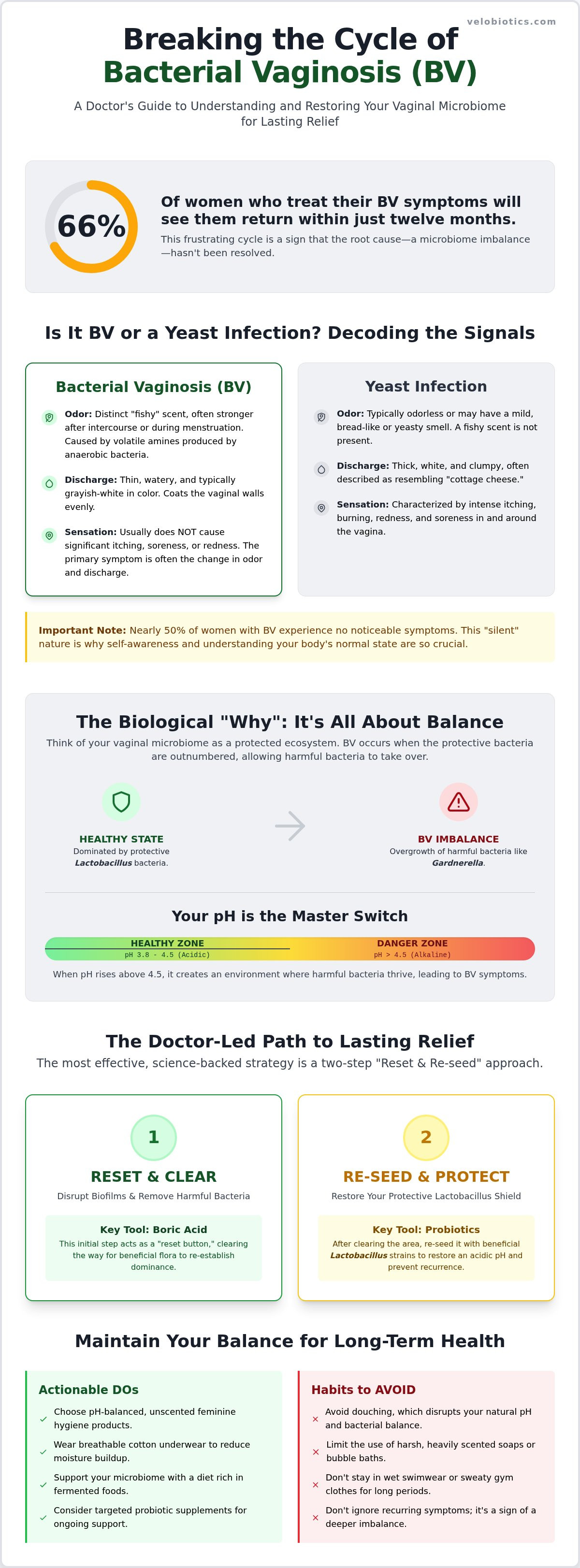
Did you know that nearly 66% of women who treat their bacterial vaginosis symptoms will see them return within just twelve months? It's incredibly frustrating to deal with that persistent fishy odor or thin, grayish discharge, especially when you've already tried standard treatments. You're likely exhausted by the cycle of temporary fixes and the constant confusion over whether you're facing BV or a stubborn yeast infection.
I've spent my career as a physician and researcher studying how to break this cycle by focusing on the biological viability of the vaginal microbiome. This isn't just about killing bad bacteria; it's about restoring the protective seal that keeps your system resilient. I promise that by the end of this guide, you'll know exactly how to identify your symptoms and implement clinical-grade strategies for lasting relief. We'll explore the latest 2026 diagnostic breakthroughs, the science of microbial diversity, and practical steps you can take today to ensure your health remains balanced and your confidence stays intact.
Key Takeaways
- Pinpoint specific bacterial vaginosis symptoms like the signature fishy scent and thin, grayish-white discharge that indicate your microbiome's protective seal is compromised.
- End the confusion between BV and yeast infections by learning the texture and scent markers that help you choose the right clinical-grade strategy.
- Explore why your internal Lactobacillus shield is your best defense and how to avoid hygiene habits that accidentally sabotage your vaginal pH.
- Learn the science-backed Reset and Re-seed approach, using boric acid to disrupt biofilms followed by probiotics to restore a healthy microbial population.
- Gain actionable, doctor-led advice on dietary and lifestyle shifts that ensure your beneficial bacteria survive and thrive for long-term health.
Recognising Bacterial Vaginosis Symptoms: More Than Just an 'Off' Day
Identifying an imbalance in your vaginal microbiome isn't always as straightforward as a textbook would suggest. In my clinical experience, the most startling fact for many patients is that nearly 50% of women with this condition experience no noticeable changes at all. This "silent" nature is why regular screening and self-awareness are vital. When bacterial vaginosis symptoms do manifest, they serve as biological distress signals, indicating that your protective Lactobacillus seal has been breached by an overgrowth of anaerobic species. For a more comprehensive overview of bacterial vaginosis and its clinical definitions, understanding the shift from a healthy acidic environment to an alkaline state is key.
While some might dismiss a slight change as a result of a long day or a new soap, your body's chemistry is rarely random. We need to look at the specific sensory data your body provides. If you've noticed a shift in your internal environment, it's often a sign that the delicate pH balance has been disrupted, allowing opportunistic bacteria to colonise the space where your beneficial flora should thrive.
The Signature Odour: Why It Happens
The hallmark sign of BV is a distinct, "fishy" scent that isn't just a matter of hygiene; it's a matter of chemistry. This happens because anaerobic bacteria produce compounds called volatile amines. These amines are trapped in the vaginal fluid and only become "volatile" (meaning they turn into a gas you can smell) when the pH level rises. This is why many women notice the scent becomes significantly more intense after intimacy or during their period. Both semen and blood are alkaline, which triggers the release of these odorous gases. In a clinical setting, we often use a "whiff test" to confirm this, but you can monitor this at home by noticing if certain triggers consistently cause a flare-up.
Visual Indicators: Discharge and Texture
Healthy lubrication is usually clear or slightly white and can vary in thickness depending on your cycle. However, BV discharge has a very specific profile. It's typically thin and watery, often described as having a consistency similar to skim milk. You might notice it appears off-white or even greyish. Unlike the thick, clumpy, "cottage cheese" texture associated with yeast infections, BV fluid tends to coat the vaginal walls evenly. You may find it more noticeable on your liners or clothing because of its liquid nature. If you're struggling with these shifts, using a targeted solution like Femina Probiotic COOKIE FRESH Suppositories can help address both the odour and the pH imbalance simultaneously.
It's also important to note what you shouldn't feel. Pure BV usually doesn't cause significant itching or soreness. If you're experiencing intense burning or redness, it might indicate a secondary complication or a co-infection. Always listen to these sensory cues. They're the primary way your body asks for a microbial reset.
The Biological 'Why': Understanding the Microbiome Imbalance
Think of your vaginal ecosystem as a high-security biological facility. In a healthy state, the guards on duty are beneficial bacteria called Lactobacillus. Their primary job is to produce lactic acid, which keeps the environment acidic and inhospitable to intruders. When these guards are outnumbered, a state of "vaginal dysbiosis" occurs. This isn't just a minor shift; it's a total regime change where anaerobic bacteria like Gardnerella vaginalis take over the territory. As this microbial war unfolds, you begin to experience the hallmark bacterial vaginosis symptoms that signal your internal defenses have been compromised.
This shift is more than just "too much of the wrong stuff." It's a complex biological failure. According to the World Health Organization (WHO) fact sheet, this imbalance is a leading cause of vaginal discharge worldwide and can lead to significant reproductive health risks if left unmanaged. Understanding why your "guards" failed is the first step toward a permanent solution.
The pH Scale and Vaginal Health
Your vaginal health lives and dies by the pH scale. A healthy vagina typically maintains an acidic pH between 3.8 and 4.5. When your pH rises above 4.5, you enter the "danger zone" where harmful bacteria can rapidly replicate. This alkalinity often stems from external triggers like certain soaps, menstrual blood, or semen, which act as a catalyst for overgrowth. Vaginal dysbiosis is the fundamental state of microbial imbalance where pathogenic species outcompete beneficial flora, serving as the root of all BV symptoms. Without that acidic barrier, your body loses its natural ability to self-clean and protect against infection.
Biofilms: The Hidden Barrier to Recovery
Have you ever wondered why BV keeps coming back even after a round of antibiotics? The culprit is often a "biofilm." Think of a biofilm as a protective "slime city" built by Gardnerella and its cohorts. This sticky, sugar-based matrix acts like a raincoat, allowing bad bacteria to hide underneath and survive antibiotic treatments. While the medicine might kill the bacteria floating on the surface, the ones tucked away in the biofilm remain untouched. Once the treatment ends, they emerge to recolonise the area, leading to that exhausting cycle of recurrence. To achieve long-term relief, you must find ways to disrupt this biofilm and re-establish a dominant population of "good" bacteria.
The real challenge in 2026 isn't just finding probiotics; it's ensuring they actually work. Many standard supplements lack "viability," meaning the bacteria are dead before they ever reach their destination. If you want to support your system's recovery, you need to focus on delivery systems that protect these delicate strains. You might find that integrating Femina™ Probiotic Capsules into your routine helps provide the resilient microbial support your body needs to reclaim its balance.
BV vs. Yeast Infection: How to Decode Your Body's Signals
Many patients walk into my clinic convinced they're suffering from a yeast infection, only to discover that their bacterial vaginosis symptoms were the actual cause of their discomfort. This confusion is completely understandable because both conditions involve noticeable changes in discharge. However, the biological fingerprints of these two issues are quite different. While a yeast infection is a fungal overgrowth, typically Candida, BV is a bacterial imbalance. If you've been treating a "yeast infection" for a week with no results, it's time to look closer at the evidence your body is providing.
Let's talk about texture and scent. Yeast infections are famous for a thick, white discharge that looks like cottage cheese. It usually doesn't have a strong scent, though some describe it as slightly "bready." On the other hand, BV presents as a thin, watery fluid that is often grey or off-white. The most reliable differentiator is the odour. As we've discussed, the fishy scent of BV is unique to bacterial overgrowth. If you have intense itching, redness, or swelling, you're likely looking at yeast. BV is rarely that physically irritating; it's usually just messy and smelly.
The NHS guide to BV symptoms highlights that pH is a major clue for diagnosis. You can actually test this at home with a simple pH strip. Yeast thrives in a normal, acidic environment with a pH below 4.5. BV, however, only takes hold when the pH rises above that 4.5 threshold. If your pH is high, it's almost certainly not just a yeast infection.
Symptom Overlap: Can You Have Both?
Biology isn't always tidy. It's entirely possible to suffer from a co-infection, where both yeast and harmful bacteria are throwing a party at your expense. This often happens because the same triggers that disrupt your bacteria, like hormonal shifts or hygiene products, can also encourage fungal growth. If you're feeling a mix of intense itching and a fishy scent, you might need a dual-action approach. You can learn how to tell the difference in our BV or Yeast Infection guide to help you decide on the next step for your microbiome.
When to See a Professional
While home management is effective for many, some situations require a clinical eye. If you're pregnant, self-treating is a high-risk move because untreated BV is linked to complications like preterm birth. You should also book an appointment if you experience pelvic pain, fever, or unusual sores. A professional swab can identify the specific bacterial strains involved, ensuring your treatment plan is precise rather than a guessing game. If your symptoms are persistent, products like Femina COOKIE FRESH Boric Acid ONLY Suppositories can be used to help reset your pH to its natural, acidic state.
Practical Steps for Symptom Relief and Microbiome Restoration
When you're dealing with the daily frustration of bacterial vaginosis symptoms, your first instinct might be to reach for the strongest soap you can find. I often tell my patients that this is the biological equivalent of trying to put out a fire with gasoline. Managing BV isn't about scrubbing away bacteria; it's about creating an environment where your beneficial flora can reclaim their territory. Think of your lifestyle choices as the infrastructure that supports your internal Lactobacillus shield. If the infrastructure is weak, even the best clinical treatments will struggle to provide long-term relief.
The golden rule of vaginal hygiene is remarkably simple: less is more. Your vagina is a sophisticated, self-cleaning organ that relies on a specific chemical balance to function. When you introduce external variables like harsh chemicals or restrictive fabrics, you're essentially sabotaging your body's natural defense mechanisms. Let's look at the specific shifts you can make today to break the cycle of recurrence.
The 'No-Go' List for BV Sufferers
If you want to stop the "revolving door" of infections, you have to stop the habits that invite anaerobic overgrowth. Douching is the primary offender. It doesn't just "clean" the area; it physically flushes out the protective Lactobacillus species we discussed in earlier sections, leaving the door wide open for pathogens. Similarly, scented soaps and "feminine wipes" are chemical disruptors that spike your pH level. Your diet also plays a critical role. High-glucose diets provide a feast for the "wrong" bacteria, particularly Gardnerella, which thrives on sugar. Reducing refined sugar intake is a practical, science-backed way to starve the bad actors while you work on re-seeding the good ones.
Actionable Daily Habits
Restoration requires a dual-pronged approach: protecting the current population and introducing reinforcements. Start with your wardrobe. Breathable fabrics like cotton are essential because synthetic materials create a "moisture trap" that acts as a greenhouse for harmful bacteria. After intimacy, which naturally raises your pH, make it a habit to rinse with warm water only and urinate immediately to help reset the environment.
While probiotic-rich foods like kefir or sauerkraut are great for your gut, they often lack the specific strains or the "viability" needed to reach the vaginal microbiome effectively. This is where targeted support makes a difference. You can discover the best probiotics for women's overall health to ensure you're getting clinical-grade strains that actually survive the journey through your digestive system. If you're ready to take a more direct approach to balancing your internal ecosystem, consider exploring the Femina Probiotic COOKIE FRESH range to restore your pH and eliminate odour at the source.
Advanced Support: The Role of Boric Acid and Probiotics
Managing the cycle of recurrence requires more than just temporary fixes. If you've been chasing bacterial vaginosis symptoms with repetitive rounds of antibiotics only to have them return, you're likely dealing with a resilient biofilm. As I've explained to many frustrated patients, the key to long-term stability lies in a two-phase clinical approach: Reset and Re-seed. We must first dismantle the protective barriers built by harmful bacteria and then immediately colonise that space with protective strains before the bad actors can return. This strategy addresses the biological delivery failure that causes standard treatments to fall short.
How Boric Acid Works as a pH Buffer
Boric acid acts as the ultimate biological reset button. Unlike antibiotics that simply kill bacteria, boric acid works as a mild acidifying agent to buffer the vaginal pH back to its ideal acidic range. This creates a hostile environment for Gardnerella and other anaerobes while simultaneously disrupting the "slime city" biofilms they hide in. It's a critical tool for those with stubborn, recurring issues. Safety is paramount; you must remember that boric acid is strictly for vaginal use and should never be taken orally. To begin this reset, you can explore the Femina Probiotic COOKIE FRESH Suppositories with Boric Acid which provide a dual-action approach to balance and odour control.
Re-seeding with Lactobacillus
Killing the "bad" bacteria is only half the battle. If you don't fill the empty space with "good" bacteria, you're leaving the door wide open for the next infection. This is where strain diversity becomes your greatest asset. We focus on specific protectors like L. crispatus and L. rhamnosus because they are the natural architects of a healthy microbiome. However, the biggest industry secret is the failure of probiotic viability. Most standard probiotics die in the bottle or shortly after application. Proprietary micro-encapsulated delivery systems serve as the gold standard for probiotic viability by shielding delicate bacteria from environmental stressors until they reach their target. This technology ensures that the 16 strains we use actually survive and thrive where you need them most.
Moving from crisis management to proactive wellness means you aren't just reacting to a fishy odour or unusual discharge. You're maintaining a fortress. By combining a pH reset with a high-viability re-seeding protocol, you're giving your body the tools it needs to prevent bacterial vaginosis symptoms from ever returning. It's about empowering your own biology to stay in control, ensuring you can live your life with confidence and clarity.
Take Command of Your Intimate Health
You now have the clinical roadmap to move beyond temporary relief and toward genuine biological stability. We've decoded how to distinguish bacterial vaginosis symptoms from other imbalances and why a high-viability "Reset and Re-seed" protocol is the only way to dismantle stubborn biofilms. Your vaginal health isn't a mystery; it's a measurable ecosystem that thrives when you maintain an acidic pH and a diverse Lactobacillus shield. By focusing on the scientific mechanism of recovery rather than just masking the issues, you're setting the stage for long-term resilience.
It's time to stop the cycle of recurrence and start living with confidence. Our doctor-formulated solutions focus on maximum viability, ensuring that beneficial strains actually reach their target to provide lasting protection. This dual-action method, trusted by thousands of women, combines a precise pH reset with potent probiotic re-seeding. You can restore your balance with Femina Probiotic COOKIE FRESH Suppositories today and take the first step toward a more resilient, balanced future. You don't have to settle for a compromised microbiome when science-backed wellness is within reach. You've got the tools; now it's time to use them.
Frequently Asked Questions
Is bacterial vaginosis considered an STD?
No, BV is not classified as a sexually transmitted disease; it's a disruption of your internal vaginal microbiome. While it's more common in sexually active individuals, it can occur in anyone because it's caused by an overgrowth of bacteria that are already present in the vagina. Think of it as an internal ecosystem shift rather than an infection caught from an external source.
Can bacterial vaginosis go away on its own without treatment?
It's possible for mild cases to resolve as your body tries to recalibrate, but you shouldn't count on it. Most women find that their bacterial vaginosis symptoms persist or worsen without intervention. Leaving it to "fix itself" often leads to the development of stubborn biofilms that make future episodes much harder to clear and manage.
What happens if I leave BV untreated for a long time?
Ignoring the imbalance carries real risks, including an increased susceptibility to STIs like HIV, herpes, or chlamydia. If left long-term, the bacteria can travel higher into the reproductive tract, potentially causing pelvic inflammatory disease. During pregnancy, untreated BV is specifically linked to premature birth and low birth weight, so early management is essential for your reproductive health.
Can I get BV from a toilet seat or swimming pool?
You can't catch BV from toilet seats, bedding, or swimming pools. The condition is strictly about the internal chemistry of your vaginal environment and the balance of your own bacterial strains. External surfaces don't have the biological capacity to trigger the specific microbial shift required to cause this type of bacterial overgrowth.
Why does my BV keep coming back after taking antibiotics?
Antibiotics are excellent at killing active bacteria, but they don't address the underlying "viability gap" or the protective biofilms that shield harmful species. Up to 66% of women experience a recurrence within a year because the beneficial Lactobacillus shield wasn't properly restored. Without re-seeding the environment with healthy strains, the opportunistic "bad" bacteria simply move back in once the medicine is gone.
Is it safe to use boric acid suppositories while on my period?
Yes, it's actually a strategic time to use them. Menstrual blood has a pH of about 7.4, which is quite alkaline compared to the healthy vaginal range of 3.8 to 4.5. Using a boric acid suppository during your flow helps buffer that rise in pH, preventing the alkalinity that often triggers a flare-up of bacterial vaginosis symptoms right after your cycle ends.
How long does it take for BV symptoms to disappear after starting treatment?
Most women notice a significant reduction in odour and discharge within two to three days of starting a clinical-grade treatment. However, you must finish the entire course even if you feel perfectly fine after the first few doses. Stopping early allows the strongest bacteria to survive and rebuild their biofilms, which is a primary driver of the recurring cycles many patients find so frustrating.
Can my partner give me BV or do I need to treat them too?
While BV isn't a traditional STI, recent 2026 clinical updates from major health organisations now support offering treatment to male partners in cases of recurrent BV. This is a major shift in medical guidance. If you're stuck in a cycle of infections, treating your partner can help prevent the "ping-pong" effect where bacteria are shared back and forth during intimacy, allowing your microbiome to finally stabilise.

Disclaimer
Information and statements regarding dietary supplements/products have not been evaluated by the Food and Drug Administration, MCC/SAHPRA, MHRA, TGA or any other drug regulatory authority and are not intended to diagnose, treat, cure, or prevent any disease. Information on this website is provided for informational purposes only and is a result of years of practice and experience by the author. This information is not intended as a substitute for the advice provided by your physician or other healthcare professional or any information contained on or in any product label or packaging. Do not use the information on this website for diagnosing or treating a health problem or disease, or prescribing medication or other treatment. Always speak with your physician or other healthcare professional before taking any medication or nutritional, herbal, or homeopathic supplement, or using any treatment for a health problem. If you have or suspect that you have a medical problem, contact your healthcare provider promptly. Do not disregard professional medical advice or delay in seeking professional advice because of something you have read on this website.