

Can You Take Too Much Collagen Powder? A Doctor’s Guide to Optimal Dosing in 2026
Taking more collagen doesn't necessarily lead to faster results; in many cases, it simply creates a biological bottleneck that your body isn't equipped to handle. You've likely seen the social media trends suggesting massive daily doses for radiant skin, but you're probably starting to wonder can you take too much collagen powder when the bloating and digestive discomfort begin to outweigh the benefits. It's a common frustration to feel like you're investing in your health only to experience "expensive waste" because your system isn't absorbing the active ingredients.
This guide provides a clinical perspective on the scientific upper limits of collagen intake for 2026. We'll explore the physiological signs of "collagen overload" and explain how to bridge the efficacy gap by focusing on delivery systems rather than raw volume. You'll learn the specific daily gram limits that prevent metabolic strain and how to maximize bioavailability through 16-strain probiotic synergy. By understanding the cause-and-effect relationship between gut health and protein utilization, you can stop over-supplementing and start seeing the tangible results your body deserves.
Key Takeaways
- Identify the physiological saturation point to address the fundamental clinical question: can you take too much collagen powder?
- Recognize the gastrointestinal red flags of overconsumption, including undigested protein fermentation and metabolic strain.
- Learn why high-viability peptides and low molecular weight are superior to the high-gram counts found in standard bulk supplements.
- Apply a strategic dosing framework based on age and activity level to ensure your body receives precise structural support.
- Discover how 16-strain probiotic synergy bridges the efficacy gap by optimizing the gut-skin axis for maximum absorption.
Understanding Collagen Intake: Is There a Medical 'Too Much'?
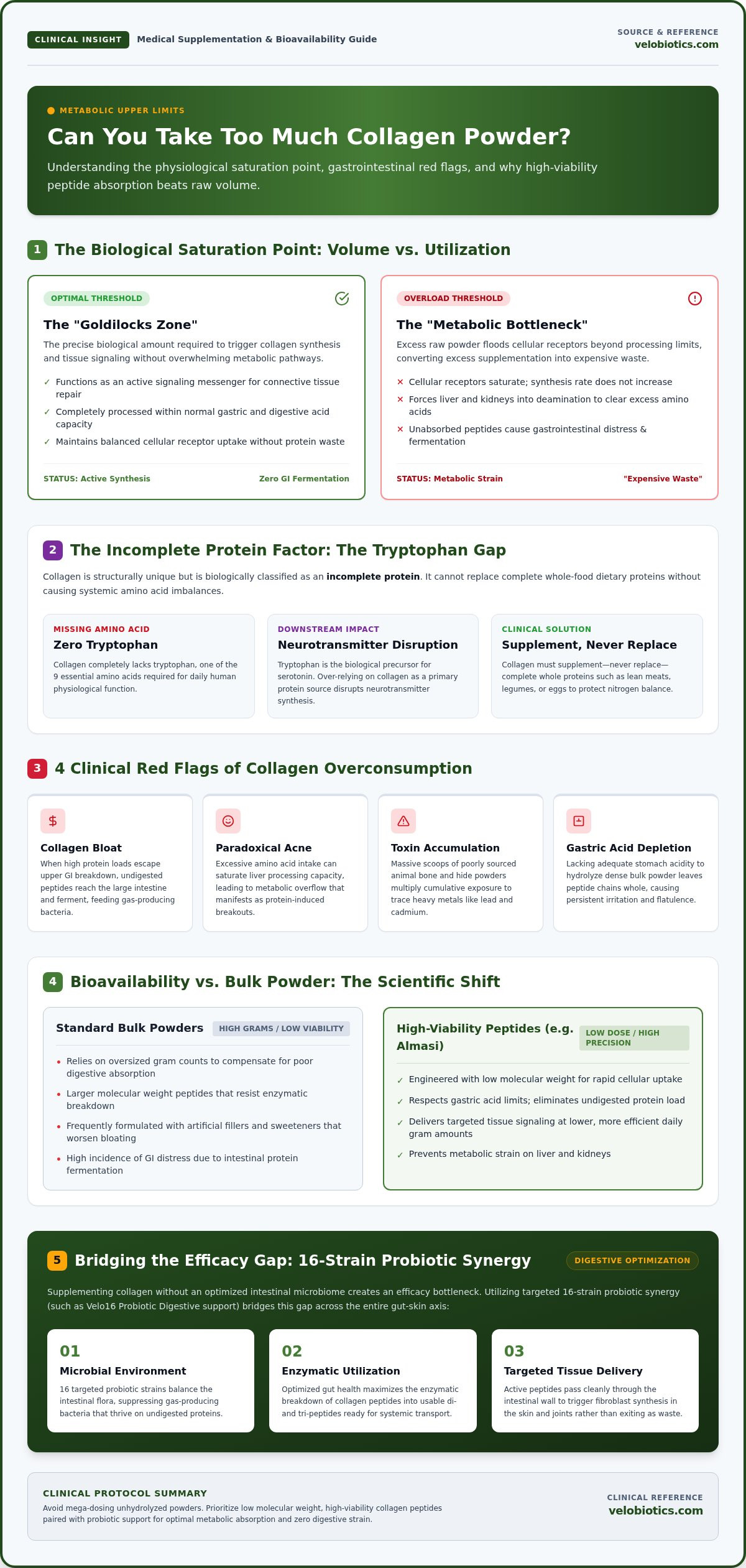
Collagen is often marketed as a cosmetic additive, yet its clinical reality is far more complex. It's the primary structural protein in the human body, providing the scaffold for our connective tissues. When we analyze collagen structure and biological function, we see it acts as a functional messenger that signals the body to repair and regenerate. However, many consumers ask can you take too much collagen powder because they confuse a lack of regulation with a lack of biological consequence. While health authorities haven't established a formal Recommended Dietary Allowance (RDA), your physiology dictates a clear saturation point where additional intake becomes redundant.
The Goldilocks Zone for collagen is the precise amount required to trigger synthesis without taxing the digestive system.
The Upper Limit of Protein Metabolism
When you consume collagen, your liver and kidneys must process the resulting amino acids. If you flood your system with excessive amounts, you reach a metabolic ceiling. This doesn't accelerate skin or hair growth. Instead, it forces the body to deaminate the excess protein, which can strain renal function over time. Maintaining a positive nitrogen balance is essential for tissue repair, but tipping the scales too far leads to metabolic waste. More powder doesn't equal faster results because the rate of protein synthesis is limited by cellular receptors, not just the availability of raw materials.
Collagen vs. Complete Proteins
Because it lacks tryptophan, one of the nine essential amino acids, collagen is classified as an incomplete protein. If you replace a significant portion of your dietary protein with collagen, you risk an imbalanced amino acid profile. This imbalance can disrupt the synthesis of neurotransmitters like serotonin, which requires tryptophan as a precursor. To avoid these risks, collagen should supplement, not replace, whole-food protein sources like lean meats, legumes, or eggs. When patients ask can you take too much collagen powder, the answer lies in the specific amino acid ratios required for health. Ensuring your gut can actually utilize these proteins is the key to solving the efficacy gap, often requiring specialized support like Velo16 Probiotic Digestive Capsules to optimize the internal environment.
The Side Effects of Excessive Collagen: What Happens to Your Body?
While collagen is benign at standard doses, exceeding your body's biological threshold leads to specific physiological pushback. When patients ask can you take too much collagen powder, they are often already experiencing "collagen bloat." This digestive distress occurs when undigested protein reaches the large intestine and begins to ferment, feeding gas-producing bacteria. According to Harvard's evidence-based review of collagen supplements, the source and processing of the peptides significantly impact how the body tolerates high protein loads. Excessive intake can also lead to paradoxical skin breakouts; when the liver is saturated with amino acids, the metabolic overflow can manifest as protein-induced acne.
High-volume consumption of low-quality powders introduces an additional risk: cumulative toxin exposure. Because collagen is derived from animal bones and hides, poorly sourced products can contain trace heavy metals like lead or cadmium. Taking multiple large scoops daily increases the concentration of these contaminants in your system, potentially leading to long-term health complications that outweigh any aesthetic benefits.
Gastrointestinal Red Flags
Distinguishing between a temporary adjustment and genuine overconsumption is vital for gut health. If bloating or flatulence persists beyond the first few days of use, you have likely exceeded your metabolic capacity. Many commercial powders contain hidden fillers or artificial sweeteners that exacerbate these symptoms. Your stomach acid is the first line of defense; if you lack sufficient acidity to break down large protein doses, the peptides remain intact and cause irritation. To avoid this, focusing on a high-viability option like Almasi Collagen Powder allows for lower, more effective dosing that respects your digestive limits.
Kidney Health and High Protein
Concerns regarding kidney stones are often exaggerated for healthy individuals, yet those with pre-existing renal conditions must exercise caution. High protein loads increase the workload on the kidneys to filter nitrogenous waste. Hydration is your most essential partner here. Water acts as the primary solvent that helps your kidneys process supplemental amino acids efficiently. If you don't increase your fluid intake alongside your collagen regimen, you risk concentrated urine and metabolic strain. A disciplined approach to dosing ensures structural support without compromising renal filtration.
Bioavailability vs. Bulk: Why More Powder Doesn't Mean More Results
The industry standard of 20g servings often fails to account for the "bioavailability ceiling." This is the physiological point where your intestinal transport proteins become saturated, leaving the excess peptides to linger in the digestive tract. If you're wondering can you take too much collagen powder, consider the Efficacy Gap. This metric describes the discrepancy between the volume of powder consumed and the actual amino acids that reach systemic circulation. A low-quality, large-dose supplement might only offer 30% absorption, rendering the remaining 70% as metabolic waste.
Large protein chains create "traffic jams" at the gut lining. Because the body can only transport a finite number of peptides across the epithelial barrier at once, bulk dosing without high-viability processing is counterproductive. When people ask can you take too much collagen powder, they're usually looking for a volume answer, but the clinical reality is found in the peptide size. The Velobiotics philosophy shifts the focus from quantity to survival. We believe the true value of a supplement is measured by what survives the acidic journey through the stomach to be utilized by the cells.
The Science of Delivery Systems
Protecting delicate amino acids requires sophisticated processing. High-heat extraction methods used in budget powders often denature the protein, stripping it of its bio-viability before it ever reaches your glass. We prioritize quality processing to ensure structural integrity is maintained. To further optimize this process, maintaining a healthy microbiome is essential. Integrating Velo16 Probiotics helps prime the gut environment, ensuring that the intestinal checkpoints are functioning at peak efficiency for maximum nutrient uptake.
Quality Indicators to Look For
Choosing the right collagen requires a methodical approach to purity and structure. Not all collagen serves the same purpose, and taking more of the wrong type won't yield results. Focus on these clinical markers:
- Type I vs. Type II: Match Type I to skin and hair goals, while Type II is specific to joint cartilage support.
- The 'Smell and Dissolve' Test: High-purity hydrolyzed collagen should be virtually odorless and dissolve into a clear liquid. Persistent cloudiness or a pungent scent often signals the presence of fillers or poor filtration.
- Hydrolyzed Peptides: Always look for "hydrolyzed" on the label. This process breaks the long protein chains into smaller peptides with a lower molecular weight, which bypasses the typical absorption bottlenecks in the gut.
Finding Your Ideal Dosage: A Practical Dosing Framework
Determining your personal saturation point is more of a biological calculation than a guessing game. While mass-market labels offer a generic serving size, your specific requirements depend on your body weight, metabolic activity, and age. For instance, a 50-year-old individual who's experienced a steady decline in endogenous production since their mid-20s will naturally require a higher baseline than a younger adult. When patients ask can you take too much collagen powder, the answer often lies in their activity levels; an athlete with high turnover in connective tissue can utilize more protein than a sedentary individual.
The concept of a "loading phase," which involves doubling your intake for the first week, is largely a supplement myth. Your body's transport proteins can only move a finite amount of peptides into the bloodstream at once. Instead of a single large dose, splitting your intake provides better 24-hour coverage. Taking half your daily goal in the morning and the other half in the evening prevents the metabolic "traffic jams" mentioned earlier and keeps amino acid levels stable. This steady rhythm ensures your cells have a consistent supply of raw materials for repair.
Dosing by Goal: A Quick Reference
- Skin, Hair, and Nails: A range of 2.5g to 5g daily is often sufficient. Clinical data suggests that even these smaller, consistent doses can significantly improve dermal density and hydration.
- Joint Support and Recovery: For those managing joint discomfort or high-impact training, 10g to 15g is the therapeutic sweet spot. This provides enough glycine and proline to support cartilage maintenance.
- Gut Lining Repair: Collagen acts as a biological sealant for the digestive tract. Consistent dosing helps reinforce the intestinal barrier, which is essential for nutrient absorption.
How to Listen to Your Body
We recommend the "Two-Week Test" to calibrate your regimen. Start at the lower end of your goal range and monitor your digestive response. If you don't experience the bloating or distress associated with over-supplementation, you can gradually increase your intake. Signs your dose is perfect include improved recovery times after physical exertion and a noticeable "glow" in skin texture. However, if you begin to feel lethargic or experience digestive heaviness, you may be wondering can you take too much collagen powder; this is a clear sign to scale back to a dose your liver can process more efficiently. To ensure you aren't wasting powder on poor absorption, consider switching to high-viability Almasi Probiotics Collagen Powder, which is formulated for maximum biological utilization.
Beyond the Scoop: How Probiotics Maximize Your Collagen Investment
The biological efficacy of collagen supplementation is fundamentally governed by the gut-skin axis. This bidirectional communication network means that the health of your microbiome directly influences your body's ability to synthesize and distribute structural proteins. Taking collagen without the support of beneficial bacteria is akin to pouring water into a leaky bucket; the raw materials are present, but the system's integrity is compromised. When individuals ask can you take too much collagen powder, they're often overcompensating for poor absorption by increasing volume. Instead of excessive dosing, the clinical solution lies in optimizing the internal environment so that every peptide is utilized effectively.
Velobiotics Collagen Solutions address this efficacy gap by integrating high-viability probiotics directly with hydrolyzed peptides. This synergistic approach ensures that the living components of the supplement prime the intestinal lining, reducing the risk of the undigested protein fermentation discussed in earlier sections. By focusing on delivery rather than just density, we solve the biological problem of "expensive waste" that plagues standard bulk powders.
The Synergy of 16 Probiotic Strains
A diverse microbiome is essential for proteolysis, the process of breaking down complex protein structures into usable amino acids. Our multi-strain approach utilizes 16 distinct bacterial cultures to ensure broad-spectrum gut viability. These strains act as biological catalysts, facilitating the transport of peptides across the gut barrier and into the bloodstream. As a clinical recommendation, combining your supplement regimen with fermented foods like kefir or sauerkraut can further enhance this microbial diversity, creating a robust foundation for collagen synthesis and tissue repair.
Practical Routine: The Velobiotics Way
Timing and preparation are critical to maintaining the viability of your supplement. The optimal time for consumption is typically on an empty stomach, either first thing in the morning or before sleep, to minimize interference from other dietary proteins. When preparing your dose, avoid using boiling liquids. Excessive heat can denature the enzymes and compromise the living probiotic strains. Use room temperature or lukewarm water to preserve the product's functional integrity. If you've questioned can you take too much collagen powder, shifting your focus to this integrated delivery method allows for superior results with a lower, more sustainable dose. Explore the Almasi Probiotics Collagen range for smarter dosing to experience the difference that high-viability technology makes.
Transitioning from Volume to Viability
The clinical evidence is clear: achieving optimal health isn't about the number of scoops in your glass, but the percentage of peptides that successfully cross the intestinal barrier. While you now understand that can you take too much collagen powder in terms of metabolic waste and digestive strain, the solution isn't simply taking less; it's about choosing a delivery system that works with your biology. By prioritizing gut-skin synergy and calibrated dosing, you move from "expensive waste" to measurable structural support.
To ensure your investment leads to tangible results, it's time to bridge the efficacy gap. Optimize your intake with Almasi Probiotics Collagen Powder. This doctor-formulated solution utilizes a proprietary micro-encapsulated delivery system and 16-strain probiotic synergy to maximize biological viability. You don't have to navigate complex dosing alone when you have technology designed to protect and deliver every active ingredient. Start your journey toward a more resilient, balanced version of yourself today with confidence in the science behind your routine.
Frequently Asked Questions
What happens if I take 40g of collagen powder in one day?
Consuming 40g of collagen in a single day typically exceeds the physiological saturation point for most adults. Your body reaches a metabolic ceiling where it can no longer transport peptides into the bloodstream effectively. This excess protein remains in the digestive tract, where it ferments and causes significant bloating or gas. Rather than providing faster results, these high doses simply increase the workload on your liver and kidneys to process the redundant amino acids.
Can taking too much collagen cause kidney stones?
While collagen is safe for most, taking excessive amounts may increase the risk for those prone to kidney stones. Collagen contains hydroxyproline, an amino acid that the body can convert into oxalate. High oxalate levels in the urine contribute to stone formation in susceptible individuals. If you have a history of renal issues, it's essential to maintain high hydration levels and stick to a clinically appropriate dose to ensure your kidneys process the protein efficiently.
Is it okay to take collagen every day for years?
Consistent daily supplementation is safe and often recommended to counteract the natural decline in structural protein production that occurs as we age. Long-term use doesn't typically lead to dependency or metabolic issues if the dose remains within the recommended 2.5g to 15g range. The key to longevity in your regimen is choosing high-viability peptides that support your gut-skin axis without causing the chronic digestive inflammation often associated with low-quality, bulk-fill powders.
Does collagen powder cause weight gain if you take too much?
Collagen is a lean protein source and is unlikely to cause direct weight gain at standard dosages. However, you might wonder can you take too much collagen powder if you notice changes in your physique. Excessive protein intake still contributes to your total daily caloric load. Additionally, many budget-friendly brands include maltodextrin or artificial sweeteners that can impact blood sugar and contribute to weight fluctuations over time. Pure, hydrolyzed peptides are generally weight-neutral.
Can I take collagen while pregnant or breastfeeding?
Supplementing with collagen during pregnancy or breastfeeding is generally considered safe as it provides essential amino acids like glycine for tissue repair. However, the quality of the source is paramount. You must ensure the product is free from heavy metals and synthetic contaminants that could affect fetal development. Always review the ingredient profile with your doctor to confirm that the specific formulation aligns with your clinical needs during this sensitive biological period.
How do I know if my collagen powder is high quality or just filler?
Purity and processing are the primary indicators of quality. A high-quality supplement, such as Almasi Probiotics Collagen Powder, will be hydrolyzed into low-molecular-weight peptides for superior absorption. You can test this by checking how easily the powder dissolves; it should become clear without a pungent odor. If your product remains cloudy or tastes heavily of chemicals, it likely contains fillers or has undergone high-heat processing that denatures the functional protein chains.
Should I take collagen on an empty stomach or with food?
For maximum bioavailability, we recommend taking collagen on an empty stomach. This prevents other dietary proteins from competing for the same intestinal transport systems, allowing the peptides to enter the bloodstream more efficiently. If you use a probiotic-enhanced formula, taking it before breakfast ensures the living cultures can colonize the gut without interference from heavy digestion. If you experience mild nausea, moving your dose to coincide with a small snack is a perfectly acceptable adjustment.
Can too much collagen cause constipation or diarrhea?
Gastrointestinal shifts are a common sign that you have exceeded your biological threshold. If you're asking can you take too much collagen powder, persistent diarrhea or constipation is a definitive answer. Diarrhea occurs when the osmotic balance in the gut shifts to clear unabsorbed protein. Constipation usually signals a lack of fiber or hydration to balance the increased protein intake. Reducing your dose and increasing water consumption typically resolves these issues within forty-eight hours.

Disclaimer
Information and statements regarding dietary supplements/products have not been evaluated by the Food and Drug Administration, MCC/SAHPRA, MHRA, TGA or any other drug regulatory authority and are not intended to diagnose, treat, cure, or prevent any disease. Information on this website is provided for informational purposes only and is a result of years of practice and experience by the author. This information is not intended as a substitute for the advice provided by your physician or other healthcare professional or any information contained on or in any product label or packaging. Do not use the information on this website for diagnosing or treating a health problem or disease, or prescribing medication or other treatment. Always speak with your physician or other healthcare professional before taking any medication or nutritional, herbal, or homeopathic supplement, or using any treatment for a health problem. If you have or suspect that you have a medical problem, contact your healthcare provider promptly. Do not disregard professional medical advice or delay in seeking professional advice because of something you have read on this website.