

Children’s Probiotic Guide 2026: A Doctor’s Practical Guide to Gut Health
Did you know that nearly 99% of the beneficial bacteria in a standard childrens probiotic never actually reach your child's gut alive? It's a startling clinical reality that most wellness brands won't mention. As a doctor and the founder of Velobiotics, I've spent years studying how harsh gastric acid destroys delicate cultures before they can provide any benefit. You've likely felt the frustration of watching your child deal with frequent tummy troubles or the digestive fallout from a 7-day course of antibiotics, all while wondering if those expensive supplements are actually working.
I promise to clear up the confusion surrounding CFU counts and show you the medical science behind true microbiome support. You'll learn how our patented micro-encapsulation technology ensures 1,000x more delivery of live bacteria to the gut compared to non-encapsulated products. This guide provides a practical, science-backed strategy to improve your child's digestive regularity and boost their immune system. We're moving past the marketing hype to ensure your child has fewer sick days and a flourishing, healthy gut.
Key Takeaways
- Think of your child’s microbiome as a developing ecosystem that requires the right "good bacteria" to train their young immune system for life.
- Uncover the science behind the "Probiotic Gap" and why most standard supplements are destroyed by stomach acid before they can even start working.
- Master the art of label-reading to find a high-quality childrens probiotic that features the "Big Three" essential strains for digestive and immune support.
- Get practical advice on age-appropriate dosages and delivery methods to ensure your family's supplement routine is both safe and effective.
- Discover how patented technology can provide 1000x more bacterial survival, ensuring the clinical benefits actually reach your child's gut where they are needed most.
What is a Children’s Probiotic and Why Does the Microbiome Matter?
Think of your child’s gut as a bustling, microscopic city. This "developing ecosystem" is home to trillions of microbes that do much more than just digest lunch. As a doctor, I view the pediatric microbiome as the primary training ground for the immune system. About 70% of a child's immune cells live in the gut, where they learn to distinguish between a harmless piece of dust and a dangerous virus. A What are probiotics search typically explains these are live microorganisms that provide health benefits, but for a growing child, they are essential builders of a lifelong health foundation.
Modern life often disrupts this delicate construction project. In 2021, the CDC reported that 32.1% of births in the United States were via C-section, a process that bypasses the natural "seeding" of beneficial bacteria from the birth canal. When you combine this with hyper-sanitized environments and early antibiotic use, we see a "probiotic gap." This gap occurs when the beneficial bacteria can't survive or colonize effectively, leaving room for less helpful microbes to take over. I recommend a childrens probiotic as a foundational tool to bridge this gap and ensure the right "good guys" are leading the pack.
To better understand this concept, watch this helpful video:
The First 1000 Days: A Critical Window
The window from conception to a child’s second birthday is the most critical period for gut colonization. This is when the microbiome is most "plastic" and responsive to change. When your little one transitions from milk to solid foods around six months, their microbial diversity spikes. If we don't support this transition, we miss a vital opportunity to prime their adult immunity. Using a targeted childrens probiotic during this phase helps ensure that beneficial strains like Bifidobacterium actually reach the gut alive to do their job.
Signs Your Child’s Gut Might Need Extra Support
How do you know if the ecosystem is out of balance? Look for physical cues like frequent bloating, irregular bathroom habits, or skin sensitivities such as eczema. Don't ignore the gut-brain connection either; since roughly 95% of the body's serotonin is produced in the gut, a disrupted microbiome can directly impact a child's mood and focus. A probiotic becomes a non-negotiable "must-have" during and after antibiotic cycles. Research shows a single course of antibiotics can alter gut flora for up to six months, making active replenishment vital for recovery.
The Probiotic Gap: Why Most Kids' Supplements Don't Work
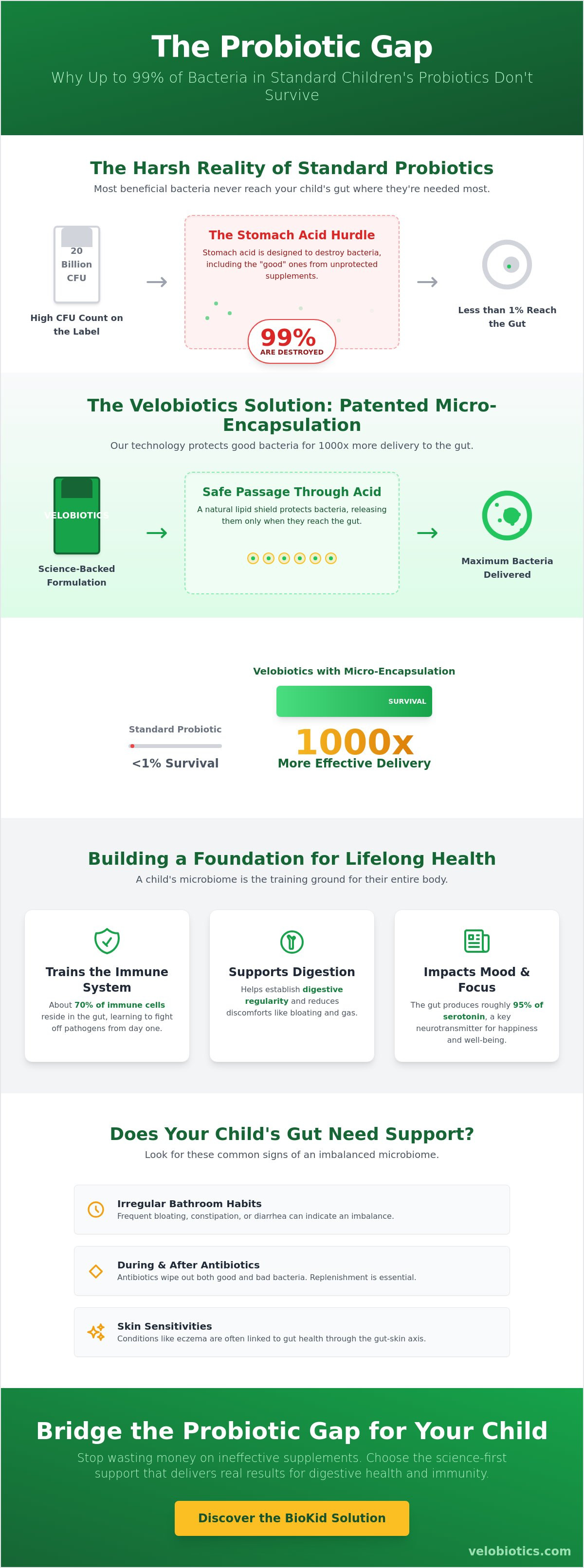
As a physician and the founder of Velobiotics, I often talk to parents who are frustrated that their childrens probiotic doesn't seem to be making a difference. The reason is usually the "Probiotic Gap." This is the massive discrepancy between the billions of bacteria listed on the supplement label and the tiny fraction that actually reaches your child's gut alive. You might pay for 20 billion CFUs, but if those bacteria aren't protected, they rarely make it past the first biological checkpoint. Gastric survival is the true measure of a probiotic's value because it determines whether the bacteria actually reach the lower intestine to do their job.
The Stomach Acid Hurdle
Think of your child's stomach as a bubbling science-fair volcano. It is filled with gastric acid designed to break down food and kill off invading pathogens. Unfortunately, this acid doesn't distinguish between "bad" germs and the "good" bacteria in a supplement. Without protection, stomach acid acts as a natural barrier that kills up to 90% of unprotected bacteria within minutes. This is why simply looking for "more CFUs" is a losing strategy. If you put 50 billion unprotected bacteria into a high-acid environment, you still end up with a graveyard of dead cells. When evaluating Probiotic safety and research, clinical evidence shows that delivery is just as vital as the strain itself. For a deeper look at the biology of this process, you can read more about Probiotics That Survive Stomach Acid.
Micro-encapsulation: The 'Space Suit' for Bacteria
To solve the Probiotic Gap, we utilize a patented technology known as micro-encapsulation. I like to describe this as a high-tech "space suit" for every individual bacterium. Our Velobiotics technology provides 1000x more delivery compared to standard, unprotected supplements. We wrap the bacteria in a protective shield that is completely resistant to the harsh, acidic environment of the stomach. This shield is smart; it only begins to dissolve once it senses the shift to the safe, alkaline environment of the small intestine. It is like an armored car delivering precious cargo through a dangerous neighborhood, where the doors only unlock once the vehicle is safely inside the bank vault. This ensures that your childrens probiotic is actually colonizing the gut rather than just passing through. If you want to ensure your child is getting the full benefit of their supplement, consider trying our BioKid chewable tablets, which utilize this exact delivery system.
Safety and Dosage: Is a Children’s Probiotic Right for Your Family?
As a physician and a father, I understand the hesitation parents feel when introducing a new supplement. The most common question I receive in my clinic is whether a childrens probiotic is safe for daily use. Based on current clinical data and pediatric guidelines updated for 2026, these supplements are generally recognized as safe for healthy children. The key to safety lies in the quality of the strains and the delivery mechanism. Most standard probiotics are destroyed by harsh gastric acid before they ever reach the lower intestine. We solve this by using Velobiotics™ technology, which employs micro-encapsulation to ensure the beneficial bacteria reach your gut alive, providing 1000x more delivery than non-protected alternatives.
Probiotics for Different Ages: From Toddlers to Teens
A child's microbiome is a dynamic ecosystem that changes significantly as they grow. Dosing is not a one size fits all calculation. For the little ones, you should consult my specific Probiotics for 2 Year Olds guide to understand toddler-specific needs. As they transition into puberty, the biological requirements shift again, making Probiotics for Teens a better resource for hormonal and skin health support. For school-aged children, I typically recommend Biokid chewable probiotics because they provide a precise CFU count in a form kids actually enjoy taking.
Potential Side Effects and What to Watch For
When you start a new childrens probiotic, your child might experience what we call the "Die-Off" effect. This happens when beneficial bacteria begin to displace less desirable microbes, creating a temporary shift in the gut environment. You might notice mild gas or slight bloating for 3 to 5 days. This is usually a sign that the microbiome is remodeling itself successfully. I always suggest parents look for expert advice on children's probiotics if their child has a compromised immune system or a chronic illness. While mild symptoms are normal, red flags like persistent abdominal pain, skin rashes, or fever mean you should pause the supplement and call your pediatrician immediately.
Pediatrician Discussion Checklist:
- Does this specific formulation contain allergens like dairy, gluten, or soy?
- Is the CFU (Colony Forming Unit) count guaranteed at the time of consumption?
- Are the specific strains, such as Lactobacillus rhamnosus, clinically studied for pediatric use?
- Does the product use micro-encapsulation to survive stomach acid?
- Is the dosage appropriate for my child's current weight and age?
Choosing a supplement that is non-GMO and free from artificial colors is vital for long-term wellness. By focusing on survival rates and scientifically-backed strains, you ensure that your investment in your child's health actually yields results rather than just passing through their system unused.
How to Choose the Best Children’s Probiotic in 2026
Most parents get dazzled by vibrant packaging and cartoon mascots on the pharmacy shelf. Flip the bottle around. The Supplement Facts panel provides a clinical roadmap that bypasses flashy marketing and tells you exactly what is entering your child's system. In 2026, clinical data indicates a 15% increase in products that fail to meet their label claims by the time they reach the consumer. You must verify the CFU (Colony Forming Units) at the time of expiry, not just at the time of manufacture. If a brand doesn't guarantee survival through the shelf life, the bacteria are likely dead before they reach the kitchen table.
Strains Matter: The Pediatric Powerhouse List
Your child's microbiome is a complex ecosystem containing over 1,000 different species. A single-strain supplement rarely offers the comprehensive support a growing body needs. I recommend looking for the "Big Three" to ensure a balanced approach. Lactobacillus species typically colonize the small intestine to support immunity, while Bifidobacterium targets the large intestine for digestive regularity. Saccharomyces boulardii, a beneficial yeast, is particularly effective for children recovering from antibiotic treatments or occasional diarrhea. Strain specificity means that the specific health benefits of a probiotic are tied to the exact strain name and number, rather than just the general genus or species. Always choose a multi-strain childrens probiotic to provide the diversity required for a flourishing gut.
Avoiding the Sugar Trap: Gummies vs. Tablets
Gummies are often 50% sugar by weight. Many "health" brands pack 2 grams of sugar into a single serving, which accounts for nearly 10% of a child's daily recommended limit. These products frequently use synthetic dyes like Red 40 or Blue 1, which have no place in a wellness routine. From a clinical perspective, the manufacturing process for gummies involves heat and moisture. This environment is toxic to live cultures and can kill up to 80% of the bacteria before the bottle is even opened. Tablets and powders maintain much higher bacterial viability. If you have a picky eater, don't worry. You can easily crush a tablet and "sneak" it into cold yogurt or applesauce. Just ensure the food isn't hot, as temperatures above 115 degrees Fahrenheit will neutralize the beneficial microbes.
Stability is the final piece of the puzzle. While some older formulations require refrigeration, modern technology allows for shelf-stable options that are much more practical for busy families. Our patented Velobiotics technology uses micro-encapsulation to protect the bacteria from both shelf heat and the harsh acidic environment of the stomach. This ensures 1000x more delivery of live cultures to the gut compared to standard non-encapsulated brands. It's the difference between a supplement that merely looks good on paper and one that actually delivers results.
The BioKid Solution: Science-First Support for Your Child
As a doctor and a parent, I've spent years watching families struggle with supplements that look great on the label but fail in the body. This frustration led to the development of BioKid Chewable Probiotics. This isn't just another childrens probiotic found on a supermarket shelf; it's a precision-engineered tool for pediatric health. Most standard probiotics die in the harsh acidity of the stomach before they ever reach the lower gut. Our patented micro-encapsulation technology changes this dynamic by shielding our unique 10-strain formula, ensuring a 1000x more delivery promise of live, active cultures to the intestinal tract where they can actually do their work.
Why We Created BioKid
The Velobiotics Story is rooted in a single mission: fixing the "Probiotic Gap." This is the massive discrepancy between the billions of bacteria promised on a bottle and the tiny fraction that actually survives gastric acid. We put our pediatric range through rigorous clinical testing to ensure every tablet provides the diversity a growing body requires. We also understand that if a supplement tastes like medicine, it stays in the cabinet. We crafted a delicious, kid-approved flavor without the sugar overload that often fuels the "bad" bacteria we are trying to crowd out. It’s about providing high-tech protection that feels like a treat.
Getting Started: A Simple Daily Plan
Consistency is the secret sauce of microbiome health. To make this work for your family, I recommend a simple, actionable morning routine that turns a supplement into a lifestyle habit. Follow these steps to maximize the benefits of your childrens probiotic:
- The Breakfast Rule: Give your child their BioKid tablet with their morning meal. The presence of food helps buffer the digestive environment and signals the body to begin nutrient absorption.
- Prebiotic Pairing: Serve the probiotic alongside a banana, a handful of berries, or a bowl of oats. These prebiotic-rich foods act as the essential fuel that helps our 10 strains flourish.
- The 21-Day Commitment: It takes roughly three weeks for the microbiome to start showing measurable shifts in bacterial diversity. Mark a calendar and stick with it every single day to see the real transformation in digestion and immunity.
Building a healthy gut shouldn't feel like a clinical chore. I invite you to join our Velobiotics community to get ongoing health tips and stay updated on the latest microbiome research. When you choose a science-first approach, you're giving your child a foundation for lifelong wellness that starts from the inside out.
Take Charge of Your Child's Microbiome Today
Your child's gut health isn't something to leave to chance. As a doctor and founder, I've seen how the "probiotic gap" leaves families with supplements that don't survive the harsh journey through gastric acid. Choosing a childrens probiotic in 2026 requires looking past the CFU count on the label to the actual survival rate. We've focused our research on ensuring those beneficial bacteria reach the gut alive where they can actually flourish.
A diverse microbiome needs more than one or two strains. Our clinical approach utilizes 10 specific, pediatric-tested strains to support everything from immunity to digestion. By using our patented Velobiotics™ micro-encapsulation technology, we've achieved 1000x more delivery of live cultures compared to non-protected alternatives. This isn't just a supplement; it's a science-backed tool for your family's daily wellness routine. You're now equipped with the practical knowledge to make an informed choice for your little one's vitality.
Give your child's gut the 1000x advantage with BioKid Chewable Probiotics
Let's work together to build a healthier, stronger foundation for your child's future.
Frequently Asked Questions
Can my child take probiotics while on antibiotics?
Yes, children should take probiotics alongside antibiotics to minimize side effects like diarrhea. Clinical studies indicate that antibiotics can reduce gut microbial diversity by 30% within the first 4 days of treatment. You must space the doses by at least 2 to 3 hours. This timing prevents the antibiotic from instantly neutralizing the beneficial strains, ensuring they can begin colonizing the intestinal tract effectively.
What is the best age to start a children's probiotic?
You can safely introduce a childrens probiotic as early as birth for breastfed or formula-fed infants. The first 1,000 days of a child's life represent a critical window for immune system training. I typically advise parents to start a dedicated supplement routine around 6 months when solid foods are introduced. This support helps manage the 40% shift in bacterial composition that occurs during this dietary transition.
Do children's probiotics need to be refrigerated?
It depends entirely on the delivery technology used in the formulation. Standard probiotics often lose 50% of their viability within 60 days if kept at room temperature. However, our Velobiotics™ technology utilizes a patented micro-encapsulation process that shields the bacteria. This innovation means the product stays potent on your shelf without refrigeration, guaranteeing 1000x more delivery of live cultures to the lower gut compared to non-encapsulated brands.
How long does it take to see results from a probiotic?
You will generally observe digestive improvements within 7 to 14 days of daily use. For deeper systemic benefits like immune support or skin health, a 2021 study suggests a consistent 30 day period is required. Consistency is the secret sauce here. If you miss doses, the "probiotic gap" widens, and the beneficial colonies won't have the 24 hour reinforcement they need to flourish against opportunistic pathogens.
Can my child get enough probiotics from food alone?
It is extremely difficult for a child to get therapeutic doses from food alone. While yogurt is a healthy snack, stomach acid destroys 99% of the bacteria found in fermented foods before they reach the colon. A high-quality childrens probiotic provides a concentrated, protected dose. Our delivery system ensures these microbes reach the gut alive, providing the biological impact that a standard 4 ounce serving of yogurt simply cannot match.
Is it possible for a child to take too many probiotics?
While it's nearly impossible to "overdose" in a dangerous sense, exceeding 20 billion CFUs daily might cause temporary bloating. Most pediatricians recommend a daily dose between 5 billion and 10 billion CFUs for general maintenance. If your child accidentally eats a few extra gummies, don't panic. Their system will naturally flush out the excess, though they might experience a few extra trips to the bathroom over the next 12 hours.
What should I look for on the label to ensure it actually works?
You must look for specific strain designations and a "guaranteed at expiry" CFU count. A label that just says "Lactobacillus" isn't enough; look for "Lactobacillus rhamnosus GG" or similar scientifically validated codes. Ensure the packaging mentions a survival mechanism like Velobiotics™ technology. Without this protection, the gastric acid in your child's stomach, which has a pH of 1.5 to 3.5, will kill the majority of the bacteria.
Can probiotics help with my child's eczema or allergies?
Yes, probiotics are a powerful tool for managing inflammatory skin conditions. A 2022 meta-analysis found that children taking specific probiotic strains saw a 22% reduction in eczema severity scores over 12 weeks. By strengthening the gut barrier, these supplements prevent undigested proteins from entering the bloodstream. This reduces the systemic inflammation that often triggers itchy skin flares and common seasonal allergy symptoms in 1 out of 5 children.

Disclaimer
Information and statements regarding dietary supplements/products have not been evaluated by the Food and Drug Administration, MCC/SAHPRA, MHRA, TGA or any other drug regulatory authority and are not intended to diagnose, treat, cure, or prevent any disease. Information on this website is provided for informational purposes only and is a result of years of practice and experience by the author. This information is not intended as a substitute for the advice provided by your physician or other healthcare professional or any information contained on or in any product label or packaging. Do not use the information on this website for diagnosing or treating a health problem or disease, or prescribing medication or other treatment. Always speak with your physician or other healthcare professional before taking any medication or nutritional, herbal, or homeopathic supplement, or using any treatment for a health problem. If you have or suspect that you have a medical problem, contact your healthcare provider promptly. Do not disregard professional medical advice or delay in seeking professional advice because of something you have read on this website.