

Children's Probiotic Gummies: A Doctor’s 2026 Comparison & Survival Guide
That bottle of children's probiotic gummies sitting on your kitchen counter might be little more than expensive candy if the bacteria inside can't survive the 2.0 pH acidity of your child's stomach. Most parents don't realize that up to 90% of the live cultures in standard supplements perish in the gastric acid gauntlet before they can ever reach the gut. As a physician and researcher, I've seen how this probiotic gap leaves kids vulnerable to frequent school-year illnesses and irregular bowel movements despite a parent's best efforts.
You probably feel the same frustration many parents do when trying to decode labels filled with complex strain names and massive CFU counts that don't seem to make a tangible difference. I promise to help you cut through the confusion and discover how to choose a supplement that truly supports your child's vitality. We're going to dive into our 2026 comparison of the leading brands and explore the patented micro-encapsulation technology that delivers 1000x more live bacteria to the gut than traditional formulations.
Key Takeaways
- Learn why the "compliance factor" makes children's probiotic gummies a parent's favorite tool and how to ensure convenience doesn't come at the cost of clinical efficacy.
- Discover why a lower CFU count with the right delivery technology is scientifically superior to high-dose supplements that lack protection against harsh gastric acid.
- Uncover the "Probiotic Gap" and the biological reasons why most standard gummies fail to reach your child’s gut alive.
- Get a doctor’s guide on choosing between gummies and chewables based on your child’s developmental stage to maximize safety and nutrient absorption.
- Master the "Survival-First" checklist to identify supplements that combine high-quality strains with patented technology while avoiding hidden sugar traps.
The Great Gummy Debate: Why Parents (and Kids) Love Them
I've spent years in clinical practice watching parents struggle to get their kids to take anything that doesn't taste like a treat. Children's probiotic gummies solved this overnight. They've transitioned from a niche health food store item to a staple in the 2026 pediatric nutrition toolkit. These supplements are essentially chewable delivery vehicles designed to introduce beneficial bacteria into a child's digestive tract. Parents typically reach for them when daycare germs start circulating, during antibiotic recovery, or when "tummy troubles" become a daily complaint. As a doctor and founder, I love the convenience, but I started looking closer at the labels because not all gummies are created equal.
To better understand this concept, watch this helpful video:
The Rise of the 'Microbiome Generation'
We're currently raising what I call the Microbiome Generation. Between 2010 and 2024, our clinical understanding of early childhood gut health exploded. We now know that roughly 70% of a child's immune system is located in the gut. Modern diets high in processed sugars and overly sanitized environments can limit the diversity of these essential microbes. Research on Probiotics in children suggests that maintaining a healthy balance of flora can be a game-changer for school-aged kids facing constant exposure to pathogens. A daily "top-up" of good bacteria helps ensure their internal ecosystem stays resilient against common stressors.
Gummies vs. The World: A Convenience Comparison
When you compare children's probiotic gummies to traditional delivery methods, the winner is clear for most families. Powders often clump or change the taste of juice. Drops are easily spat out by toddlers. Capsules represent a genuine choking hazard for children under age eight. Gummies turn a medical chore into a reward, which is vital for long-term health.
- Psychological Benefit: Making health "fun" reduces the stress of the morning routine.
- Portability: No refrigeration is required for most modern gummy formulations.
- The Compliance Gap: This is the distance between a supplement a doctor prescribes and the one a child actually swallows without a fight.
However, as a scientist, I have one major concern: survival. Most standard children's probiotic gummies use unprotected bacteria that die the moment they hit harsh gastric acid. This is why I focused our research on Velobiotics technology. If you want the benefits of a gummy but the clinical power of a medical-grade supplement, you need a system that ensures those bacteria reach the gut alive. For parents who want that extra layer of protection, our Biokid tablets utilize micro-encapsulation to provide 1000x more delivery than standard, unprotected alternatives.
The Science of Selection: 4 Metrics to Compare Probiotic Gummies
When you're standing in the supplement aisle, the bright colors and "50 Billion CFU" labels are designed to grab your attention. As a doctor and researcher, I've learned to look past the marketing. You need to flip the bottle and read the supplement facts panel like a clinical trial report. Understanding what the science says about probiotics helps you realize that more isn't always better; it's about what actually survives the journey through the digestive tract.
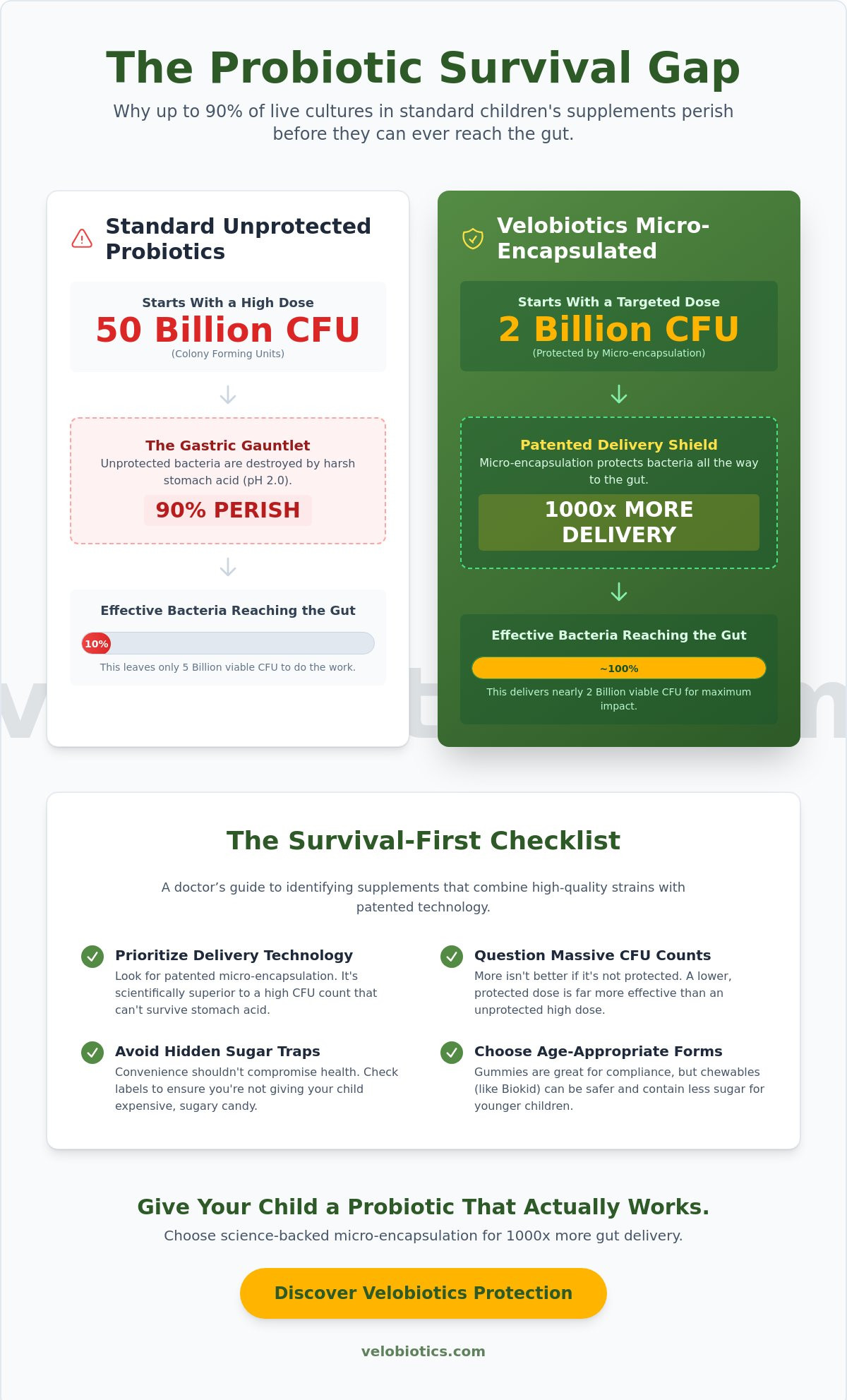
The CFU (Colony Forming Units) count is the most misunderstood metric in the industry. A label claiming 50 billion CFU sounds superior, but if those bacteria are unprotected, 99 percent of them perish in the harsh gastric acid of the stomach before they reach the lower intestine. A targeted dose of 2 billion, when protected by patented micro-encapsulation, provides 1000x more delivery to the gut. This ensures the bacteria reach your gut alive, which is the only way they can provide a tangible health benefit for your child.
The sugar trap is the next hurdle for parents. Many children's probiotic gummies use glucose syrup or cane sugar as their primary ingredient. This is counterproductive. Sugar feeds pathogenic bacteria and yeast like Candida, which can crowd out the beneficial strains you're trying to introduce. I recommend looking for options that use natural fruit flavors and minimal sweeteners to ensure you aren't feeding the "bad" bugs while trying to support the "good" ones.
Specific Strains for Specific Problems
Diversity matters, but specificity is king. The power-duo for kids is Lactobacillus and Bifidobacterium. However, you should look for clinically studied strain designations like L. rhamnosus GG for immune support or B. lactis for digestive regularity. Research from 2023 indicates that specific strains can reduce the duration of occasional respiratory symptoms by up to 48 hours. Ensure the formula includes a prebiotic, such as Inulin, which acts as the essential "food" that allows these strains to flourish once they arrive.
The Additives Checklist: What to Avoid
Cheap manufacturing often relies on artificial dyes like Red 40 or Yellow 5 to make gummies look like candy. These additives have no place in a clinical-grade supplement. Additionally, many brands use gelatin, which is problematic for vegan families or children with specific allergies. I suggest looking for pectin-based options. Pectin is derived from citrus peels, offers better heat stability in warm climates, and ensures the product is inclusive for all dietary needs. If you want a formula that prioritizes survival over marketing fluff, you might consider our BioKid chewable probiotics which utilize our unique protection technology to bypass stomach acid effectively.
The 'Survival Gap': Why Most Gummies Never Reach the Gut
As a doctor, I often explain to parents that the human stomach is a highly efficient biological incinerator. It produces hydrochloric acid specifically designed to break down food and neutralize dangerous pathogens before they can cause harm. Unfortunately, this acidic bath doesn't distinguish between "bad" bacteria and the "good" ones found in most children's probiotic gummies. Most standard gummies are formulated with naked bacteria that perish within minutes of hitting a child's stomach pH, which typically ranges from 1.5 to 3.5. If the bacteria don't survive the journey through the stomach, they can't colonize the gut or provide any health benefits.
Then we have the manufacturing issue. Probiotics are living organisms that are incredibly sensitive to heat and moisture. During the gummy-making process, ingredients are often heated to temperatures exceeding 100 degrees Celsius to achieve that chewy texture. This environment is inherently "anti-probiotic." This creates what I call the "Probiotic Gap." It's the massive difference between the Colony Forming Units (CFU) measured at the time of manufacture and the actual number of live bacteria present when your child actually chews the gummy months later. According to an expert opinion on probiotics for children, the lack of strict regulation in the supplement industry means parents must be extra vigilant about what they're actually buying for their kids.
Survival is the only metric that truly matters for gut health. If a bottle claims 50 billion CFUs but 99% of them are dead by the time they reach the small intestine, that supplement has failed its primary mission. We need to stop looking at the total number on the label and start asking how many of those organisms are actually equipped to reach the gut alive.
1000x More Delivery: The Velobiotics Difference
We solved the survival problem using a patented micro-encapsulation technology. Think of it as a tiny, high-tech "protective shield" that wraps around every single probiotic strain. In simple terms, we've created a microscopic suit of armor that protects the bacteria from the harsh acids of the stomach. This ensures that the probiotics stay dormant and safe until they reach the alkaline environment of the lower gut, where they are actually needed to flourish. Our technology provides 1000x more delivery of live cultures compared to non-encapsulated brands. For a deep dive into the clinical evidence, you can read more about Probiotics That Survive Stomach Acid and why delivery systems are the future of microbiome health.
The 'Dead Bacteria' Problem
Taking a supplement filled with dead bacteria is essentially just giving your child an expensive piece of candy. When probiotics die due to poor shelf-stability or stomach acid, they lose their ability to interact with the immune system or balance the microbiome. If a brand hasn't specifically tested their product for gastric survival, you're likely just paying for sugar and flavorings. You can tell a brand is serious if they provide data on shelf-stability at room temperature and third-party verification of live counts at the time of consumption. If you want to ensure your child is getting real results, I recommend looking at options like our Biokid Chewable Probiotics, which utilize our core survival technology.
A probiotic's value is measured not by what you swallow, but by what reaches the gut alive.
Gummies vs. Chewables: Which Is Right for Your Child's Age?
As a doctor, I see parents agonize over the supplement aisle. Should you pick the brightly colored children's probiotic gummies or the solid-looking tablet? It isn't just about flavor; it's about developmental readiness and therapeutic efficacy. While gummies are easy to chew, they often lack the structural integrity to protect delicate bacteria from stomach acid. Most gummy manufacturing involves high heat, which can kill off live cultures before they even reach the bottle. In contrast, high-quality chewables are often cold-pressed, preserving the 1000x more delivery system we prioritize to ensure bacteria reach the gut alive.
Safety is my first priority. The American Academy of Pediatrics notes that choking is a leading cause of injury in children under age 4. If your child hasn't mastered the "molars grind," they aren't ready for a firm gummy. Beyond safety, there's the "probiotic gap." This is the difference between the CFU count listed on the label and what survives the journey to the large intestine. Chewable tablets generally pack a more powerful probiotic punch because they don't require the same binders and sugars that dilute the potency of children's probiotic gummies.
The Toddler Phase (Ages 1-3)
Ages 1 to 3 are about planting the "gut garden." At this stage, your child's microbiome is still forming its permanent resident profile. For these little ones, safety means avoiding anything too rubbery or sticky. Liquid drops or soft-melt options are often better than traditional gummies. You can find more specific clinical advice in our guide to Probiotics for 2 Year Olds. Establishing a healthy bacterial balance now helps train the developing immune system to distinguish between friend and foe.
The School-Age Phase (Ages 4-12)
By age 4, kids enter the "germ swap" of daycare and school. This is when nutrient density matters most. Picky eaters might prefer the candy-like taste of gummies, but adventurous older children can handle the sophisticated profile of a tablet. This is the prime age for introducing high-survival formulas. Transitioning to BioKid chewable probiotics ensures your child gets a clinical-grade dose that survives the stomach's acidic environment. To make it a habit, tie the supplement to a "morning anchor" like brushing teeth or eating breakfast.
The Doctor's Verdict: Making the Best Choice for Your Family
I've spent years analyzing clinical data and treating young patients. The most frequent mistake I see parents make with children's probiotic gummies is assuming every brand offers the same protection. It's a misconception that can lead to wasted money and missed health opportunities. If those beneficial bacteria can't survive the harsh, acidic environment of the stomach, they won't do anything for your child's microbiome. My "Survival-First" approach focuses on getting the right strains to the right place, alive and ready to work.
To ensure you're choosing a winner, use this final checklist before your next purchase:
- Survival Technology: Ensure the product uses micro-encapsulation to protect the bacteria from gastric acid.
- Strain Diversity: Look for a blend of at least 10 clinically studied strains rather than just one or two.
- CFU Count: Verify the count is guaranteed at the time of consumption, not just at the date of manufacture.
- Sugar Content: Avoid products where glucose syrup or sucrose are the primary ingredients.
Monitoring your child's progress is straightforward. Within the first 14 days of consistent use, you should notice more regular digestion and fewer complaints of tummy discomfort. Over time, look for more consistent energy levels and a reduction in missed school days. A healthy gut is the foundation of a resilient immune system, and when the microbiome flourishes, the whole body benefits.
Why We Created BioKid
I refused to settle for standard children's probiotic gummies that were essentially candy in disguise. As a doctor and a parent, I wanted a supplement that actually delivered on its promises. We formulated BioKid with a robust 10-strain blend and our patented Velobiotics technology. This innovation provides 1000x more delivery than non-encapsulated competitors, ensuring the probiotics reach the gut alive. You can explore our science-backed mission by reading The Velobiotics Story.
Actionable Next Steps for Parents
Check your current supplement's label for the "Sugar Trap" right now. If sugar or corn syrup is one of the top three ingredients, it's likely doing more harm than good. I recommend you consult with your pediatrician about your child's specific gut health needs, especially if they have chronic digestive issues. Once you have those answers, it's time to choose a professional-grade solution. You can upgrade your child's gut health with BioKid today and see the difference that clinical-grade technology makes.
Give Your Child the Gut Protection They Actually Deserve
As a doctor and a founder, I've spent years researching how to make clinical science work for busy families. While children's probiotic gummies offer convenience, my research shows they often fail the survival test. Most bacteria in standard gummies die in the harsh environment of the stomach long before they reach the lower gut. This "survival gap" means your child isn't getting the benefits you're paying for. It's a fundamental problem that most wellness brands simply ignore.
I developed our system to solve this specific biological hurdle. We use patented Velobiotics™ technology to provide 1000x better delivery of live cultures to the microbiome. Our BioKid formula features a 10-strain clinically studied probiotic blend that's scientifically formulated to support a developing immune system. You don't have to choose between a supplement your child likes and one that actually works. By focusing on micro-encapsulation, we ensure those beneficial bacteria reach their destination alive and ready to protect. It's time to move past the gummy hype and choose a solution rooted in empirical evidence.
Switch to BioKid: The High-Survival Probiotic Your Child Actually Needs
Your journey toward better family wellness starts with smart, science-backed choices that help your little ones flourish every day.
Frequently Asked Questions
Do children's probiotic gummies actually work for immune support?
Yes, children's probiotic gummies are effective because approximately 70 percent of a child's immune system is located within the gut. These beneficial bacteria interact with lymphoid tissue to prime the body's natural defenses against pathogens. By maintaining a healthy microbial balance, you're giving your child a 24/7 internal security team. This proactive approach helps reduce the duration of common respiratory issues by an average of 2 days.
What is the best age to start giving my child probiotic gummies?
Children can typically start taking probiotic gummies once they reach 2 or 3 years of age. This milestone is vital because it ensures they have the motor skills to chew thoroughly and avoid choking hazards. Always check the specific product label, as 90 percent of brands formulate their dosage for the 3 plus age group. It's a practical way to transition from infant drops to a more "grown-up" supplement routine.
Can my child take a probiotic gummy every day?
Your child can certainly take a probiotic gummy every day to ensure consistent colonisation of the gut. Consistency is the secret sauce in microbiome health. When you skip doses, the "good guys" don't have the numbers to keep the "bad guys" in check. Using children's probiotic gummies daily provides a steady stream of reinforcements to help their digestive system flourish and stay resilient against daily stressors.
How many CFUs should a children's probiotic have?
A high-quality children's probiotic should contain between 1 billion and 10 billion CFUs (Colony Forming Units). However, the raw number matters less than the survival rate. Most standard gummies lose 90 percent of their potency in the stomach's harsh acidic environment. Our Velobiotics technology uses micro-encapsulation to ensure these billions of bacteria actually reach the gut alive, providing 1000x more delivery than unprotected alternatives.
Are there any side effects to children's probiotic gummies?
Minor digestive adjustments like gas or bloating are the most common side effects, usually resolving within 72 hours. These symptoms occur because the microbiome is undergoing a "rebalancing" phase. If symptoms persist beyond 4 days, it's a good idea to halve the dose for a week. Less than 5 percent of children experience these initial hiccups, and they're usually a positive sign that the probiotics are starting to work.
What is the difference between a gummy and a chewable probiotic tablet?
The primary difference lies in the delivery matrix and the manufacturing process used to stabilize the live cultures. Gummies are often more palatable for picky eaters, but they traditionally struggle with bacterial stability. Chewable tablets might offer higher strain diversity, but they often lack advanced protection. We've solved this "probiotic gap" by using micro-encapsulation to ensure our gummies protect the delicate cargo from gastric acid better than standard tablets.
Do I need to refrigerate my kid's probiotic gummies?
You generally don't need to refrigerate gummies if they utilize shelf-stable technology or micro-encapsulation. Most modern products are designed to remain potent at room temperatures up to 25 degrees Celsius. Just keep the bottle in a cool, dry cupboard away from direct sunlight. High heat above 30 degrees Celsius can degrade the bacteria, so avoid leaving them in a hot car after shopping.
Can probiotics help my child with antibiotic-associated diarrhea?
Probiotics are highly effective for this, with research showing they can reduce the risk of antibiotic-associated diarrhea by nearly 52 percent. Antibiotics act like a wildfire, clearing out both good and bad bacteria indiscriminately. Introducing children's probiotic gummies during and after the antibiotic course helps replant the "forest." For the best results, wait 2 to 3 hours after the antibiotic dose before giving the probiotic to ensure the bacteria survive.

Disclaimer
Information and statements regarding dietary supplements/products have not been evaluated by the Food and Drug Administration, MCC/SAHPRA, MHRA, TGA or any other drug regulatory authority and are not intended to diagnose, treat, cure, or prevent any disease. Information on this website is provided for informational purposes only and is a result of years of practice and experience by the author. This information is not intended as a substitute for the advice provided by your physician or other healthcare professional or any information contained on or in any product label or packaging. Do not use the information on this website for diagnosing or treating a health problem or disease, or prescribing medication or other treatment. Always speak with your physician or other healthcare professional before taking any medication or nutritional, herbal, or homeopathic supplement, or using any treatment for a health problem. If you have or suspect that you have a medical problem, contact your healthcare provider promptly. Do not disregard professional medical advice or delay in seeking professional advice because of something you have read on this website.