

Natural Ways to Reduce Feminine Odor: A Doctor’s Guide to Lasting Freshness in 2026
Did you know that nearly 30% of women in the United States currently experience bacterial vaginosis, yet a staggering 84% of them report no symptoms other than a subtle change in scent? It's incredibly common to feel a rush of embarrassment or worry that a new smell indicates a serious health crisis. You've likely seen endless home remedies online that leave you more confused than when you started. It's frustrating to feel like you can't trust your own body, especially when you're just looking for reliable, natural ways to reduce feminine odor without resorting to harsh chemicals or unnecessary antibiotics.
I've spent my career as a physician studying the delicate vaginal microbiome, and I'm here to promise you that lasting freshness isn't about masking smells; it's about clinical balance. In this guide, I'll demystify the science behind your body's natural signaling system and give you the practical, doctor-approved strategies you need to reclaim your confidence. We'll explore the latest 2026 research on bacterial strains and outline a simple daily routine that keeps your internal environment thriving and your mind at ease. Your body knows how to regulate itself. I'm just here to show you how to support that process naturally.
Key Takeaways
- Learn how to distinguish a healthy, tangy scent from signs of an underlying infection so you can stop worrying and start understanding your body's natural signals.
- Discover the most effective natural ways to reduce feminine odor by supporting the protective Lactobacillus bacteria that keep your pH at a healthy, acidic level.
- Find out why popular "home remedies" like douching with vinegar or yogurt are clinical nightmares that often lead to more frequent health issues.
- Master a simple daily hygiene protocol that prioritizes breathable fabrics and a "water-only" rule to protect your delicate internal ecosystem.
- Explore why micro-encapsulated probiotics and pH-correcting boric acid are considered the gold standard for restoring biological balance and ensuring lasting freshness.
Understanding Vaginal Scent: What is Normal vs. Abnormal?
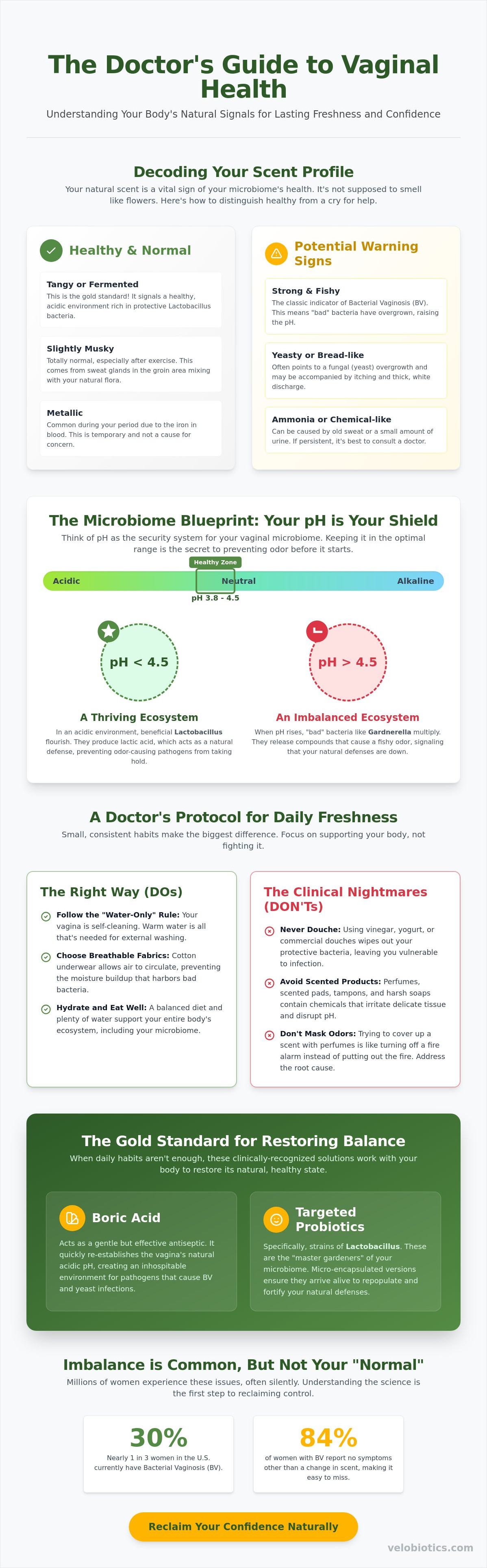
As a doctor, the first thing I tell my patients is that your vagina is not a flower, and that's actually a very good thing. If it smelled like roses or lavender, I'd be clinically concerned. A healthy vaginal microbiome is a complex, living ecosystem that produces its own distinct, natural aroma. Typically, a healthy scent profile is tangy, fermented, or slightly musky. This is largely due to the presence of beneficial bacteria that produce lactic acid to keep the environment protected. Understanding these nuances is the first step toward identifying effective natural ways to reduce feminine odor without disrupting your body's delicate chemistry.
To better understand this concept, watch this helpful video:
While a mild scent is normal, certain "red flag" odors indicate a shift in your internal biological balance. A strong, fishy smell is often a classic indicator of Bacterial Vaginosis (BV). A yeasty, bread-like scent usually points to a fungal overgrowth. You might also notice an ammonia-like odor, which can happen when sweat reacts with skin bacteria or if there's a slight urine leak. Abnormal odor is a persistent, strong scent that deviates from your baseline and is often accompanied by changes in discharge texture or color.
The "Why" Behind the Smell
Your natural aroma isn't static. It's a biological mirror of your lifestyle and internal cycles. Hormones play a massive role, especially during ovulation when discharge naturally increases. Sweat from the apocrine glands in the groin also contributes to a muskier scent when it interacts with surface bacteria. Even your diet matters. That extra garlic pasta or a spicy curry can temporarily alter your scent as compounds are excreted through your skin and fluids. During your period, a metallic "period smell" is common due to the iron content in blood. These are usually transient shifts rather than signs of a deep-seated problem.
When to Put Down the Home Remedies and Call a Pro
It's vital to know when "natural" needs to step aside for professional intervention. If your odor comes with intense itching, burning during urination, or a fever, it's time to call a healthcare provider. Many people try to "mask" scents with scented tampons or vaginal perfumes, but these often trigger a severe inflammatory response that makes the problem worse. There's a big difference between a transient odor after a workout and chronic BV, which affects about 29% of women in the U.S. and often requires targeted support like pH-correcting suppositories to restore the ecosystem properly. Finding natural ways to reduce feminine odor should always prioritize long-term health over a quick, temporary fix.
The Microbiome Blueprint: How pH Balance Prevents Odor
Imagine your vaginal environment as a carefully curated garden. In this biological ecosystem, a specific group of bacteria called Lactobacillus acts as the master gardener. These microbes are essential for maintaining a healthy pH level, which should ideally sit between 3.8 and 4.5. This acidic environment is your primary defense mechanism. When your pH remains in this range, it creates a hostile territory for pathogens. However, when the balance shifts, "bad" bacteria like Gardnerella vaginalis begin to thrive. These organisms produce volatile amines, which are the chemical compounds responsible for the pungent, fishy aroma often associated with common causes of vaginal odor. Understanding this biological blueprint is key to finding effective natural ways to reduce feminine odor.
Several factors can disrupt this delicate acidity. Antibiotics are a major culprit because they don't discriminate between good and bad bacteria; they simply clear the field. Semen is also highly alkaline, with a pH usually between 7.1 and 8, which can temporarily neutralize your natural protection. Hormonal shifts during pregnancy, menstruation, or menopause also alter the environment, making it easier for unwanted bacteria to take up residence and produce unwanted scents.
The Lactic Acid Defense System
Your "good" bacteria are tiny chemical factories. They take glycogen from your vaginal cells and convert it into lactic acid. This process ensures the environment stays acidic enough to inhibit the growth of harmful microbes. If your pH rises even slightly, it's like leaving the front door to your home wide open for unwanted guests. This shift is the fundamental cause of most odor issues. To restore this defense, many women find that using targeted probiotic suppositories helps replenish these essential Lactobacillus strains while providing the necessary pH correction. Focusing on these internal mechanisms is one of the most reliable natural ways to reduce feminine odor.
The Biofilm Challenge
You might wonder why some odors persist even after you've tried "cleansing" or using external products. The answer lies in biofilms. These are sticky, protective layers that "bad" bacteria build around themselves to hide from your immune system and standard treatments. Standard washing only touches the surface; it cannot penetrate these microscopic fortresses. This is why a biological approach is necessary. Breaking down a biofilm requires specific natural agents, such as boric acid, that disrupt the bacterial "glue" without harming your healthy flora. By addressing the root cause rather than just the surface symptoms, you can achieve a level of freshness that external soaps simply can't provide.
Natural Remedies for Feminine Odor: Kitchen Cures vs. Clinical Solutions
When patients search for natural ways to reduce feminine odor, they often end up in their kitchen pantry. It's a logical instinct to seek out "pure" ingredients, but the internet's favorite "classics" often do more harm than good. Take Apple Cider Vinegar (ACV) baths, for instance. While ACV is acidic, soaking in it can cause vulvar dermatitis, a painful irritation of the external skin. Similarly, using garlic cloves or tea tree oil as "natural antibiotics" is clinically risky. These substances are far too potent for the delicate vaginal mucosa and can lead to chemical burns or severe allergic reactions that worsen the very inflammation you're trying to fix.
The most dangerous trend I see in my clinic is "DIY" douching. Attempting to "wash" the inside of your body with vinegar or, worse, inserting yogurt to replenish bacteria, is a clinical nightmare. Your vagina is a self-cleaning organ, and forcing external liquids inside disrupts the fluid dynamics that flush out waste. Yogurt simply doesn't contain the concentration of human-specific bacterial strains needed to colonize the vaginal walls. Instead of these kitchen experiments, we should look toward "natural medical grade" solutions. Boric Acid is a naturally occurring mineral that acts as a powerful pH reset for the vaginal environment.
Boric Acid: The Natural Reset Button
Boric acid has been a staple in gynecological practice for over a century, specifically for managing recalcitrant odor and recurrent imbalances. It works by acidifying the environment and, more importantly, disrupting the bacterial biofilms we discussed earlier. Unlike traditional antibiotics that kill everything in sight, boric acid creates a hospitable landscape for your native flora to return. However, safety is paramount. You must use it as a vaginal suppository, such as Femina COOKIE FRESH, and it must NEVER be ingested orally. When used correctly, it's one of the most effective natural ways to reduce feminine odor by addressing the root chemical imbalance.
Oral vs. Vaginal Probiotics
Many women believe that eating more Greek yogurt will solve their odor issues, but the math doesn't work out. Most food-based probiotics contain strains designed for gut health, not vaginal health. To truly influence your intimate scent, you need specific strains like Lactobacillus rhamnosus and Lactobacillus reuteri. These specific microbes have a unique ability to migrate from the digestive tract to the vaginal area or can be applied directly via suppositories. For those seeking long-term maintenance, using Femina™ Probiotic Capsules with Cranberry provides a clinically targeted dose of the right bacteria. Following professional prevention tips means choosing science-backed supplements over kitchen-table remedies every time.
A Doctor’s Protocol: Daily Habits to Maintain Freshness Naturally
Maintaining a balanced microbiome isn't just about what you do when things go wrong; it's about the small, daily decisions that protect your internal chemistry. My first rule of hygiene is simple. Use water only for the vulva and absolutely nothing for the vagina. Your vagina is a self-cleaning masterpiece that manages its own waste through discharge. Introducing soaps inside disrupts the flow and invites the very odor you're trying to avoid. When you're looking for natural ways to reduce feminine odor, start by letting your body do its job without interference.
Airflow is your next best friend. I frequently recommend "breathable biology" to my patients. This means choosing 100% cotton underwear and, whenever possible, sleeping naked. Synthetic fabrics like polyester trap moisture and heat, creating a literal greenhouse for bacteria. By allowing the skin to breathe, you prevent the buildup of sweat and moisture that can shift your pH. Think of it as a medical prescription for your wardrobe.
Life happens, and activities like sex or intense exercise will temporarily shift your environment. Semen is alkaline, and sweat can change the surface acidity of your skin. After these activities, a simple "flush" with plain water on the external areas is often enough. If you're prone to recurring shifts after intimacy, it might be time to look at more targeted pH support to help your body bounce back faster.
Choosing the Right Cleansers
The marketing for "feminine washes" is often misleading. Most of these products contain fragrances and harsh surfactants that strip away your protective oils. If a product suds up like a bubble bath, keep it away from your "cookie." If you must use a cleanser, look for labels that are fragrance-free, pH-balanced, and glycerin-free. Glycerin is a sugar-based compound that can actually feed yeast, leading to more scent issues down the road. Stick to the basics to keep your flora happy.
The Role of Hydration and Diet
What you put in your mouth eventually affects what happens below the belt. Chronic dehydration concentrates your urine and vaginal secretions, making any natural scent much more pronounced. Drinking enough water ensures your fluids remain dilute and healthy. Diet is equally critical. High sugar intake provides a feast for yeast and "bad" bacteria, which produce their own distinct, often unpleasant, odors. Focus on a low-sugar diet and incorporate probiotic-rich foods like kimchi or sauerkraut to support the gut-vagina axis. For a more direct approach to bacterial replenishment, consider adding Femina™ Probiotic Capsules with Cranberry to your daily routine to ensure your "good" bacteria have the reinforcements they need.
Restoring the Balance: Why Targeted Probiotics and Boric Acid are the Gold Standard
After navigating the science of the vaginal microbiome, the path to lasting freshness becomes clear. It's not about scrubbing away your body's natural state, but rather restoring a biological equilibrium. I call this the "Cookie Fresh" philosophy. This approach combines immediate pH correction with long-term bacterial replenishment. When you're looking for natural ways to reduce feminine odor, you can't just address one side of the equation. You need a strategy that removes the odor-producing pathogens while simultaneously seeding the area with protective Lactobacillus strains.
This is where the "1-2 punch" comes into play. Think of Boric Acid as the cleanup crew. It breaks down those stubborn biofilms we discussed earlier and drops the pH back into the acidic range. However, clearing the field isn't enough. You must follow up by "seeding" the environment with beneficial bacteria. Without this second step, the "bad" bacteria often return the moment you stop treatment. A 7-day reset using this dual approach is the most effective way to reclaim your confidence and stop the cycle of recurring imbalances.
The Velobiotics Difference: Survival is Everything
The biggest flaw in most probiotic supplements is that the bacteria are often dead before they even reach you. Standard products lose potency on the shelf or get destroyed by environmental factors. We solve this through proprietary micro-encapsulation technology. This process acts like a protective shield, ensuring our formulas deliver 1000x more CFUs (Colony Forming Units) to the target site compared to standard market offerings. You can read more about probiotics that survive stomach acid to understand why biological viability is the only metric that truly matters for your health. If the bacteria don't survive, they can't help you.
Getting Started with Femina Cookie Fresh
If you're ready for immediate relief, I recommend starting with Femina Probiotic COOKIE FRESH Suppositories. This formula specifically targets the chemical imbalances that cause unwanted scents. During the first 24 to 48 hours, it's completely normal to experience some watery discharge as the suppository dissolves and the cleanup process begins. This is a sign that the pH is resetting. Once you've completed a 7-day reset, you can move into a prevention phase. This involves using the suppositories once or twice a week after activities like sex or your period. By shifting from treatment to proactive maintenance, you're choosing one of the most sustainable natural ways to reduce feminine odor for the long haul.
Step Into Your Most Confident Future
You now have the clinical blueprint to move beyond the confusion of home remedies and the frustration of recurring scents. Understanding that your body relies on a delicate acidic barrier is the first step toward true, long-term balance. By prioritizing breathable biology and evidence-based solutions over risky kitchen experiments, you're choosing the most effective natural ways to reduce feminine odor while respecting your internal ecosystem. Freshness isn't a mystery; it's a matter of biological viability and proper pH management.
I've used my medical expertise to develop a system that bridges the gap between the lab and your daily routine. Our proprietary micro-encapsulation technology ensures 1000x better delivery of active ingredients compared to standard supplements that often fail to reach the target site. This isn't just theory. Thousands of women have already reclaimed their freshness naturally using these clinical protocols. You don't have to settle for masking symptoms when you can fix the root cause.
Restore your confidence with Femina Probiotic COOKIE FRESH – The Doctor-Designed Solution for Odor. You deserve to feel comfortable and empowered in your own skin every single day. Take the first step today and let your body’s natural brilliance lead the way.
Frequently Asked Questions
Is it normal to smell myself through my pants?
Detecting a scent through your clothing is usually a signal that your vaginal pH has shifted out of the healthy range. While a mild, musky aroma after a long workout is expected, a persistent odor that others might notice typically indicates an overgrowth of anaerobic bacteria. It's your body's way of asking for biological support to restore its natural, acidic defense system and bring the microbiome back into balance.
Can I use apple cider vinegar to get rid of feminine odor?
While apple cider vinegar is acidic, using it as a douche or in a concentrated bath is a clinical risk that often leads to vulvar dermatitis. It's too harsh for the delicate external skin and doesn't address the internal bacterial imbalance. Instead of kitchen experiments, I recommend focusing on clinical natural ways to reduce feminine odor, such as using pH-balanced suppositories that reset the environment without causing painful irritation.
How long does it take for boric acid suppositories to work on odor?
Most women notice a significant reduction in unwanted scent within 24 to 48 hours of the first application. Boric acid works quickly to acidify the vaginal canal and disrupt the protective biofilms that "bad" bacteria hide behind. For a complete biological reset, I suggest a 7-day course to ensure the pathogens are fully cleared before you begin replenishing the area with healthy, protective Lactobacillus strains.
Does drinking cranberry juice help with vaginal odor?
Drinking cranberry juice primarily supports the urinary tract by preventing bacteria from sticking to the bladder wall, but it has very little direct impact on vaginal scent. To influence your intimate aroma, you need specific probiotic strains that can actually colonize the vaginal site. Cranberry extract is most effective when it's part of a targeted capsule designed to deliver those beneficial microbes directly where they are needed most.
Why do I have a fishy smell but no itching or burning?
A fishy smell without irritation is the classic presentation of asymptomatic Bacterial Vaginosis (BV), which affects an estimated 84% of women with the condition. The odor is caused by volatile amines produced by bacteria like Gardnerella vaginalis as they thrive in a high-pH environment. Even if you don't feel uncomfortable, the scent is a clear biological signal that your "good" bacteria have been outnumbered by opportunistic pathogens.
Can probiotics really change the way I smell down there?
Yes, because your natural scent is a direct byproduct of the specific bacteria living in your microbiome. When you introduce healthy Lactobacillus, they produce lactic acid and hydrogen peroxide, which naturally eliminate the microbes responsible for unpleasant smells. This is one of the most sustainable natural ways to reduce feminine odor, provided the probiotics use micro-encapsulation technology to ensure they actually survive the journey to the vaginal ecosystem.
Is it safe to use boric acid every day?
Boric acid is safe for short-term use during an active imbalance, typically for 7 to 14 days, but it isn't designed for indefinite daily application. Using it too frequently can eventually irritate the vaginal mucosa. Once your pH is restored and the odor is gone, transition to a maintenance schedule of once or twice a week, or use it only after known triggers like intimacy or your period.
What foods should I avoid to reduce feminine odor?
You should significantly limit high-sugar foods and refined carbohydrates, as these provide the primary fuel source for yeast and "bad" bacteria. Excess sugar can lead to overgrowth and fermentation in the gut-vagina axis, which creates distinct and often unwanted scents. Focusing on a diet rich in fiber and fermented foods helps your body maintain its natural, tangy aroma while starving out the microbes that cause odor issues.

Disclaimer
Information and statements regarding dietary supplements/products have not been evaluated by the Food and Drug Administration, MCC/SAHPRA, MHRA, TGA or any other drug regulatory authority and are not intended to diagnose, treat, cure, or prevent any disease. Information on this website is provided for informational purposes only and is a result of years of practice and experience by the author. This information is not intended as a substitute for the advice provided by your physician or other healthcare professional or any information contained on or in any product label or packaging. Do not use the information on this website for diagnosing or treating a health problem or disease, or prescribing medication or other treatment. Always speak with your physician or other healthcare professional before taking any medication or nutritional, herbal, or homeopathic supplement, or using any treatment for a health problem. If you have or suspect that you have a medical problem, contact your healthcare provider promptly. Do not disregard professional medical advice or delay in seeking professional advice because of something you have read on this website.