

Probiotics for Belly Fat: A Doctor's Guide (2026)
Most shelf-bought supplements offering probiotics for belly fat fail to deliver a single measurable change to your waistline, but not for the reason you think. If you've spent months eating clean, taking daily capsules, and still wrestling with stubborn abdominal bloat, your frustration makes complete sense. The wellness world bombards you with massive colony-forming unit (CFU) counts, yet rarely mentions that unshielded microbes simply don't survive the harsh, acidic bath of your stomach.
As a physician, I can tell you that live cultures can genuinely support metabolic balance, provided they actually reach your intestine alive. In this guide, you'll discover how specific, clinically studied strains influence deep visceral fat and communicate directly with fat tissue along the gut-adipose axis. We'll break down the latest clinical evidence, decode confusing label metrics, and show you how to choose shelf-stable formulations engineered for guaranteed live delivery straight to your lower digestive tract.
Key Takeaways
- Understand the gut-adipose axis, the direct communication line between your intestinal microbiome and deep visceral fat storage.
- Discover which clinically validated bacterial strains, such as Lactobacillus gasseri, make the biggest biological difference when choosing probiotics for belly fat.
- Learn how microbial fermentation produces essential short-chain fatty acids that naturally trigger satiety hormones like GLP-1 and PYY.
- Uncover why standard CFU counts can be misleading, and why micro-encapsulation is critical to surviving harsh stomach acid.
- Follow a practical, doctor-approved daily routine pairing shelf-stable cultures with soluble prebiotic fibers for sustainable metabolic support.
The Gut-Adipose Axis: How Gut Bacteria Regulate Visceral Belly Fat
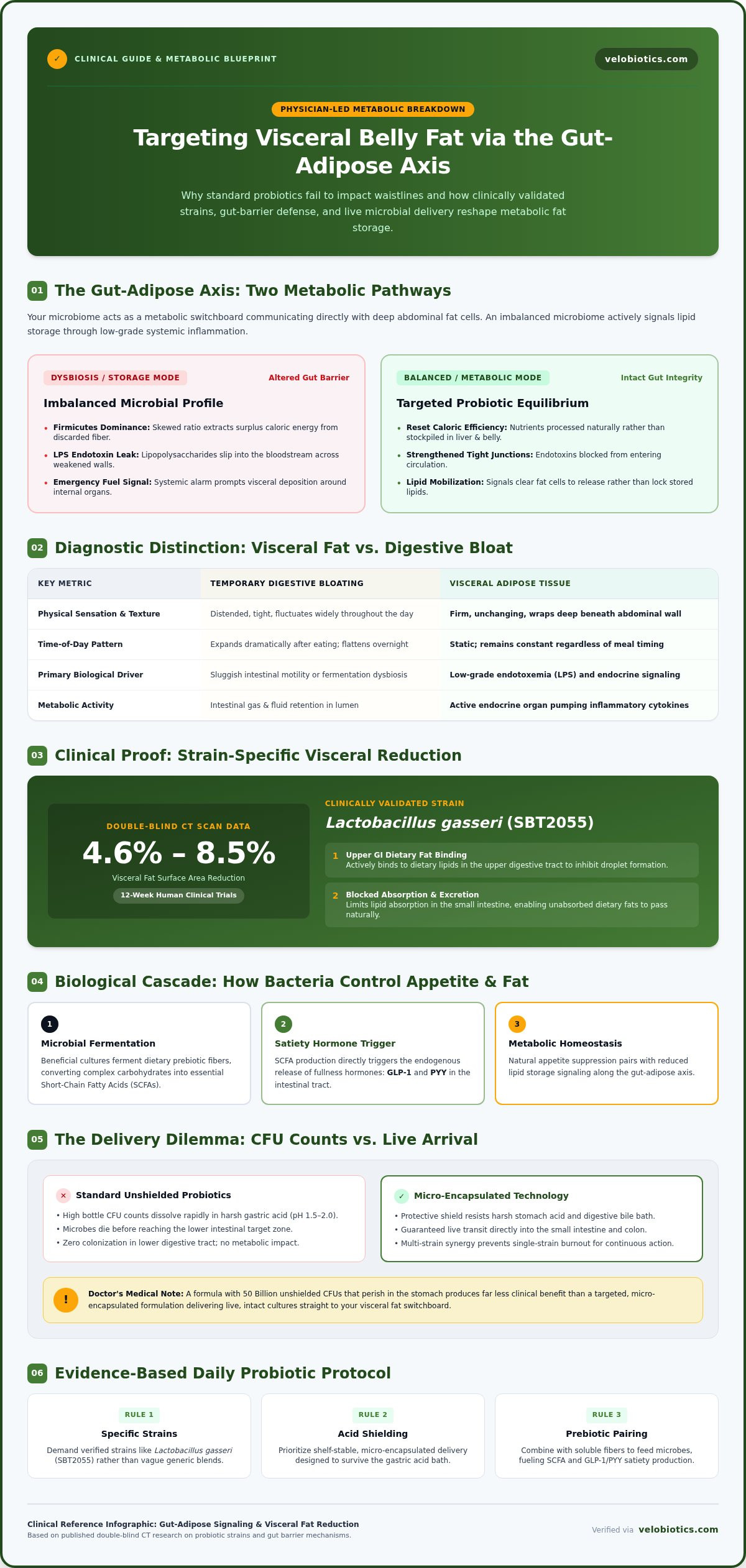
When patients walk into my clinic frustrated by an expanding waistline, they usually assume all abdominal weight behaves the same way. It doesn't. Visceral fat wraps deep around your internal organs like an active endocrine gland, pumping inflammatory cytokines directly into your circulation. Your gut microbiota acts as the primary switchboard controlling this process through a biological feedback loop called the gut-adipose axis. This is precisely why targeted probiotics for belly fat focus on metabolic signaling rather than quick-fix calorie burning.
When bad bacteria outnumber beneficial species, the metabolic conversation breaks down. Signals directing fat cells to mobilize lipids get scrambled, turning your digestive tract into an environment geared toward storage.
To better understand how specific strains influence this biological axis, watch this helpful clinical breakdown:
Visceral Adiposity vs. Temporary Digestive Bloating
Many people mistake fluid retention and intestinal gas for permanent fat. If your stomach expands dramatically after eating and flattens overnight, you are dealing with transient bloating, often triggered by sluggish motility or fermentation dysbiosis. Visceral adiposity, however, remains firm and unchanging regardless of the time of day.
Chronic gut inflammation keeps this deep fat locked in place. When microbial balance falters, structural gut barrier integrity erodes. Endotoxins known as lipopolysaccharides (LPS) slip through the weakened intestinal lining and enter your bloodstream. This low-grade endotoxemia sounds a systemic alarm, signaling your body to deposit visceral fat around vital organs for emergency fuel preservation.
The Caloric Harvesting Mechanism of an Imbalanced Microbiome
You can put two individuals on identical 2,000-calorie meal plans and see completely different changes in body composition. The difference often traces back to microbial calorie harvesting. Certain bacterial populations, particularly when the ratio between the phyla Firmicutes and Bacteroidetes skews heavily toward Firmicutes, act like hyper-efficient bio-processors.
These microbes extract surplus energy from complex fibers that your digestive system would typically discard. They ferment these carbohydrates into metabolites that trigger hepatic fat storage and elevate lipid levels. Selecting validated probiotics for belly fat, such as the specialized multi-strain blend in GutSlim Probiotics Fat Burner, helps reset this microbial efficiency, encouraging your body to process nutrients naturally instead of stockpiling extra calories around your midsection.
The Most Clinically Studied Probiotic Strains for Abdominal Fat Loss
Walking down the supplement aisle, you'll see dozens of bottles boasting vague labels like "acidophilus complex." In clinical medicine, that broad labeling tells us almost nothing. Probiotic benefits operate strictly at the strain level, where a few letters and numbers distinguish an inert organism from a metabolic powerhouse. If you want effective probiotics for belly fat, you need specific, proven workers.
Evidence shows that probiotics may help you lose weight and trim visceral adipose tissue when the formulation targets distinct biological mechanisms.
Lactobacillus Gasseri and Visceral Fat Surface Area
Among all isolated strains, Lactobacillus gasseri (specifically SBT2055) holds some of the strongest human clinical data. In randomized double-blind trials using abdominal computed tomography (CT) scans, researchers documented reductions between 4.6% and 8.5% in visceral fat area over a 12-week period.
How does it work? This organism actively binds to dietary fats in the upper digestive tract. It inhibits the formation of lipid droplets and limits how much fat your small intestine absorbs, causing unabsorbed dietary lipids to pass naturally out of your system. Pairing this organism with complementary lactic acid producers prevents single-strain burnout and supports healthy, steady microbial balance.
Bifidobacterium Strains and Metabolic Signalling
While Lactobacillus colonizes the upper intestines, Bifidobacterium species dominate the colon, serving as your metabolic heavy lifters. Clinical research highlights two strains in particular:
- Bifidobacterium animalis subsp. lactis 420: In a six-month clinical trial, subjects taking B420 demonstrated an approximate 4.5% reduction in total body fat mass, with the most pronounced drops occurring in abdominal fat deposits.
- Bifidobacterium breve B-3: Clinical trials show B-3 significantly reduces body fat mass and waist circumference by accelerating metabolic signaling and improving peripheral insulin sensitivity.
Multi-Strain Synergy vs. Single-Strain Isolates
Your gut is an intricate ecosystem featuring diverse micro-environments. A single strain acting alone rarely shifts systemic metabolism. Multi-strain formulations create ecological teamwork: lactic acid producers generate an acidic environment that encourages butyrate-synthesizing species to flourish downstream. For a deeper look at optimizing this ecosystem, review our complete clinical breakdown of probiotics for digestive health.
To support your routine, explore specialized multi-strain formulations that blend these complementary species to target visceral stores from multiple metabolic angles.
Biological Pathways: How Good Bacteria Influence Appetite and Fat Burning
Your digestive tract does much more than break down yesterday's dinner; it runs a sophisticated chemical signaling network. The microbes residing in your colon act like microscopic pharmacists, fermenting dietary fiber into potent signaling compounds known as short-chain fatty acids (SCFAs). When you select the right probiotics for belly fat, you aren't just adding bacteria; you are activating biochemical pathways that actively regulate appetite and lipid metabolism.
These SCFAs, primarily acetate, propionate, and butyrate, enter the bloodstream and communicate directly with peripheral tissues and your brain. Rather than forcing weight loss through harsh stimulants, these metabolites restore your body's natural metabolic balance.
Short-Chain Fatty Acids and Natural Satiety Hormones
Ever wonder why you feel ravenous even after finishing a large meal? That persistent hunger often stems from muted gut signals. When beneficial bacteria ferment prebiotic fibers, they generate acetate and propionate. These molecules bind to specialized receptors on enteroendocrine L-cells lining the lower intestine.
Once stimulated, these L-cells release two crucial satiety peptides: glucagon-like peptide-1 (GLP-1) and peptide YY (PYY). Together, they slow gastric emptying and travel to the hypothalamus, turning down constant neural food noise and signalling your brain that you're full. For targeted daily appetite management, options like GutSlim Probiotics GLP-1 Booster are designed to support this exact physiological axis.
Regulating the ANGPTL4 Protein to Block Adipose Storage
Beyond regulating hunger, beneficial gut microbes influence how much fat your adipose tissue takes up. They achieve this by regulating an essential protein called angiopoietin-like 4 (ANGPTL4), also known as fasting-induced adipocyte factor.
ANGPTL4 acts as a biological gatekeeper. It inhibits lipoprotein lipase, an enzyme responsible for pulling circulating triglycerides out of your blood and depositing them inside visceral fat cells. Higher levels of intestinal ANGPTL4 divert excess lipids away from abdominal storage, encouraging your body to excrete or burn them as fuel.
At the same time, butyrate stimulates mitochondrial activity in resting brown and beige adipose tissues, gently raising thermogenesis. By keeping the intestinal mucosal barrier sealed and preventing inflammatory endotoxins from stalling your metabolism, specialized probiotics for belly fat shift your internal biochemistry from fat accumulation to natural energy utilization.
The Stomach Acid Dilemma: Why Most Fat-Burning Probiotics Fail
The supplement industry loves advertising massive numbers. Brands splash "50 Billion" or "100 Billion CFU" across their labels, knowing consumers associate bigger numbers with better results. Here is the clinical reality: raw counts mean very little if those delicate cultures never make it past your stomach. Human gastric acid maintains a harsh pH between 1.5 and 3.5, which is acidic enough to dissolve unprotected bacterial cell walls within minutes.
Standard capsules melt quickly in this gastric environment, exposing live organisms to an acidic bath they cannot survive. When you take unprotected probiotics for belly fat, you lose the vast majority of active cultures long before they reach metabolic absorption sites.
The Survival Math: Label CFU vs. Intestinal Delivery
Picture the digestive journey as an intense biological obstacle course. Microbes must navigate churning gastric juices, corrosive digestive enzymes, and bile salts in the duodenum. When taking unencapsulated supplements, billions of cells perish in transit, leaving only a negligible fraction of viable bacteria to colonize your lower digestive tract.
You shouldn't have to guess how many active cultures survive. For an in-depth clinical look at this digestive hurdle, check out our guide on probiotics that survive stomach acid.
Patented Micro-Encapsulation Technology Explained
Overcoming this gastric barrier requires sophisticated biochemical engineering. Using patented Supercritical Carbon Dioxide (SCO2) micro-encapsulation, we shield live strains within a microscopic polymer velo coating. This intelligent barrier remains completely intact inside the low-pH stomach environment, protecting the fragile bacteria inside.
Once the capsule reaches the neutral, higher pH of the small intestine, the protective layer naturally releases. This mechanism guarantees the delivery of up to 1000x more viable probiotics directly into your gut, ensuring the potency listed on the label matches what actually colonizes your system.
Shelf Stability and the No-Refrigeration Requirement
Moisture, ambient heat, and room-temperature air degrade vulnerable live cultures long before you swallow them. Many standard products demand refrigeration just to keep the microbes barely hanging on, which makes traveling or sticking to a daily routine frustrating.
Patented SCO2 micro-encapsulation seals each microbe against atmospheric moisture and ambient heat. This makes the formulas fully shelf-stable, requiring zero refrigeration while maintaining verified therapeutic potency through their entire lifespan.
If you are ready to upgrade to live cultures that reliably reach their target, explore our protected probiotic formulations designed to support your daily metabolic health.
How to Build an Effective Probiotic Belly Fat Protocol in 2026
Creating lasting metabolic change requires more than swallowing a random capsule and hoping the bathroom scale drops. A successful gut strategy demands a structured clinical routine: delivering viable cultures, nourishing them properly, and aligning with your body's natural circadian rhythms. If you want probiotics for belly fat to produce tangible, lasting results, follow this three-step blueprint.
Step 1: Choose Targeted Metabolic Strains with Verified Delivery
Ditch generic digestive pills. Seek multi-strain formulas containing clinically backed Lactobacillus and Bifidobacterium species that specialize in metabolic communication. Just as crucial as the species is the delivery method. High label CFU claims mean little without physical protection against stomach acid.
For dedicated waistline support, choose formulations like GutSlim Probiotics Tummy Toner. Its patented SCO2 micro-encapsulation shields delicate bacteria through gastric transit, ensuring full therapeutic doses release directly into your lower intestine where colonization occurs.
Step 2: Nourish Your Strains with Targeted Prebiotic Substrates
Live bacteria need appropriate nutrition to synthesize short-chain fatty acids. Feed your gut flora with soluble prebiotic fibers like acacia gum, chicory inulin, and resistant starches from cooled potatoes or oats. These carbohydrates escape upper digestion to fuel colon-dwelling microbes.
Add polyphenol-rich foods such as wild berries, pomegranate, and green tea to your daily meals. Polyphenols serve as prebiotic fuel, suppressing opportunistic strains while accelerating the growth of beneficial species. Pairing your meals with GutSlim Probiotics Fat Burner reinforces this thermogenic environment, supplying targeted metabolic nutrients alongside viable live cultures.
Step 3: Track Clinical Markers Beyond the Bathroom Scale
Standard bathroom scales measure total mass, not fat distribution. Water fluctuations easily mask real changes in abdominal tissue. Instead, grab a flexible measuring tape and track your waist circumference and waist-to-hip ratio every two weeks over a 90-day clinical window.
Look for functional signs of metabolic renewal:
- Fewer post-lunch energy crashes and reduced afternoon sugar cravings
- Consistent, daily bowel regularity without excess gas
- Gradual loosening of your waistband, confirming visceral changes
- Lower systemic stress levels, supported by resistance exercise and solid non-REM sleep to manage cortisol
Curious about how micro-shielding technology makes this level of intestinal colonization possible? Read our research background on the Velobiotics Story page to see how we engineered viable probiotic delivery.
Taking Control of Your Waistline at the Cellular Level
Targeting stubborn abdominal accumulation isn't about falling for crash diets or generic stimulant pills. Real, lasting change begins when you support your gut-adipose axis with the right biological tools. Clinically validated strains modulate natural satiety hormones, curb cellular fat storage signals, and strengthen your intestinal barrier, but only when they reach your lower tract alive.
That is why choosing the right probiotics for belly fat comes down to verified biological survival. Backed by over 15 years of rigorous clinical biotechnology research, our patented Supercritical Carbon Dioxide (SCO2) micro-encapsulation delivers up to 1000x more viable probiotics directly to metabolic absorption sites. Because our formulations are 100% shelf-stable with zero refrigeration required, you get guaranteed therapeutic potency straight to your gut every single day.
Nourish your gut with patented 1000x probiotic delivery today and give your body the precision microbial allies it needs to thrive.
Frequently Asked Questions
Can taking probiotics alone cause you to lose stubborn belly fat?
No, probiotics alone aren't a magic cure for abdominal weight. They function as biological catalysts within a broader healthy lifestyle. Probiotics for belly fat optimize your internal metabolic environment by reducing systemic inflammation, strengthening gut barrier integrity, and modulating nutrient absorption. To burn deep visceral reserves, you still need a balanced diet, consistent movement, and adequate sleep to keep cortisol levels low.
How long does it take for probiotics to reduce abdominal bloating and waist size?
Most individuals notice a measurable reduction in digestive bloating within two to three weeks of consistent daily use. However, trimming actual visceral fat tissue takes longer. Clinical trials evaluating waist circumference and deep abdominal adipose tissue typically measure outcomes over an eight to twelve-week period. Colonizing the microbiome and shifting metabolic signaling pathways requires daily compliance over several months.
Which specific probiotic strain has the strongest clinical evidence for visceral fat reduction?
Lactobacillus gasseri (specifically strain SBT2055) holds the most compelling clinical data for visceral adipose reduction. Double-blind trials utilizing abdominal computed tomography scans documented visceral fat reductions between 4.6% and 8.5% over twelve weeks. Strains like Bifidobacterium animalis subsp. lactis 420 and Bifidobacterium breve B-3 also demonstrate significant clinical support for reducing waist circumference and trunk fat mass.
Do you need to keep fat-burning probiotic supplements in the refrigerator?
No, properly formulated metabolic probiotics don't require refrigeration if they utilize advanced micro-encapsulation. Unprotected cultures degrade when exposed to heat and ambient moisture, leading many brands to demand cold storage. Formulations protected by patented Supercritical Carbon Dioxide (SCO2) micro-encapsulation seal bacteria inside an inert polymer velo coating, ensuring complete shelf stability and full potency at room temperature without cold storage.
What happens to standard probiotic capsules when they encounter human stomach acid?
Standard gelatin and vegetable capsules dissolve rapidly in the stomach, exposing vulnerable live cultures to gastric acid with a pH between 1.5 and 3.5. This intense acidic bath destroys fragile bacterial cell walls within minutes, killing up to 99% of unprotected microbes. Consequently, only a tiny fraction of live cells survive to reach the lower digestive tract where metabolic colonization occurs.
Can probiotics help naturally stimulate the body's production of GLP-1 hormones?
Yes, specific probiotic strains stimulate endogenous GLP-1 release through the fermentation of soluble dietary fibers. When beneficial bacteria consume prebiotic fibers, they generate short-chain fatty acids like acetate and propionate. These signaling molecules bind directly to receptors on enteroendocrine L-cells in the lower intestine, prompting your body to release natural GLP-1 and PYY to slow digestion and quiet food cravings.
What is the difference between subcutaneous fat and visceral belly fat?
Subcutaneous fat sits directly beneath your skin and feels soft or pinchable, whereas visceral fat resides deep within the abdominal cavity, wrapping tightly around internal organs. Visceral fat is far more hazardous because it functions as an active endocrine tissue, releasing inflammatory cytokines directly into portal circulation. Targeted probiotics for belly fat specifically address the chronic inflammation that drives visceral storage.
How do I know if my probiotic supplement is actually reaching my gut alive?
Look for verified micro-encapsulation delivery systems rather than relying on bloated CFU numbers on the front label. High CFU counts don't matter if unprotected bacteria perish in stomach acid. With patented SCO2 micro-encapsulation, the protective barrier stays intact through low gastric pH and dissolves exclusively in the neutral intestines, delivering up to 1000x more viable probiotics straight to target sites.

Disclaimer
Information and statements regarding dietary supplements/products have not been evaluated by the Food and Drug Administration, MCC/SAHPRA, MHRA, TGA or any other drug regulatory authority and are not intended to diagnose, treat, cure, or prevent any disease. Information on this website is provided for informational purposes only and is a result of years of practice and experience by the author. This information is not intended as a substitute for the advice provided by your physician or other healthcare professional or any information contained on or in any product label or packaging. Do not use the information on this website for diagnosing or treating a health problem or disease, or prescribing medication or other treatment. Always speak with your physician or other healthcare professional before taking any medication or nutritional, herbal, or homeopathic supplement, or using any treatment for a health problem. If you have or suspect that you have a medical problem, contact your healthcare provider promptly. Do not disregard professional medical advice or delay in seeking professional advice because of something you have read on this website.