

Quality Probiotics in South Africa: A Doctor's Guide
A capsule can list billions of probiotic bacteria and still leave you wondering whether they’ll survive the journey through your stomach. If you’re searching for where to buy quality probiotics in durban, look beyond the headline CFU count: strain details, viability through the product’s shelf life, and how the bacteria are protected all matter.
It’s understandable to feel wary after spending money on a supplement that’s inconvenient to store or doesn’t seem to help. As a doctor and founder, I encourage people to ask a practical question: what helps these live bacteria reach the gut? Velobiotics uses patented SCO2 micro-encapsulation technology, with a 1000x delivery claim, in shelf-stable products that don’t require refrigeration.
This guide will show you how to assess probiotic labels, understand what CFU counts can and can’t tell you, and compare pharmacy and online buying options across South Africa. You’ll also learn what to consider when choosing targeted support for digestive or intimate health, so you can make a more informed choice without getting lost in the numbers.
Key Takeaways
- Look beyond the CFU number: learn which label details can help you compare probiotic products more confidently.
- Discover how patented SCO2 micro-encapsulation is used to deliver 1000x more viable probiotics to the gut.
- Use the no-fridge test as one practical clue when assessing convenience and storage needs.
- Explore how to match probiotic options to personal wellness goals instead of choosing a one-size-fits-all blend.
- Find out where to buy quality probiotics in durban and what to consider when choosing an online source with national delivery.
The Survival Gap: Why Most Probiotics Fail Before Reaching Your Gut
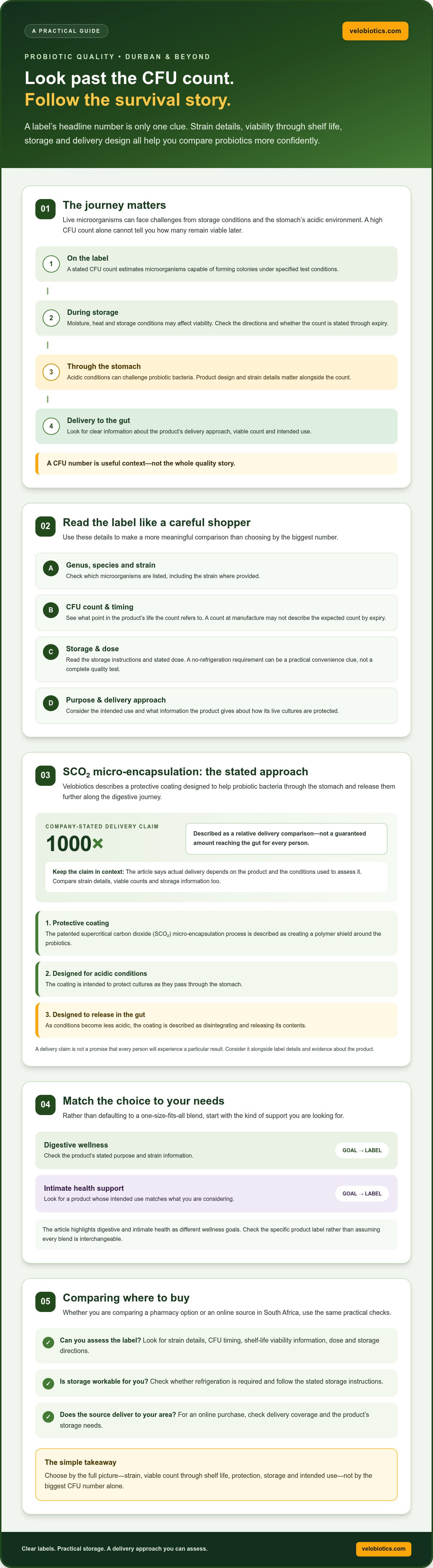
A probiotic isn’t judged by the number printed on the bottle alone. It’s judged by whether its live microorganisms remain viable through storage and the journey through your digestive system. That’s the survival gap: a product can contain live bacteria at one point, but exposure to moisture, heat or the stomach’s highly acidic environment may affect how many remain viable later. The effect varies by strain and product design, so a high CFU count by itself doesn’t tell the whole story.
Viability is central to quality, but it isn’t the only thing to check. The strains, intended use, storage instructions and evidence for the product’s delivery approach also matter. If you’re researching where to buy quality probiotics in durban, use those details to compare options rather than choosing by the biggest number on the label.
Stomach Acid: The Probiotic’s Greatest Enemy
The stomach’s acidic environment helps digest food, but it can also challenge probiotic bacteria as they pass through. Without suitable protection, some microorganisms may be damaged before they reach the intestines. That doesn’t mean every unprotected bacterium is destroyed, or that a CFU count can’t be useful. It means the count alone can’t show how well a product is designed for delivery.
Delivery technology matters more than CFU count alone because it helps determine whether viable bacteria can travel through the stomach and reach the gut.
The Reality of Label Claims vs. Gut Reality
A CFU, or colony-forming unit, estimates the number of microorganisms capable of forming colonies under specified test conditions. Check what point in the product’s life the stated count refers to. A count described at manufacture may not tell you the expected count by the end of shelf life, so look for clear information about viability through expiry, along with storage directions.
Read the label like a careful shopper: note the genus, species and strain where listed; check the CFU statement and whether it applies through expiry; and follow the stated dose and storage instructions. These details make comparisons more meaningful than a headline number. For a plain-language overview of what are probiotics, see Wikipedia’s summary, then use the product label to assess the specific formulation.
Velobiotics uses patented SCO2 micro-encapsulation, with a stated claim of delivering 1000x more viable probiotics to the gut. Its products are shelf-stable and require no refrigeration. That’s a delivery approach to examine alongside the strain and label information, not a reason to ignore them. The goal is targeted delivery: choosing a product designed to protect its live cultures on the way to the gut.
The Science of Quality: SCO2 Micro-encapsulation Technology
Probiotic delivery isn’t just about putting live cultures into a capsule. It’s also about protecting them as they pass through the digestive system. Velobiotics uses patented supercritical carbon dioxide (SCO2) micro-encapsulation to create a protective coating around probiotics. The company describes this technology as delivering 1000x more viable probiotics to the gut. That’s a delivery claim, not a promise that every person will experience a particular result.
How Micro-encapsulation Protects the “Second Brain”
The gut is sometimes called the “second brain” because it communicates with the nervous system. Velobiotics’ “Nourish Your Second Brain” philosophy centres on supporting gut wellness. Its velo coating is described as a polymer shield designed to protect probiotic bacteria in the stomach’s acidic, low-pH conditions. As the capsule moves into the gut, where conditions are less acidic, the coating is designed to disintegrate and release its contents.
In simple terms, the goal is to protect the cultures during the earlier stages of digestion, then release them further along the journey. That targeted approach is intended to improve delivery without relying on an ever-larger starting dose. It doesn’t mean that every other product needs a massive dose, or that a higher dose is automatically ineffective; formulation and evidence matter. For the background behind this innovation, read the Velobiotics story.
1000X Delivery: What the Claim Means
A 1000x comparison describes a relative difference in delivery, not a specific number of bacteria reaching the colon for every person. The actual amount depends on the product and the conditions used to assess it. Ask what the comparison is measured against and look for clear information about strains, viable counts and storage. Harvard’s guide to probiotics also explains why probiotic identity and evidence are important considerations.
The company states that its SCO2 technology was developed through more than 15 years of research and development collaboration with the CSIR. Better delivery may support the intended use of a formulation, but it doesn’t establish how quickly someone will notice a benefit. Probiotic effects can depend on the strain and individual, so be cautious of guaranteed timelines or treatment promises.
If you’re weighing where to buy quality probiotics in durban, compare the delivery method as well as the label. You can review the SCO2 delivery approach alongside a product’s strain and storage details. Velobiotics’ products are shelf-stable and don’t require refrigeration, which can make storage simpler.
How to Evaluate Probiotic Quality When Shopping Online
A product page can make a probiotic sound impressive, but a few practical checks help separate useful information from marketing language. Start with the storage instructions, named strains, intended use and ingredient list. Then check whether claims about certifications or special technology are supported with clear product information.
Shelf-Stability vs. Refrigeration
Refrigeration isn’t a universal test of probiotic quality. Some formulations need to be kept cold; others are designed to remain shelf-stable. Velobiotics uses patented SCO2 micro-encapsulation and states that its products require no refrigeration, with a 1000x delivery claim for viable probiotics reaching the gut. Check the specific product’s label and storage directions, and protect it from heat as instructed, especially when travelling.
A no-fridge format can be convenient if your routine involves commuting, travel or a busy household. But shelf stability alone doesn’t prove a product is effective. Look for an explanation of how the formulation protects its cultures and how viability is assessed, rather than treating storage convenience as the only quality measure.
Targeted Strains for Specific Goals
Different probiotic strains aren’t interchangeable, and a blend should suit its intended use. Consider whether you want general digestive support or a product formulated for a more specific wellness goal, then check which strains the label identifies. A larger strain count isn’t automatically better for every person; the formulation and its purpose matter.
For example, the 16-strain probiotic digestive capsules offer a multi-strain option. Diversity can be one factor to consider, but it doesn’t replace checking the strains, label directions and product information for yourself.
Check Certifications and Ingredients
Certifications should be verifiable, not just mentioned in promotional copy. Velobiotics identifies its products as Halal-certified. If a listing also claims cGMP or ISO standards, look for clear documentation showing which product or manufacturing process the claim applies to; don’t assume one certification covers another.
Review the full ingredient list, including added ingredients, and check whether a non-GMO claim applies to that particular product. Velobiotics lists a non-GMO probiotic collagen capsule, but that claim shouldn’t be generalized to its entire range. If you’re searching where to buy quality probiotics in durban, use the same label checks whether you’re comparing online listings or products in a shop.
Matching Probiotics to Your Personal Wellness Goals
“Probiotic” isn’t a one-size-fits-all label. The right choice depends on your goal, the strains and ingredients in the formula, and the route it’s designed for. A product intended for digestive support, for example, isn’t automatically the right choice for intimate wellness or for a child. Match the formulation to the need, and be cautious of claims that promise to treat a condition.
Women’s Intimate and Digestive Wellness
The gut and vaginal microbiomes are distinct microbial communities, but they can be influenced by some of the same broad factors, including health, hormones and medication. That doesn’t mean a general gut probiotic will necessarily support vaginal health. Check whether a product is specifically formulated for its intended use. Some options include cranberry extract, while boric acid is a separate ingredient used in certain intimate-care formulations. Follow product directions and ask a healthcare professional before using boric acid, especially if you’re unsure whether it’s appropriate for you.
For an example of a targeted option, see probiotic suppositories with boric acid. Suppositories and oral probiotic capsules are different formats, so don’t treat them as interchangeable.
Men’s Health and Digestive Regularity
Probiotic products for men may combine cultures with other ingredients, but a men-specific label doesn’t prove that a formula will raise testosterone. Look at the listed strains and ingredients, and treat testosterone claims cautiously. For digestive regularity, consider the product’s stated purpose and directions, alongside everyday habits such as drinking enough fluids and eating fibre-rich foods.
Metabolic Goals and Children’s Needs
GutSlim products are marketed for goals such as tummy toning and fat burning, but a product name isn’t proof of a particular effect. Probiotic research is strain-specific, so don’t assume a supplement will increase GLP-1, control appetite or cause weight loss. If you use a product as part of a wellness routine, pair it with practical habits such as adding fibre-rich foods gradually, and seek professional advice for individual concerns.
Children have developing microbiomes, and an adult probiotic shouldn’t automatically be used for them. Check that any product is intended for the child’s age and follow its directions; ask a healthcare professional if you’re unsure.
As a science-first South African innovator, Velobiotics uses patented SCO2 micro-encapsulation and states a 1000x delivery claim for viable probiotics reaching the gut. To compare formulations for your own goals, explore Velobiotics’ probiotic options. If you’re searching for where to buy quality probiotics in durban, use the same checks: intended use, ingredients, format and clear product directions.
Where to Buy Premium Probiotics with National Delivery
For buyers across South Africa, online ordering can make it easier to compare probiotic labels and access products beyond local shop shelves. Buying directly from a manufacturer may also help you find product information and storage guidance in one place. But a short supply chain alone can’t guarantee potency. Check the expiry date, batch details, storage instructions and how the seller handles products before they reach you.
If you’re searching for where to buy quality probiotics in durban, compare direct-from-brand options with established pharmacies and other reputable retailers. Look for clear product details, sensible storage directions and a way to contact the seller with questions. Shelf-stable products can simplify storage, but they should still be kept according to the label, especially away from excessive heat.
Ordering Direct and Building a Routine
Ordering from a manufacturer can make it simpler to review a product’s stated strains, ingredients and delivery technology. It doesn’t automatically mean the product is fresher, so check its expiry and storage details rather than relying on the sales channel alone. A subscription can be convenient if a retailer offers one and it suits your routine; confirm the terms before signing up.
Doctor’s note: habits stick better when they’re easy. Keep a shelf-stable probiotic with your other daily essentials and follow the product directions. Velobiotics says its products don’t require refrigeration, which can be helpful for a busy routine or travel. Don’t leave them in a hot car or ignore storage instructions.
National Reach and Support
Premium health products shouldn’t be limited by geography. Velobiotics is based in Germiston and serves the South African market with national accessibility. Its products use patented SCO2 micro-encapsulation, with a stated 1000x delivery claim for viable probiotics reaching the gut. That figure describes the brand’s delivery claim, not a guarantee of an individual health outcome. The company’s products are shelf-stable and require no refrigeration.
Before ordering, check delivery coverage for your address, product availability, storage directions and expiry information. These practical details help you choose confidently, whether you’re in Durban or elsewhere in the country. For product information and the available range, shop the Velobiotics range for national delivery.
Choose Probiotic Quality With Confidence
A useful probiotic choice starts with more than a headline CFU count. Check the strains, intended use, storage directions and information about viability, then choose a formula that fits your personal wellness goals. If you’re weighing where to buy quality probiotics in durban, compare product details and expiry information across reputable sellers rather than relying on a big number or bold promise alone.
Velobiotics uses globally patented SCO2 micro-encapsulation technology and states a 1000x Delivery Guarantee for viable probiotics reaching the gut. Its products don’t require refrigeration, making storage simpler while you follow the directions on the label. As with any supplement, individual experiences can vary, and probiotic products aren’t a substitute for medical advice.
Ready to explore a science-led approach to gut wellness? Empower your gut with 1000x more viable probiotics. Shop Velobiotics now, and take the next step toward a routine that works for you.
Frequently Asked Questions
Do quality probiotics always need to be refrigerated?
No, refrigeration depends on the formulation and its storage instructions. Some probiotics need to be kept cold, while Velobiotics products are shelf-stable and don’t require refrigeration. Always follow the specific product label and protect supplements from heat as directed. If you’re searching “where to buy quality probiotics in durban,” compare storage requirements and check how the seller handles delivery, rather than assuming that a refrigerated product is automatically better.
How can I tell if a probiotic is actually working?
Start by identifying the specific wellness goal you have in mind, then follow the product directions consistently and notice whether you experience a change relevant to that goal. Feeling no immediate difference doesn’t by itself prove that a product is ineffective, and individual responses vary. Keep realistic expectations, check the label’s strain and storage information, and speak with a healthcare professional if symptoms persist or you’re unsure whether a supplement is suitable.
What is the difference between CFUs and viable delivery?
CFU means colony-forming units, a way of counting microorganisms capable of forming colonies under test conditions. Viable delivery refers to live probiotics reaching the gut. Velobiotics states that its patented SCO2 micro-encapsulation technology provides “1000x Delivery Guaranteed,” with the CFU count on the label being the count that reaches the gut. When comparing products, look for clear information about the count, strains, storage and delivery approach.
Are there specific probiotics for women’s intimate health?
Yes, some products are formulated specifically for women’s intimate wellness, but they aren’t interchangeable with general digestive probiotics. Check the ingredients, intended use and directions. Velobiotics offers oral probiotic capsules with cranberry extract and separate suppository formulations, including one with boric acid. These are different formats and should be used only as directed. Ask a healthcare professional if you’re pregnant, have concerns, or aren’t sure which option is appropriate.
Can children take the same probiotics as adults?
Don’t assume an adult probiotic is suitable for a child. Formulas, serving directions and age guidance can differ, so check the product label for whom it’s intended and follow its instructions. If the label doesn’t clearly address your child’s age, ask a healthcare professional before giving the supplement. This is especially sensible if your child has a health condition, takes medication, or has had a reaction to supplements before.
How long does it take to see results from a high-quality probiotic?
There isn’t one reliable timeline that applies to every probiotic or person. The intended use, product formulation and individual response can all affect what you notice, and some people may not feel a clear change. Follow the label’s directions rather than increasing the dose or expecting a guaranteed result by a certain date. If you’re taking a probiotic for a specific concern, ask a healthcare professional what to expect and when to seek further advice.
Is it better to take probiotics with food or on an empty stomach?
Follow the directions on the specific product, because instructions can vary by formulation. If the label doesn’t say whether to take it with food, check the manufacturer’s guidance or ask a pharmacist instead of guessing. Take it consistently as directed, and don’t change the dose to compensate for a missed serving. If you use other supplements or medicines, a healthcare professional can help you check whether the timing is suitable.
Are Velobiotics products Halal-certified?
Yes, Velobiotics states that its products are Halal-certified. If you need to confirm the status of a particular product, check its current packaging or product information before purchasing, as that’s the best way to verify details for the item you plan to use. You can also contact the company with questions about product-specific information. As with any supplement, review the ingredient list and directions to make sure the product fits your needs.

Disclaimer
Information and statements regarding dietary supplements/products have not been evaluated by the Food and Drug Administration, MCC/SAHPRA, MHRA, TGA or any other drug regulatory authority and are not intended to diagnose, treat, cure, or prevent any disease. Information on this website is provided for informational purposes only and is a result of years of practice and experience by the author. This information is not intended as a substitute for the advice provided by your physician or other healthcare professional or any information contained on or in any product label or packaging. Do not use the information on this website for diagnosing or treating a health problem or disease, or prescribing medication or other treatment. Always speak with your physician or other healthcare professional before taking any medication or nutritional, herbal, or homeopathic supplement, or using any treatment for a health problem. If you have or suspect that you have a medical problem, contact your healthcare provider promptly. Do not disregard professional medical advice or delay in seeking professional advice because of something you have read on this website.