

Signs of an Unhealthy Vaginal Microbiome: A Doctor’s Guide to Intimate Wellness in 2026
Did you know that as many as 1 in 3 women will experience bacterial vaginosis this year, while 75% of women will face at least one yeast infection in their lifetime? These aren't just annoying inconveniences. They are clear signs of an unhealthy vaginal microbiome that indicate your internal ecosystem is under siege. As a physician, I've seen how frustrating it is when your body feels like a stranger. You might be dealing with a persistent, fishy odor or the constant itch of a recurring infection that refuses to quit. It's exhausting to filter through conflicting health advice while your intimate comfort feels like it's in a state of permanent flux.
I understand the confusion and the urgent desire for a solution that works beyond a temporary patch. You deserve to feel confident and balanced. In this guide, I'll help you decode the specific biological signals your body is sending and explain the scientific steps required to restore a thriving environment. We will explore the critical role of pH levels and the protective Lactobacillus shield, identify the precise symptoms of dysbiosis, and map out a doctor-recommended path to lasting intimate wellness.
Key Takeaways
- Understand the critical role of Lactobacillus as your "hero" bacteria, maintaining a protective lactic acid shield that keeps your internal ecosystem resilient and balanced.
- Discover how to recognize the specific signs of an unhealthy vaginal microbiome, including the distinct chemical triggers behind "fishy" odors and textured discharge.
- Learn why standard antibiotics often leave you frustrated by failing to penetrate bacterial biofilms, which are the microscopic fortresses built by harmful microbes.
- Master a practical daily vitality checklist that focuses on biological harmony, such as choosing breathable fabrics and ending the cycle of "over-scrubbing" with harsh soaps.
- Identify the biological advantages of targeted delivery systems over standard oral probiotics to ensure active ingredients reach their intended destination with maximum viability.
The Silent Symphony: What a Healthy Vaginal Microbiome Actually Looks Like
Think of your body as a high-tech fortress. The The Silent Symphony: What a Healthy Vaginal Microbiome Actually Looks Like is your primary biological shield, a complex network of microorganisms that prevents harmful invaders from taking root. In a state of health, this ecosystem functions with incredible precision, maintaining a delicate balance that keeps you feeling fresh and comfortable. When this harmony is disrupted, the signs of an unhealthy vaginal microbiome begin to emerge, often manifesting as persistent discomfort or recurring infections that signal a structural failure in your defenses.
To better understand this concept, watch this helpful video:
The Lactobacillus Shield: Your Natural Antibiotic
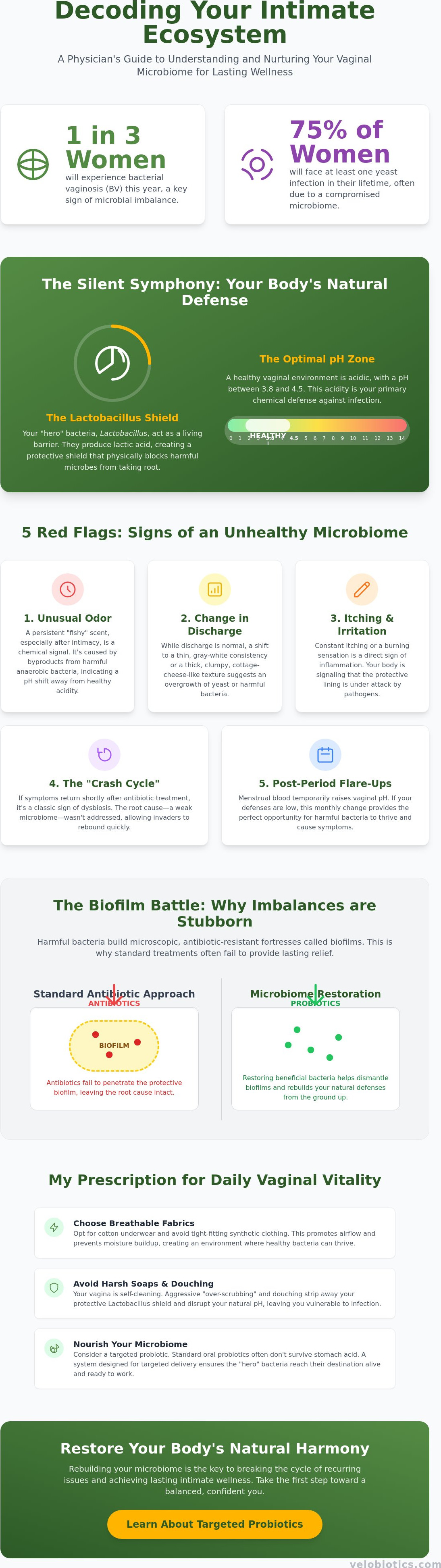
The undisputed heroes of this ecosystem are bacteria from the Lactobacillus genus. These "good guys" don't just sit there; they actively defend their territory. They produce lactic acid and hydrogen peroxide, which create a hostile environment for pathogens like yeast or harmful bacteria. Through a process called "competitive exclusion," these beneficial microbes physically occupy the space on the vaginal walls, effectively acting as a living barrier that leaves no room for "bad bugs" to land and colonize. A healthy vaginal environment maintains an acidic pH range between 3.8 and 4.5 to serve as a primary chemical barrier against infection.
How the Environment Changes with Your Cycle
Your microbiome isn't a static snapshot; it's a living environment that responds to your hormones. Estrogen plays a starring role here. It encourages the vaginal lining to produce glycogen, which is essentially the favorite food for Lactobacillus. More food means more protective bacteria. This is why you might feel your best during ovulation when estrogen is high and your "hero" bacteria are well-fed and thriving.
Conversely, your microbiome is often most vulnerable right after your period. Menstrual blood has a neutral pH of about 7.4, which can temporarily dilute your natural acidity and provide an opening for pathogens. If your Lactobacillus count is already low, this shift allows opportunistic bacteria to take over, which is why many women find their symptoms flare up at the same time every month. Recognizing these cyclical fluctuations is key to maintaining your "sweet spot" of intimate comfort. For those looking to support this balance daily, clinical-grade supplements like Femina™ Probiotic Capsules with Cranberry can help reinforce your natural defenses before the "bad bugs" get a chance to settle in.
5 Red Flags: The Most Common Signs of an Unhealthy Vaginal Microbiome
Identifying the 5 Red Flags: The Most Common Signs of an Unhealthy Vaginal Microbiome is the first step toward reclaiming your comfort. While a healthy system maintains a quiet, musky baseline, an imbalance creates a loud biological protest. One of the most telling signs of an unhealthy vaginal microbiome is the cyclical nature of symptoms. If you find yourself feeling "normal" for a week after treatment only to have the discharge or irritation return, your ecosystem is struggling with deep-seated dysbiosis rather than a simple, one-off infection. This "crash" cycle happens because the underlying microbial structure remains fractured, allowing bad bacteria to rebound the moment conditions shift.
Odor and Discharge: More Than Just an Inconvenience
I often tell my patients that chemistry doesn't lie. When Bacterial Vaginosis (BV) takes hold, certain anaerobic bacteria produce volatile amines, specifically trimethylamine. This is what creates that unmistakable "fishy" odor, which often becomes more pronounced after intimacy or during your period when pH levels rise. It's fundamentally different from the odorless or slightly yeasty scent associated with a fungal overgrowth.
Your discharge acts as a diagnostic map. Thin, watery, gray, or white discharge that coats the vaginal walls is a classic hallmark of BV. If the texture shifts to a thick, "cottage cheese" consistency, you're likely dealing with a yeast infection. Pay close attention to color; while clear or milky white is standard, yellow or green hues usually indicate an influx of white blood cells, signaling that your immune system is actively fighting an inflammatory battle. A quick "sniff test" can provide a clue, but clinical reality is found in the microscopic details of these secretions.
The Invisible Signs: pH and Micro-Inflammation
A healthy vagina is naturally acidic, but when your pH climbs above 4.5, it creates an "open door" for Gardnerella vaginalis and other opportunistic pathogens. You can actually monitor this at home with medical-grade pH strips. If your reading is consistently high, your Lactobacillus shield has likely been compromised. This shift often leads to micro-inflammation, which might not be visible but can cause significant discomfort or "rawness" during intimacy.
We also can't ignore the crosstalk between different systems in your body. There is a documented link between gut health and vaginal health; an imbalanced digestive tract can act as a reservoir for pathogens that migrate and disrupt your intimate flora. Supporting your system with probiotics for digestive health can help fortify your overall microbial defenses. When you start noticing these red flags, using a targeted solution like Femina Probiotic Cookie Fresh can help reset the environment before a minor imbalance turns into a chronic frustration.
The Biofilm Battle: Why Imbalances Are So Stubborn
If you've ever felt like you're doing everything right but still seeing signs of an unhealthy vaginal microbiome every few months, you aren't alone. One of the most frustrating biological realities I explain to my patients is the existence of biofilms. These aren't just random clusters of bacteria; they are sophisticated, multicellular communities that anchor themselves to the vaginal epithelium. This structural challenge is why standard treatments often provide only temporary relief. You might feel better for a week, but the underlying problem is simply hiding behind a microscopic wall.
The Fortress Mechanism: How Pathogens Hide
Imagine a sticky, glue-like matrix that coats the vaginal wall. This is a biofilm. Pathogens like Gardnerella vaginalis secrete this substance to create a protective environment where they can safely multiply. Biofilms act like a physical shield that prevents your white blood cells and your body's natural defenses from reaching the invaders. Standard oral antibiotics often fail because they simply cannot penetrate these dense biological barriers. It's like trying to water a plant through a plastic sheet. You need something that can dissolve the sheet first. This architectural defense explains why 50% of women with bacterial vaginosis experience a recurrence within just six months of finishing standard antibiotic therapy. The pills might kill the free-floating bacteria, but the "fortress" remains intact, ready to relaunch the infection the moment you stop the medication.
Boric Acid: The Biofilm Disruptor
To truly restore balance, we have to unlock these fortresses. This is where boric acid becomes a clinical game-changer. Unlike antibiotics which act as assassins targeting specific cells, boric acid acts more like a key that dissolves the fungal and bacterial matrix. It disrupts the cell walls of pathogens and breaks down the sticky biofilm layer, effectively exposing the hidden bacteria to your body's natural defenses and any concurrent treatments.
I always recommend a two-step approach: clear the path, then plant the seeds. Using Femina Probiotics Cookie Fresh with Boric Acid allows you to do both. The boric acid handles the demolition of the biofilm, while the integrated probiotics begin the re-colonization process. When used as a vaginal suppository, boric acid has a long-standing safety profile for managing stubborn dysbiosis. It doesn't just treat the symptoms; it addresses the physical structure that allows the signs of an unhealthy vaginal microbiome to persist. By breaking down these protective fortresses, you're not just masking the odor or discharge. You're fundamentally changing the environment so that healthy bacteria can finally reclaim their home.
The Doctor’s Daily Checklist for Vaginal Vitality
Maintaining a resilient ecosystem requires more than just reactive treatments; it demands a proactive daily routine. Just as you wouldn't ignore a high-tech filtration system in a lab, you shouldn't neglect the environmental factors that keep your intimate flora thriving. When you ignore these maintenance steps, you invite the signs of an unhealthy vaginal microbiome to return, often as soon as your current treatment cycle ends. Consistency is your greatest ally in preventing the structural failures that lead to chronic dysbiosis.
- Stop the "Scrubbing": The vaginal canal is a self-cleaning biological marvel. Using scented soaps, "feminine" washes, or harsh cleansers disrupts the delicate acid mantle we discussed earlier. Warm water is sufficient for the vulva; anything more aggressive acts as a chemical disruptor to your Lactobacillus shield.
- Prioritize Airflow: Pathogens like yeast thrive in dark, damp, anaerobic environments. Synthetic fabrics like polyester or nylon trap moisture against the skin. The non-negotiable rule is 100% cotton underwear, which allows for essential "breathing" and moisture evaporation.
- Post-Intimacy Protocols: Intimacy can temporarily raise vaginal pH due to the alkaline nature of certain fluids. Always prioritize "flushing" the system by urinating immediately after intercourse and consider a gentle external rinse with plain water to restore environmental stability.
Hygiene Habits That Protect Your Flora
I always remind my patients of the "outside-only" rule. Douching is essentially "evicting" your beneficial bacteria and diluting the protective lactic acid your body works so hard to produce. This practice is a leading cause of recurring infections. Additionally, your post-workout routine is critical. Staying in sweaty leggings creates a hothouse for Candida overgrowth. Change into dry, breathable clothing immediately after exercise to prevent moisture buildup from compromising your defenses.
The Gut-Vagina Connection
We must acknowledge the anatomical reality of microbial migration. Because of the physical proximity between the rectum and the vaginal opening, bacteria frequently travel between these two systems. If your gut is dominated by inflammatory or pathogenic microbes, your intimate health will likely suffer as well. A healthy gut acts as a reservoir for wellness rather than a source of infection.
To support this internal crosstalk, focus on a diet rich in prebiotics, such as garlic, onions, and asparagus, which feed your beneficial bacteria. Incorporating fermented foods like kefir or kimchi provides a steady influx of live cultures. For targeted support that bridges the gap between gut and intimate health, I recommend adding Femina™ Probiotic Capsules with Cranberry to your daily regimen. This ensures your biological "seeds" are planted in both systems, creating a unified front against the signs of an unhealthy vaginal microbiome.
Restoring the Peace: Targeted Solutions for a Balanced Microbiome
Once you've identified the signs of an unhealthy vaginal microbiome and understood the biofilm fortresses holding you back, it's time to discuss the reconstruction phase. You can't just throw any generic supplement at this problem and hope for the best. Clinical restoration requires precision. We need to focus on two specific goals: ensuring the beneficial bacteria actually survive their journey and selecting the right biological strains to hold the line against future invaders. Restoring the peace isn't just about killing bad bugs; it's about structural re-colonization.
Survival of the Fittest: Why Delivery Systems Matter
Most women are surprised to learn that standard oral probiotics often fail before they even reach the target site. Your stomach is a literal acid bath designed to destroy biological matter. If a probiotic isn't specifically engineered to withstand this environment, the viability of the strains drops significantly. This is why we utilize advanced micro-encapsulation technology in our Femina Probiotic Capsules. This technology acts as a protective shield, ensuring that billions of live, active cultures bypass the digestive tract intact. When searching for probiotics that survive stomach acid, the delivery mechanism is just as important as the strain count itself. High-viability counts reaching the target site are the difference between a wasted supplement and a successful re-colonization.
For those dealing with acute flare-ups, we sometimes bypass the digestive system entirely. The "Cookie Fresh" approach uses direct delivery via vaginal suppositories. By placing the Lactobacillus exactly where they're needed, we eliminate the transit time and acid exposure. Combining Boric Acid with Probiotics has become the clinical gold standard for managing recurring imbalances. The Boric Acid dissolves the biofilm fortresses we discussed earlier, while the probiotics immediately occupy the newly cleared space.
Your Long-Term Maintenance Plan
Success isn't a one-time event; it's a maintenance strategy. I typically recommend using suppositories like Femina Probiotics Cookie Fresh during or immediately after a flare-up to reset the environment. Once you've stabilized, transitioning to daily oral probiotics provides the long-term reinforcement your system needs. You should focus on strains like Lactobacillus crispatus and Lactobacillus jensenii, which are the primary defenders in a healthy vaginal ecosystem.
Keep a close eye on your body's signals. If you notice the first signs of an unhealthy vaginal microbiome returning, such as a slight shift in pH or a change in discharge, don't wait for a full-blown infection. Adjust your routine, prioritize airflow, and give your flora the targeted support it needs. Your body fundamentally wants to be in balance. We're simply providing the high-tech tools to help it get there.
Take Control of Your Intimate Ecosystem
Reclaiming your comfort starts with the realization that your body isn't working against you; it's simply sending signals that its internal defenses need reinforcement. By recognizing the specific signs of an unhealthy vaginal microbiome, you've already moved past the confusion of conflicting advice. You now understand that stubborn, recurring issues are often the result of microscopic biofilms that require a strategic, dual-action approach to dismantle and replace with healthy flora.
True restoration requires more than just generic wellness promises. It demands high-tech delivery systems that ensure active ingredients actually reach their destination. Our doctor-founded solutions are scientifically formulated using proprietary micro-encapsulation to guarantee maximum biological viability. Whether you're disrupting a protective bacterial fortress or re-planting the seeds of balance, our dual-action Boric Acid and Probiotic technology provides the clinical precision your body deserves. It's time to stop the cycle of frustration and start your journey toward lasting vitality.
Restore your balance with Femina Cookie Fresh Probiotic Suppositories today. Your body is designed for harmony, and with the right scientific tools, you can finally maintain the resilient, thriving environment you deserve.
Frequently Asked Questions
What does an unhealthy vaginal microbiome smell like?
An unhealthy vaginal microbiome typically produces a distinct fishy or chemical scent, which is caused by volatile amines released by overgrowing anaerobic bacteria. While a healthy vagina has a mild, musky aroma, a sharp or foul smell is one of the most common signs of an unhealthy vaginal microbiome. This odor often intensifies after intercourse or during menstruation when the environment becomes more alkaline and less protective.
Can I have an imbalanced microbiome without having an infection?
Yes, you can experience a state of dysbiosis where your protective Lactobacillus levels are low even before a clinical infection like BV or yeast takes hold. This pre-infection state might cause minor irritation or pH fluctuations that don't yet meet the diagnostic criteria for a full infection. Monitoring these early signs of an unhealthy vaginal microbiome allows you to intervene with probiotics before the imbalance escalates into a painful or symptomatic condition.
How long does it take to restore a healthy vaginal microbiome?
Restoration typically takes anywhere from two weeks to several months, depending on the severity of the initial imbalance and the presence of biofilms. While suppositories can provide relief in just a few days by resetting the pH, re-colonizing the environment with beneficial bacteria is a slower biological process. Consistency with targeted probiotics and lifestyle adjustments is essential to ensure the new colony becomes a permanent, self-sustaining shield.
Can my partner affect my vaginal microbiome balance?
Your partner can absolutely influence your microbial balance through the introduction of new bacteria or the alkaline nature of certain fluids. Semen has a pH of about 7.1 to 8.0, which can temporarily neutralize your natural acidity and provide an opening for opportunistic pathogens. If you find that symptoms flare up specifically after intimacy, it's a sign that your ecosystem needs extra support to buffer these regular environmental shifts.
Is it safe to use boric acid suppositories every day?
Boric acid should not be used as a daily maintenance product but rather as a targeted intervention for acute flare-ups or biofilm disruption. I generally recommend a short course of 7 to 14 days to reset the environment. Overusing it can lead to excessive dryness or irritation by stripping away the protective mucosal layer. Once the initial imbalance is cleared, you should transition to probiotic-only maintenance to support long-term stability.
What foods should I avoid if I have recurring vaginal imbalances?
You should significantly reduce your intake of refined sugars and highly processed carbohydrates, as these can spike blood glucose levels and feed yeast overgrowth. Pathogens like Candida thrive on simple sugars, which can travel through the digestive system and eventually affect your intimate health. Focus instead on a high-fiber, prebiotic-rich diet that encourages the growth of beneficial bacteria throughout your entire body to support internal harmony.
Can stress cause my vaginal pH to change?
Chronic stress triggers the release of cortisol, which can disrupt your immune response and negatively impact the glycogen levels in your vaginal lining. Since Lactobacillus relies on glycogen for food, a high-stress lifestyle can literally starve your hero bacteria. This metabolic shift often leads to a rise in pH, making you more susceptible to infections. Managing your nervous system is a vital, though often overlooked, component of your daily intimate wellness routine.
Do oral probiotics actually reach the vagina?
Oral probiotics can reach the vagina through a process called microbial translocation from the rectum, but only if they survive the journey through your stomach acid. This is why the delivery system is so critical. Standard capsules often lose their viability before they even enter the gut. Using micro-encapsulated strains ensures that a high concentration of live bacteria reaches the digestive tract, where they can then migrate to support your intimate ecosystem.

Disclaimer
Information and statements regarding dietary supplements/products have not been evaluated by the Food and Drug Administration, MCC/SAHPRA, MHRA, TGA or any other drug regulatory authority and are not intended to diagnose, treat, cure, or prevent any disease. Information on this website is provided for informational purposes only and is a result of years of practice and experience by the author. This information is not intended as a substitute for the advice provided by your physician or other healthcare professional or any information contained on or in any product label or packaging. Do not use the information on this website for diagnosing or treating a health problem or disease, or prescribing medication or other treatment. Always speak with your physician or other healthcare professional before taking any medication or nutritional, herbal, or homeopathic supplement, or using any treatment for a health problem. If you have or suspect that you have a medical problem, contact your healthcare provider promptly. Do not disregard professional medical advice or delay in seeking professional advice because of something you have read on this website.