

Symptoms of Probiotic Die-Off: A Doctor’s Guide to the Herxheimer Reaction
What if that sudden bloating after starting your new supplement isn't a sign of failure, but actually a signal that your gut's unwanted tenants are finally being evicted? It's frustrating to invest in your health only to feel worse than when you started. You're likely wondering if you've wasted your money or if your body is simply rejecting the help. In reality, these symptoms of probiotic die-off or Herxheimer reaction affect about 30% to 40% of people beginning a potent regimen; it's often a sign of significant biological activity occurring deep within your digestive tract.
In this guide, I'll explain why this reaction is a biological validation that your supplement is successfully reaching its destination. You'll learn how our SCO2 micro-encapsulation ensures 1000x more viable bacteria reach your gut, which can trigger this temporary "microbial eviction" process. I'll provide a clear timeline for the typical 7 to 14 day adjustment period and offer practical tips to manage the discomfort. We'll bridge the gap between complex microbiology and your daily routine so you can navigate this healing process with total confidence.
Key Takeaways
- Reframe temporary digestive shifts as a "microbial eviction notice" that validates your supplement's potency and successful delivery.
- Learn to identify the physical and emotional symptoms of probiotic die-off or Herxheimer reaction so you can stay the course with confidence.
- Understand how SCO2 micro-encapsulation ensures 1000x more viable bacteria reach your gut, making this transition a sign of high-tech efficacy.
- Follow a practical checklist of non-negotiables, including hydration and rest, to minimize discomfort during the initial adjustment phase.
- Discover why this short-term transition is a vital bridge to long-term gut health, improved immunity, and a balanced mood.
What is Probiotic Die-Off? The Microbial Eviction Notice
Imagine your gut is an apartment building. For years, unruly tenants have been trashing the place. When you introduce high-quality probiotics, you're essentially hiring a professional cleaning crew and a very stern bailiff. The resulting chaos isn't a sign that the new tenants are bad; it's the mess left behind during the eviction. This process is medically known as the Jarisch-Herxheimer reaction. While the symptoms of probiotic die-off or Herxheimer reaction can feel like a setback, they actually prove that your microbiome is undergoing a necessary and successful transformation.
To better understand how this biological shift works and how to navigate it, watch this helpful video:
The Science of the Herxheimer Reaction
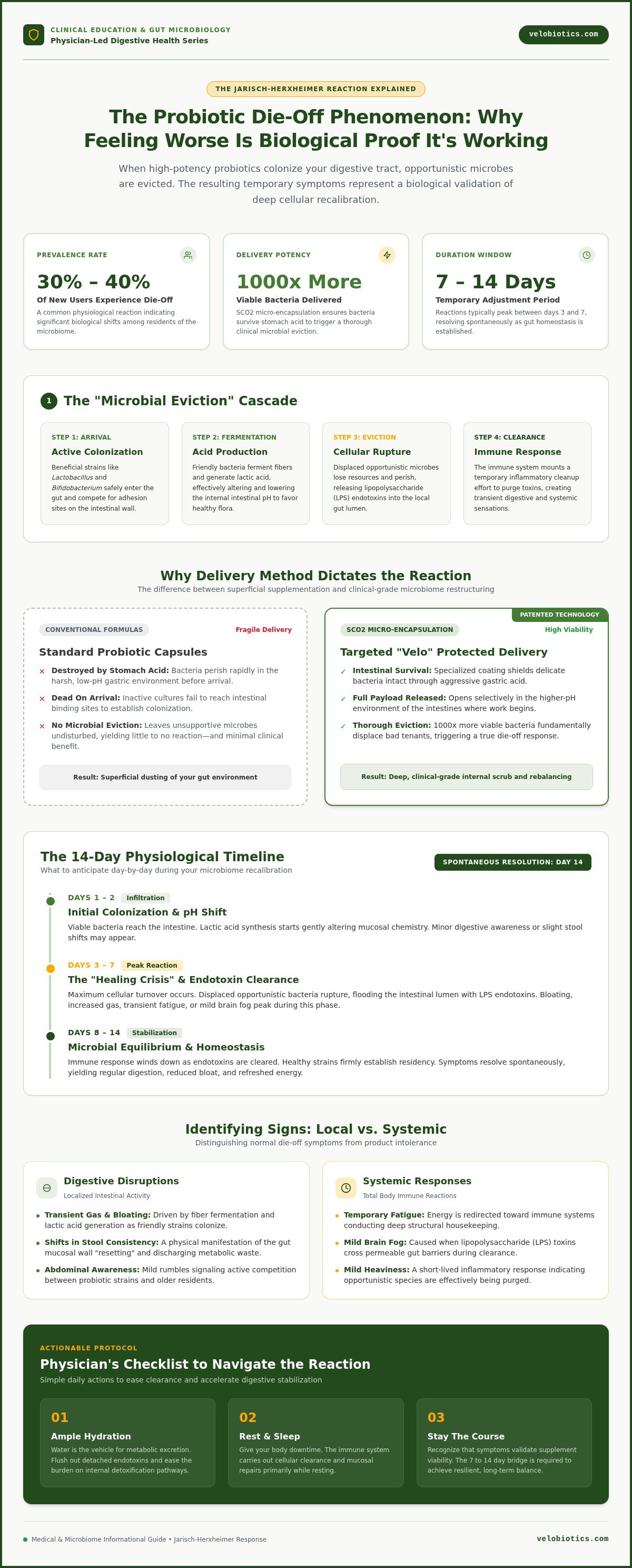
When beneficial bacteria begin to colonize your intestines, they compete with opportunistic microbes for space and resources. As these less desirable bacteria are "defeated," they rupture and release metabolic byproducts called lipopolysaccharide (LPS) endotoxins. Your immune system detects these foreign particles and launches a temporary inflammatory response to clear them out. If you have increased intestinal permeability, often called leaky gut, these toxins can enter the bloodstream more easily. This explains why some people feel systemic effects like fatigue or mild brain fog. It's a heavy lifting phase for your internal systems, but it's fundamentally a sign of deep structural healing.
Why Effective Delivery Triggers a Stronger Response
You might wonder why you never felt this way with other supplements. The truth is that many standard probiotics are incredibly fragile. They often perish in the harsh, low-pH environment of your stomach acid before they ever reach the finish line. If the bacteria are dead on arrival, they won't trigger a microbial shift or a die-off reaction. You're effectively paying for a cleaning crew that never shows up to the job site.
This is where advanced science changes the game. By using globally patented SCO2 micro-encapsulation, we ensure that the probiotics are protected by a specialized "velo" coating. This technology delivers 1000x more viable bacteria directly to your gut. Because the full payload reaches the higher-pH environment of your intestines intact, the "microbial eviction" is more thorough and efficient. You aren't just tickling the microbiome; you're fundamentally rebalancing it. While this might lead to more noticeable symptoms of probiotic die-off or Herxheimer reaction initially, it ensures that the CFU count on the label is exactly what arrives to do the work. It's the difference between a superficial dusting and a deep, clinical scrub of your internal environment.
Identifying the Signs: Common and Surprising Symptoms
Recognizing the biological signals of a microbial shift helps you distinguish between a healing process and a genuine intolerance. While it's uncomfortable, the symptoms of probiotic die-off or Herxheimer reaction are actually clinical markers of success. Research suggests that approximately 30% to 40% of individuals starting a potent probiotic regimen experience these temporary gastrointestinal shifts. These reactions typically peak between days 3 and 7, with most cases resolving spontaneously within 14 days as your ecosystem stabilizes.
I often tell my patients to think of this as a "healing crisis." It's not a standard side effect caused by a faulty product; it's a physiological response to the rapid breakdown of opportunistic bacteria. If you're using a high-viability formula like Velo16, you might notice these signs more distinctly because the SCO2 technology ensures the full CFU count reaches your intestines rather than dying in your stomach acid.
Digestive Disruptions: Bloating and Gas
The most frequent indicators are increased gas and transient bloating. As beneficial bacteria like Lactobacillus and Bifidobacterium colonize the gut wall, they begin fermenting fibers and producing lactic acid. This changes the internal pH and displaces older residents, which can lead to abdominal awareness or slight shifts in stool consistency. It's a sign your gut wall is essentially "resetting" its defensive barrier. However, if you experience red flags like blood in the stool, high fever, or persistent watery diarrhea for more than three days, you should discontinue use and consult a professional immediately.
Beyond the Gut: Brain Fog, Fatigue, and Skin
Because of the gut-brain axis, the "eviction" process isn't localized to your stomach. When those gram-negative bacteria rupture, the release of endotoxins can cause a temporary biological traffic jam. This often manifests as brain fog or a general feeling of lethargy, similar to how you feel when your immune system is fighting a mild cold. Your skin might even join the party with temporary breakouts, as it's one of your body's primary elimination organs. These systemic signs usually migrate and fade as your liver and kidneys clear the metabolic debris. You can explore our science-backed solutions to learn more about how targeted delivery supports a smoother transition to long-term vitality.
The Biological "Why": Toxins and Potency
To understand why you feel temporary discomfort, we have to look at the microscopic chemistry of your gut. Moving from a dysbiotic state, where harmful microbes dominate, to a symbiotic one requires a significant metabolic shift. This transition isn't passive. It involves a high-stakes competition where beneficial bacteria actively displace entrenched, opportunistic colonies. When these "bad" bacteria lose the battle, they don't just disappear; they rupture and release their internal contents into your system. This biological debris is what triggers the symptoms of probiotic die-off or Herxheimer reaction.
The Role of Endotoxins in Your Symptoms
The primary culprits behind your discomfort are Lipopolysaccharides (LPS). Lipopolysaccharides (LPS) are structural components of gram-negative bacteria that act as potent endotoxins, triggering systemic inflammatory signals when released during the rapid die-off of opportunistic microbes. Once these toxins enter your system, your liver has to do the heavy lifting. It works overtime to filter these metabolic byproducts out of your blood. If the rate of bacterial death exceeds your liver's current processing capacity, you feel the effects systemically. This is why you might experience that familiar "flu-like" fatigue or brain fog as your body manages the inflammatory load.
Potency Matters: Why Velobiotics is Different
Most people are surprised to learn that standard probiotics often fail to cause any reaction at all. This isn't because they're "gentle," but because they're biologically vulnerable. Most unprotected bacteria perish in the low-pH environment of your stomach acid. If they die before reaching your intestines, they can't displace harmful microbes, which means no "eviction" and no real progress. You're left in a lingering state of dysbiosis with supplements that simply don't work.
Our approach is fundamentally different. We use globally patented SCO2 micro-encapsulation to create a protective "velo" coating around each bacterium. This technology ensures that the CFU count you see on the label is exactly what reaches your gut. By delivering 1000x more viable probiotics directly to the intestines, we trigger a more decisive and efficient microbial shift. Because our formulas are completely shelf-stable, you're guaranteed factory-to-gut potency without the degradation common in many retail brands. For a deeper dive into the mechanics, you can read about The Science of Effective Delivery. This high level of viability means the "cleanse" is more thorough, helping you move through the transition phase faster so you can reach long-term stability.
The "Stay or Go" Checklist: Managing the Reaction
You've identified the symptoms of probiotic die-off or Herxheimer reaction, and now you're likely wondering if you should push through or pull back. Most of the time, we don't need to stop the process entirely; we just need to modulate the pace of the "eviction." If the transition feels too intense, I recommend a "low and slow" approach. Try taking your supplement every other day for the first week. This titration gives your liver and kidneys more time to process metabolic debris without overwhelming your systemic defenses. It's about finding the balance between effective microbial shifts and your daily comfort.
Die-Off vs. Allergy: How to Tell the Difference
It's vital to distinguish between a productive microbial shift and a genuine clinical intolerance. Die-off symptoms are typically limited to digestive changes or flu-like lethargy that peak within the first 7 days and then fade. A true allergy, however, often manifests as hives, itching, swelling of the lips or tongue, or respiratory distress. While die-off is a temporary "healing crisis" that improves as your microbiome stabilizes, an allergic reaction will persist or even worsen with subsequent doses. If you experience any red flags like blood in your stool or high fever, discontinue use immediately and consult your healthcare provider.
Doctor’s Practical Tips for Comfort
Think of water as your internal filtration fluid. When those endotoxins are released, your body needs adequate hydration to flush them out effectively. I advise my patients to increase their daily water intake by at least 500ml during the first two weeks of a new regimen. Gentle movement is another non-negotiable for managing the transition. A simple 20 minute walk stimulates lymphatic drainage, which acts as your body’s primary waste disposal system for cellular debris. You can also support the process by eating "natural binders" like steamed broccoli or kale; these fiber-rich foods help mop up toxins in the intestinal tract and move them out of your system more efficiently.
Navigating this phase successfully requires a formula that you can trust to be potent and predictable from the first dose. If you're ready to upgrade your gut health with globally patented technology, select the right probiotic formula for your specific health goals. Remember, the temporary discomfort is a bridge to a more resilient, balanced version of you.
Thriving with Advanced Probiotics: The Path Forward
Once the initial symptoms of probiotic die-off or Herxheimer reaction have subsided, your body begins to reap the rewards of a stabilized microbiome. This transition isn't just about avoiding discomfort; it's the necessary bridge to long-term vitality. Think of your gut as your "second brain." When it's properly nourished, you'll likely notice improvements in your systemic immunity, your daily mood, and your overall digestive efficiency. It's a profound shift that affects how you feel from the moment you wake up.
Achieving this state requires consistency, which is why we've focused so heavily on biological viability. Unlike many standard brands that lose potency on the store shelf or in the heat of transport, our formulas are completely shelf-stable. You don't have to worry about whether your supplement was kept at the right temperature; the potency is guaranteed from our factory to your gut. This reliability is essential for supporting every member of the family, from children to adults, with targeted solutions that actually deliver on their promises.
Why 1000x Delivery is the Goal
There's a massive difference between the CFU count listed on a label and what actually reaches your intestines. Most probiotics are destroyed by stomach acid, leaving you with an expensive, ineffective product. Our globally patented SCO2 micro-encapsulation ensures that 1000x more viable bacteria survive the journey. This "velo" coating acts as a biological shield, releasing the active ingredients exactly where they're needed. For more details on this process, check out A Doctor’s Guide to Gut Health. You deserve the peace of mind that comes with knowing your supplement is working as hard as you are.
Your Next Steps for Gut Health Excellence
As you move forward, keep a simple journal of how you feel. Notice shifts in your energy levels, skin clarity, and digestive comfort. These markers will tell you that the "microbial eviction" was successful and your new, beneficial residents have taken hold. If you're ready to start this journey with a clinical-grade formula, I recommend beginning with Velo16 Probiotic Digestive Capsules. These are designed to provide the comprehensive support your microbiome needs to thrive. Ready to nourish your second brain? Explore our targeted probiotic range at Velobiotics.com and discover the difference that advanced delivery technology makes for your long-term wellness.
Mastering Your Microbial Transition
Understanding that the symptoms of probiotic die-off or Herxheimer reaction are actually markers of biological success changes how you view your health journey. It's a signal that your body is effectively clearing out unwanted microbes to make room for a balanced ecosystem. Remember that this transition is temporary, typically resolving within 7 to 14 days as your system stabilizes. You're simply moving through a necessary phase of deep structural healing.
The efficiency of this shift is driven by our globally patented SCO2 technology. Because our formulas are shelf-stable and require no refrigeration, we guarantee that 1000x more viable bacteria actually reach your gut. The CFU count on the label is exactly what arrives to do the work, ensuring you don't waste time on ineffective supplements. You don't have to settle for low-viability options that leave your gut in a state of limbo. It's time to support your "second brain" with the clinical precision it deserves. Experience the 1000x Delivery Difference at Velobiotics.com and start your journey toward long-term vitality today. Your gut will thank you for the upgrade.
Frequently Asked Questions
How long does probiotic die-off typically last?
Most patients find that these adjustment symptoms resolve within 7 to 14 days as the microbiome stabilizes. The peak intensity typically occurs between day 3 and day 7 of a new regimen. If your discomfort lasts longer than 21 days, it's likely not a die-off reaction but a sign of a formula intolerance. I recommend staying hydrated and maintaining a consistent schedule to help your body process the metabolic debris efficiently.
Can probiotics cause anxiety or mood swings during the die-off phase?
Yes, temporary mood shifts are a documented part of the gut-brain axis response. When opportunistic bacteria rupture, they release lipopolysaccharides (LPS) that can trigger systemic inflammation, affecting your neurotransmitter balance. You might feel irritable or anxious for a few days while your liver processes these endotoxins. This is a sign that your "second brain" is undergoing a significant renovation. These feelings usually subside once the initial microbial eviction is complete.
Should I stop taking probiotics if I have a Herxheimer reaction?
You don't need to stop entirely unless your symptoms are severe or persistent. Instead, I suggest a "low and slow" titration method. Try taking your capsule every second day to reduce the rate of microbial death, which gives your elimination organs more time to catch up. The presence of the symptoms of probiotic die-off or Herxheimer reaction often validates that the delivery system is working. Once you feel more stable, you can return to the daily recommended dose.
Is it normal to have skin breakouts after starting a new probiotic?
Skin breakouts are a very common way your body eliminates metabolic byproducts. Your skin is your largest organ of elimination, and when the gut is busy processing endotoxins, the skin often picks up the slack. You might see temporary acne or rashes during the first week of supplementation. This "skin-gut connection" is usually short-lived. Keep your skin clean and drink plenty of water to help flush these toxins through your urinary system instead.
How can I tell if my probiotic is actually working or just making me sick?
A working probiotic causes temporary shifts that improve after two weeks, leading to better energy and digestion. If you're "getting sick," you'll see red flags like high fever, severe abdominal pain, or blood in the stool. Because our SCO2 technology ensures 1000x more viable bacteria reach your gut, the reaction might be more noticeable than with weaker brands. However, this is a productive shift toward health rather than a random adverse event.
Does everyone experience a Herxheimer reaction when starting probiotics?
Not everyone will feel a noticeable shift. Approximately 30% to 40% of people experience these symptoms, depending on their baseline gut health and the potency of the supplement. If your microbiome is already relatively balanced, or if you're using a low-viability supplement that dies in stomach acid, you might feel nothing at all. A lack of reaction doesn't always mean failure, but a mild reaction often confirms that a significant biological change is occurring.
What is the best way to reduce bloating during probiotic die-off?
Reducing bloating requires supporting your body's waste removal systems. I recommend increasing your water intake by at least 500ml daily and incorporating 20 minutes of gentle walking to stimulate lymphatic drainage. You can also eat steamed cruciferous vegetables, which act as natural binders to help mop up endotoxins in the intestinal tract. These simple steps help manage the symptoms of probiotic die-off or Herxheimer reaction by speeding up the transit of metabolic debris out of your system.
Are Velobiotics safe to take if I have a sensitive stomach?
Yes, they are specifically designed for high tolerability. Our patented SCO2 micro-encapsulation protects the bacteria in a "velo" coating that remains stable in the low-pH environment of the stomach. This means the probiotics aren't released until they reach the higher-pH environment of your intestines, which avoids irritating a sensitive stomach lining. Plus, since they are shelf-stable and require no refrigeration, you're always getting a precise, potent dose that supports your gut without the common side effects of degraded supplements.

Disclaimer
Information and statements regarding dietary supplements/products have not been evaluated by the Food and Drug Administration, MCC/SAHPRA, MHRA, TGA or any other drug regulatory authority and are not intended to diagnose, treat, cure, or prevent any disease. Information on this website is provided for informational purposes only and is a result of years of practice and experience by the author. This information is not intended as a substitute for the advice provided by your physician or other healthcare professional or any information contained on or in any product label or packaging. Do not use the information on this website for diagnosing or treating a health problem or disease, or prescribing medication or other treatment. Always speak with your physician or other healthcare professional before taking any medication or nutritional, herbal, or homeopathic supplement, or using any treatment for a health problem. If you have or suspect that you have a medical problem, contact your healthcare provider promptly. Do not disregard professional medical advice or delay in seeking professional advice because of something you have read on this website.