

Best Collagen for Gut Lining Repair: A Doctor’s Guide to Sealing a Leaky Gut
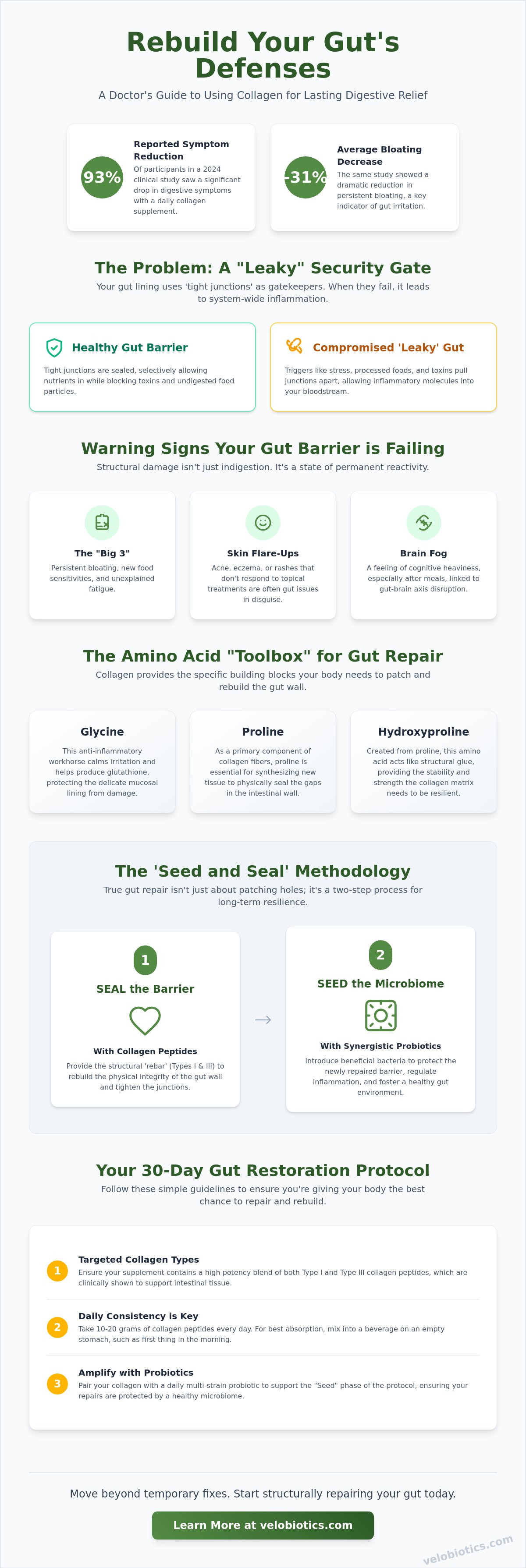
Did you know that 93% of participants in a 2024 clinical study reported a significant reduction in digestive symptoms after using a daily collagen peptide supplement? If you're struggling with persistent bloating, which participants in that same study saw drop by an average of 31%, you aren't alone. Most of my patients come to me exhausted from wasting money on trendy powders that don't survive the harsh environment of the stomach. Finding the best collagen for gut lining repair requires looking past the marketing and focusing on the biological viability of the peptides. According to a June 2026 meta-analysis, while many athletic claims have been debunked, the evidence for collagen supporting tissue integrity remains a cornerstone of digestive health.
I understand the frustration of trying to decode the difference between Type I and Type III collagen while your digestive system feels like it's under constant siege. In this guide, I'll show you how to effectively seal your intestinal barrier using a high potency combination of collagen and synergistic probiotics. You'll learn the exact Seed and Seal protocol I use to reduce systemic inflammation and the clear criteria you need to choose a supplement that delivers measurable results. We'll move beyond vague wellness promises and look at the clinical reality of repairing your gut for long term comfort.
Key Takeaways
- Learn how tight junctions act as the gatekeepers of your health and why their failure leads to the systemic inflammation associated with "leaky gut."
- Discover the specific "Power Trio" of amino acids that serve as the essential building blocks for cellular repair within your intestinal wall.
- Identify why the best collagen for gut lining repair must include specific peptide types to reinforce both the physical barrier and the protective mucosal layer.
- Master the "Seed and Seal" methodology to ensure your structural repairs are maintained by a thriving, well-regulated microbiome.
- Follow a practical 30-day restoration protocol with clear guidelines on dosage and consistency to finally end persistent digestive discomfort.
Understanding the Gut Barrier: Why 'Leaky Gut' Requires Structural Repair
Imagine your gut lining as a high-tech security gate. It's a microscopic, single layer of epithelial cells that acts as the primary filter between the food you eat and your bloodstream. These cells are held together by proteins called tight junctions. When these junctions are healthy, they're selective and strong, allowing nutrients in while keeping pathogens out. However, when they become compromised, we face a condition known as intestinal permeability. To get a foundational scientific perspective, Understanding the Gut Barrier is essential for anyone looking to reverse chronic digestive distress and systemic inflammation.
Chronic inflammation acts as the primary architect of barrier destruction. It triggers a biological cascade that degrades the extracellular matrix, which is a collagen-rich mesh providing the structural scaffolding for your gut cells. Without this support, the lining loses its integrity. This is why searching for the best collagen for gut lining repair is a logical step. You're essentially providing the raw materials required to rebuild the physical "rebar" of your intestinal wall. This is the "seal" in the Seed and Seal protocol I recommend to my patients.
To better understand this concept, watch this helpful video:
The 'Tight Junction' Crisis
Modern life is remarkably efficient at dismantling your gut's defenses. High-stress environments, processed diets, and environmental toxins physically pull these tight junctions apart. Your body actually produces a protein called zonulin that signals these gates to open. When zonulin levels are chronically high, the gates stay open. Intestinal permeability is the root of systemic inflammation. This breakdown tells your body to prioritize defense over repair, leading to a cycle of damage that only structural intervention can break. Without the right building blocks, your body simply can't knit these junctions back together.
Signs Your Gut Lining Needs Structural Support
How do you know if your barrier is failing? I look for specific indicators in my clinic that suggest the physical lining is compromised. Unlike temporary indigestion from a heavy meal, structural lining damage feels like a permanent state of reactivity. Look for these signs:
- The Big 3: Persistent bloating, new food sensitivities, and unexplained fatigue.
- Skin Flare-ups: Acne, eczema, or rashes that don't respond to topical treatments.
- Brain Fog: A general sense of cognitive heaviness after eating.
Skin issues are frequently gut issues in disguise. If your symptoms persist regardless of what you eat, your extracellular matrix likely needs the specific amino acids found in the best collagen for gut lining repair. Once we provide these nutrients, we can transition from a state of constant inflammation to one of active structural restoration.
The Amino Acid 'Toolbox': How Collagen Peptides Rebuild the Lining
Think of collagen not as a general food source, but as a specialized structural repair kit. While many people view protein as a way to build muscle, collagen serves a different biological purpose. It provides the specific architecture for your connective tissues. According to The Nutrition Source, collagen is a primary component of our extracellular matrix, which is the "glue" that keeps our intestinal cells from drifting apart. When you consume the best collagen for gut lining repair, you aren't just eating protein; you're delivering messenger molecules that tell your gut cells it's time to regenerate.
There's a significant difference between eating a piece of tough meat and taking hydrolyzed collagen peptides. Standard collagen molecules are massive and difficult for a compromised digestive system to break down. Hydrolysis is a process that pre-digests these large proteins into tiny peptides. These smaller chains bypass the need for intense stomach acid and are absorbed directly into the bloodstream. This high bioavailability ensures the amino acids actually reach the intestinal wall instead of simply passing through your system. For those with serious digestive hurdles, using a clinically focused probiotic and collagen blend can bridge the gap between ingestion and actual cellular utilization.
Glycine: The Anti-Inflammatory Anchor
Glycine is the smallest amino acid, but it carries the heaviest load in gut restoration. It acts as a protective shield for the gastric mucosa, helping to neutralize oxidative stress and acid damage. Perhaps most importantly, glycine is a precursor to glutathione, your body's master antioxidant. Without enough glycine, your gut lining can't seal properly because it's too busy fighting off local inflammation. It provides the calm environment necessary for the structural work to begin.
Glutamine and Proline: The Construction Crew
If glycine is the architect, glutamine and proline are the laborers. Glutamine is the preferred fuel source for the enterocytes, the cells that line your small intestine. When these cells have plenty of glutamine, they reproduce faster and maintain tighter bonds. Proline then steps in to reinforce the physical mesh of the gut wall. It adds the "stretch" and durability required for the lining to withstand the daily passage of food and toxins. Understanding the difference between eating raw collagen and absorbing targeted peptides is the key to moving from temporary relief to permanent cellular repair. By providing this specific amino acid toolbox, you give your body the exact materials it needs to knit the intestinal barrier back together.
Type I vs. Type II vs. Type III: Which is Best for Gut Lining Repair?
Choosing the right supplement isn't just about the brand name; it's about the biological profile of the protein. While we've already covered the amino acids that act as raw materials, these are organized into specific types that perform different functions in the body. If you're searching for the best collagen for gut lining repair, you'll likely encounter Types I, II, and III. Type I is the most abundant protein in the human body and provides the primary structure for the intestinal wall. Type III often works alongside it, especially in fast-growing tissues and during the initial stages of cellular healing.
Many people overlook Type II because it's traditionally marketed for joint health. However, clinical perspectives emphasize the role of collagen in gut health, noting that Type II is essential for maintaining the mucosal layer that protects the intestinal lining. A multi-type approach is almost always more effective than a single-source supplement. It provides a more comprehensive array of peptides to support both the physical barrier and the protective mucus that sits on top of it. This dual action is vital for long term digestive stability.
Bovine vs. Marine Collagen for Digestion
Bovine collagen is my clinical gold standard for gut repair. It naturally contains both Type I and Type III collagen, which closely matches the structural needs of the human intestinal tract. Marine collagen is often praised for its smaller molecular size, but it typically only provides Type I. While marine options are excellent for skin hydration, they lack the Type III variety that is so critical for organ and gut tissue restoration. For my patients, grass-fed bovine peptides offer the most complete repair kit for sealing a leaky gut. It's about finding the source that offers the widest spectrum of tissue support.
The Bioavailability Factor
The effectiveness of your collagen depends entirely on whether it survives the journey to your intestines. Molecular weight is measured in Daltons; the lower the number, the better the absorption. Standard collagen is too heavy for the body to use efficiently. Hydrolyzation solves this by pre-digesting the protein into smaller peptides. This is a similar challenge to what we see with live cultures. If the active ingredients don't survive the stomach's acidic environment, they can't do their job. You can learn more about this delivery hurdle in our guide on Probiotics That Survive Stomach Acid. Using hydrolyzed peptides ensures that the amino acids are small enough to be utilized by your intestinal cells the moment they arrive.
The 'Seed and Seal' Method: Why Collagen Needs Probiotics to Work
Imagine trying to patch a hole in a dam while the water is still churning violently. You might apply the best sealant available, but the turbulent environment will wash it away before it ever sets. This is exactly what happens when you take collagen without addressing the microbiome. Sealing the gut with collagen peptides is only half the battle. To make those repairs permanent, you must seed the environment with beneficial bacteria. This synergistic relationship is the foundation of the Seed and Seal method, ensuring that your structural repairs aren't just a temporary fix.
The microbiome actually regulates the enzymes responsible for both building and breaking down collagen. Specifically, certain bacteria manage Matrix Metalloproteinases (MMPs). When your gut is in a state of dysbiosis, these enzymes can become overactive, degrading the very tissue you're trying to restore. By balancing the bacterial landscape, you essentially tell these enzymes to stand down. This creates the stable biological environment necessary for the best collagen for gut lining repair to actually integrate into your intestinal wall and strengthen those vital tight junctions.
The Synergy of Probiotic Collagen Peptides
Specific probiotic strains do more than just aid digestion; they act as biological foremen. Strains within a diverse 16-strain profile stimulate the growth of epithelial cells, the very cells that form your gut barrier. They also play a critical role in neutralizing lipopolysaccharides (LPS). These are inflammatory toxins produced by harmful bacteria that physically trigger the opening of tight junctions. By reducing the LPS load, probiotics remove the primary trigger for leaky gut, allowing the collagen to do its structural work without constant interference from inflammatory signals.
Maximizing Absorption with 16 Strains
Diversity is the key to resilience. A 16-strain approach provides a broader spectrum of protection than single-strain supplements. This variety ensures that every niche of the intestinal tract is supported, preventing the breakdown of newly formed gut tissue. However, these bacteria must actually reach the gut alive. This is where micro-encapsulation technology becomes vital, protecting the delicate seeds from stomach acid so they can thrive alongside the collagen seal. To ensure your seeding is as effective as your sealing, I recommend pairing your repair protocol with Velo16 Probiotic Digestive Capsules.
If you're ready to move beyond basic supplements and embrace a clinically backed recovery, you can explore our full range of gut repair solutions designed specifically for high biological viability and long term digestive comfort.
The Doctor’s Protocol: How to Use Collagen for Gut Repair
Consistency is the silent engine of clinical success. While many patients expect overnight results, the biological reality of tissue remodeling takes time. Your intestinal cells, or enterocytes, regenerate approximately every three to five days, but rebuilding the underlying structural matrix requires a sustained effort. I recommend a 30-Day Seal phase to provide the continuous "rebar" your gut needs to stabilize. The best collagen for gut lining repair is only as effective as your commitment to the daily routine. Skipping days creates gaps in the repair process, allowing inflammation to reset the clock on your progress.
Dosage is where many generic wellness plans fail. For active structural restoration, you need a higher concentration than what is typically found in a "beauty" supplement. I prescribe between 10g and 20g of hydrolyzed peptides daily during the initial repair phase. Timing is just as critical as the amount. You should take your collagen on an empty stomach, ideally thirty minutes before breakfast. This ensures that the peptides have direct contact with the gastric mucosa without competing with other dietary proteins for absorption. When you provide the best collagen for gut lining repair in a fasted state, you maximize the biological viability of every gram.
Step-by-Step Daily Routine
- Morning: Mix one scoop of high-quality probiotic collagen into warm water. Avoid boiling water, as extreme heat can occasionally destabilize certain delicate peptide chains.
- Mid-day: Focus on consuming prebiotic fibers like chicory root or slightly under-ripe bananas. These act as the fertilizer for the "seeds" we discussed in the previous section.
- Evening: Protect your progress by avoiding late-night inflammatory triggers. Sugar and alcohol are the primary culprits that physically degrade the tight junctions you spent all day rebuilding.
What to Look for on the Label
The supplement market is unfortunately crowded with fillers that can actually worsen intestinal permeability. Always verify that your product has undergone third-party testing for heavy metals; this is non-negotiable for bovine and marine sources. Avoid formulas containing artificial sweeteners or thickeners like carrageenan, which are known to trigger digestive distress in sensitive individuals. Instead, look for a "Probiotic Plus" formula that includes gut-specific strains such as L. rhamnosus to support the mucosal barrier. To simplify your protocol, you can Explore the Almasi Probiotics Collagen Powder for a combined approach that seeds and seals simultaneously. By following this structured medical protocol, you transition from managing symptoms to actively engineering a resilient, healthy gut barrier.
Reclaim Your Digestive Integrity with Targeted Structural Support
Repairing a compromised intestinal barrier requires more than just a generic supplement; it demands a clinical strategy that addresses both structure and environment. We've explored how the Seed and Seal method utilizes specific amino acids to knit the lining back together while beneficial bacteria manage the inflammatory triggers that cause damage. Finding the best collagen for gut lining repair means choosing a solution that addresses both the physical barrier and the biological ecosystem through high-potency, hydrolyzed peptides.
Our approach is grounded in this exact science. It's formulated by medical doctors to solve the delivery gaps that leave other supplements ineffective. By using proprietary micro-encapsulated technology, we ensure that 1000x more bacteria reach your gut compared to standard offerings. This formula includes 16 clinically-studied probiotic strains to provide the diverse microbial support your new gut tissue needs to thrive. You don't have to live with persistent bloating and digestive distress forever.
Take the final step in your restoration journey and Shop the 16-Strain Probiotic Collagen Peptides for Total Gut Repair. Your path to a resilient, sealed gut barrier starts with the right biological building blocks. You've got the knowledge and the protocol; now it's time to give your body the support it deserves.
Frequently Asked Questions
How long does it take for collagen to repair the gut lining?
It typically takes 30 to 90 days of consistent daily use to achieve measurable structural improvements in the intestinal barrier. While the cells lining your gut turn over every few days, the underlying collagen matrix requires a sustained supply of amino acids to fully stabilize and strengthen. Most of my patients report a noticeable reduction in bloating and digestive discomfort within the first two to three weeks of a dedicated protocol.
Can I just drink bone broth instead of taking a collagen supplement?
Bone broth is a wonderful whole-food source of nutrients, but it lacks the standardized peptide concentration found in the best collagen for gut lining repair supplements. The collagen in broth is often in its large, whole form, which can be difficult for a compromised digestive system to break down efficiently. Hydrolyzed supplements provide "pre-digested" peptides that are small enough for immediate cellular absorption, offering more predictable clinical results.
Does collagen help with Leaky Gut Syndrome specifically?
Collagen provides the essential building blocks, specifically glycine and glutamine, that reinforce the tight junctions responsible for maintaining a sealed intestinal barrier. By strengthening the physical structure of the gut wall, collagen helps address the underlying cause of intestinal permeability. While "leaky gut" isn't a recognized medical diagnosis by the FDA, the role of collagen in supporting the structural integrity of the digestive tract is well-supported by clinical observation.
Is bovine or marine collagen better for digestive health?
Bovine collagen is the clinical gold standard for gut repair because it naturally contains both Type I and Type III collagen. These two types are the primary structural components of the human intestinal wall, making bovine peptides a closer biological match for your repair needs. Marine collagen is fantastic for skin elasticity due to its high Type I content, but it often lacks the Type III variety required for deep gut tissue restoration.
Can collagen cause bloating or digestive upset?
High-quality hydrolyzed collagen is generally very easy on the stomach, but some people may experience mild bloating if they introduce a full dose too quickly. This reaction is usually a sign that your digestive system needs a few days to adjust to the increased protein load. I recommend starting with a half-dose for the first five days to allow your gut environment to adapt before moving to the full 10g to 20g repair dose.
Should I take collagen with or without food for gut repair?
You should take your collagen on an empty stomach, ideally 30 minutes before breakfast, to ensure the peptides have direct contact with the gut lining. Taking it without other food prevents the collagen from competing with other dietary proteins for absorption, which maximizes its biological viability. If your collagen is paired with probiotics, this fasted state also helps the beneficial bacteria move through the stomach more quickly to reach the intestines.
Are there any side effects to taking high doses of collagen for the gut?
Collagen is remarkably safe, but taking excessive amounts beyond 30g per day can lead to a feeling of over-fullness or mild constipation. Sticking to the recommended 10g to 20g range is usually the "sweet spot" for effective repair without digestive sluggishness. The most important safety factor is ensuring your supplement is third-party tested for heavy metals, as poor-quality bovine or marine sources can carry environmental contaminants that hinder the healing process.

Disclaimer
Information and statements regarding dietary supplements/products have not been evaluated by the Food and Drug Administration, MCC/SAHPRA, MHRA, TGA or any other drug regulatory authority and are not intended to diagnose, treat, cure, or prevent any disease. Information on this website is provided for informational purposes only and is a result of years of practice and experience by the author. This information is not intended as a substitute for the advice provided by your physician or other healthcare professional or any information contained on or in any product label or packaging. Do not use the information on this website for diagnosing or treating a health problem or disease, or prescribing medication or other treatment. Always speak with your physician or other healthcare professional before taking any medication or nutritional, herbal, or homeopathic supplement, or using any treatment for a health problem. If you have or suspect that you have a medical problem, contact your healthcare provider promptly. Do not disregard professional medical advice or delay in seeking professional advice because of something you have read on this website.