

Doctor’s Guide: The Best Foods That Promote Healthy Vaginal Flora in 2026
What if the secret to ending the cycle of recurring BV isn't found in a prescription bottle, but in your grocery cart? You've likely felt the frustration of a pH imbalance that just won't quit, leaving you confused by conflicting advice while you deal with persistent discomfort. It's time to stop guessing and start feeding your body the specific foods that promote healthy vaginal flora to reclaim your balance. Research into the gut-vagina axis shows that what you eat directly impacts the protective Lactobacillus strains that keep your intimate ecosystem resilient.
I've spent years studying how biological viability affects your health, and I'm going to simplify the complex science into a clear, actionable plan. You'll discover the exact nutrients that nourish your internal defenses and learn how the 2025-2030 Dietary Guidelines support your vaginal health goals. We'll cover everything from folate-rich greens to the specific fermented staples that provide a biological edge for your microbiome; this guide gives you a definitive shopping list for lasting comfort and freedom from irritation.
Key Takeaways
- Understand the mechanics of your "Acid Shield" and how specific bacteria produce the lactic acid required for a healthy, low-pH environment.
- Discover the specific fermented foods that promote healthy vaginal flora and why many popular "probiotic" drinks are actually hidden sugar traps.
- Learn which prebiotic "superfoods" act as the ultimate fertilizer to help your protective bacteria colonize and outcompete harmful pathogens.
- Uncover the connection between healthy fats and intimate lubrication, alongside the specific nutrients that prevent bacteria from sticking to your tract.
- Recognize the clear biological signs that indicate when dietary changes aren't enough and a clinical pH reset is required to break down biofilms.
Understanding the Vaginal Ecosystem: Why Your Flora Matters
The vagina is a high-tech biological fortress. Within this environment, a diverse community of microorganisms works tirelessly to maintain an equilibrium that prevents pathogens from taking root. We call this community the vaginal flora. In a healthy state, this ecosystem is dominated by the Lactobacillus species. These beneficial bacteria act as the primary residents, ensuring that the environment remains inhospitable to "bad" bacteria like those that cause Bacterial Vaginosis (BV) or yeast overgrowth. Integrating specific foods that promote healthy vaginal flora into your daily routine is the most effective way to fuel this natural defense system.
To better understand this concept, watch this helpful video:
The secret to this protection lies in the "Acid Shield." Lactobacillus bacteria consume glycogen from the vaginal walls and produce lactic acid as a byproduct. This process keeps the environment acidic, which is exactly what you want. When this balance is disrupted, we call it dysbiosis. This is when you'll notice symptoms like unusual odor, itching, or general discomfort. Modern research into the "Gut-Vagina Axis" confirms that your digestive health and vaginal health are linked; the gut serves as a reservoir for beneficial bacteria that can migrate to the vaginal tract. Your diet is the primary fuel for this entire biological transit system.
The Lactobacillus Army: Your Internal Guardians
Think of specific strains like L. rhamnosus and L. reuteri as your body's elite security team. These guardians don't just hang around; they actively create a "biofilm." This is a microscopic, protective coating that covers the vaginal lining, making it physically impossible for harmful pathogens to stick or colonize. When you eat foods that promote healthy vaginal flora, you're essentially sending fresh recruits and supplies to this army. Without proper nutrition, your security team becomes sluggish, leaving the gates open for infections to take hold.
pH Balance 101: The Chemistry of Comfort
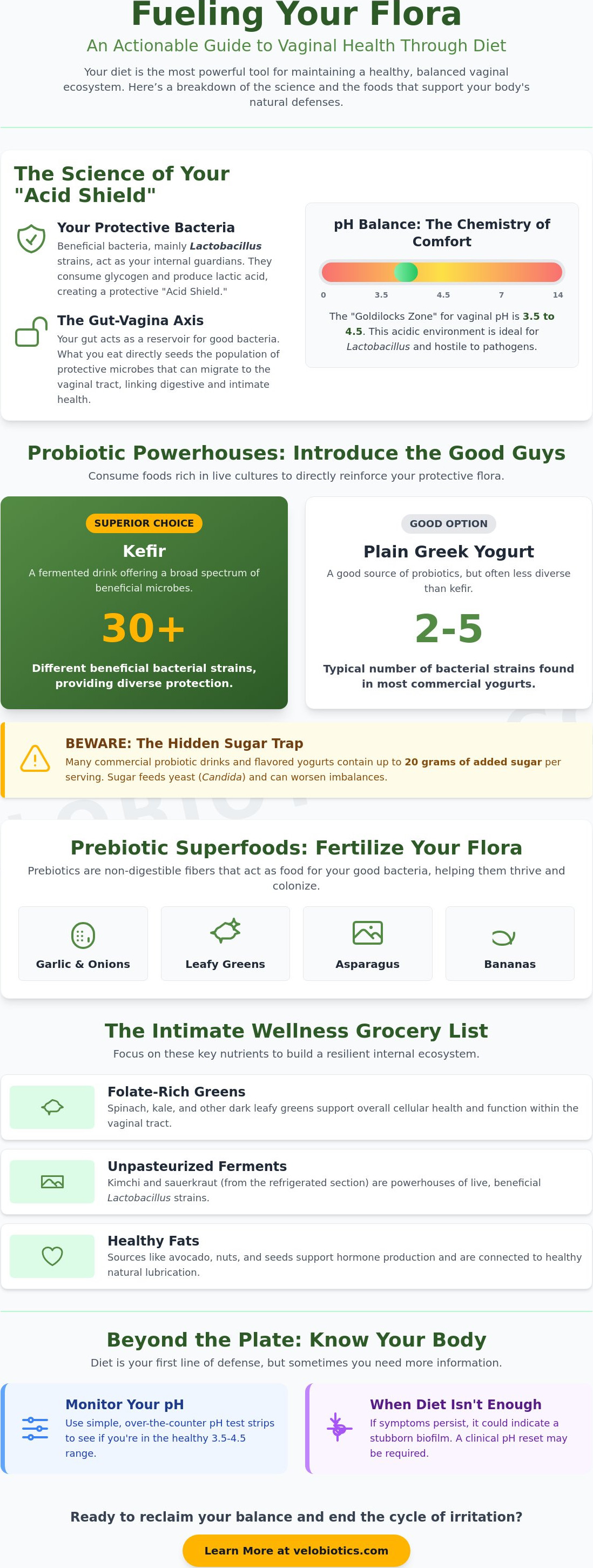
In the world of vaginal chemistry, 3.5 to 4.5 is the "Goldilocks zone." This acidic range is perfect for your good bacteria but deadly for most pathogens. Unfortunately, your pH is under constant attack from disruptors. High-sugar diets, which were flagged in the 2026 dietary guideline updates for their inflammatory effects, can feed the wrong bacteria and spike your pH. Hormonal shifts during your cycle also play a role. If you're feeling "off," you can easily monitor this at home by using over-the-counter pH test strips; simply press the strip against the vaginal wall and compare the color change to the provided chart to see if you've drifted out of the healthy zone.
Probiotic-Rich Foods: Introducing the Good Guys
If you want to maintain a resilient microbiome, you have to prioritize the "Gut-Vagina Axis." Most people think the vagina is a biological island; it's actually part of a connected network where your digestive health dictates your intimate balance. When you consume foods that promote healthy vaginal flora, those beneficial bacteria don't just stay in your stomach. They migrate. However, the modern grocery store is a minefield of "sugar traps." Many commercial yogurts and probiotic drinks contain up to 20 grams of added sugar per serving. Since sugar is the primary fuel for Candida albicans, the yeast responsible for most infections, these products can actually trigger the very imbalances you're trying to prevent.
Fermented Favorites for Your Flora
Kefir is often the superior choice over standard Greek yogurt. While yogurt typically offers two to five bacterial strains, kefir can contain up to 30 or more, providing a much broader spectrum of protection. Fermented vegetables like unpasteurized sauerkraut and kimchi are also powerhouses. The key word here is "unpasteurized." If a product is shelf-stable and not in the refrigerated section, the heat from pasteurization has likely killed the live cultures. Try adding a tablespoon of kimchi to your morning eggs or swapping your afternoon snack for a cup of plain, unsweetened kefir to keep your internal defenses replenished without the sugar spike.
The Digestion Hurdle: Will Those Bacteria Actually Reach the Vagina?
The journey from your mouth to the vaginal canal is a treacherous one. Your stomach is a literal vat of acid designed to destroy bacteria, which is a massive problem for biological viability. This is the survival challenge. Most CFUs (Colony Forming Units) listed on food labels are decimated long before they reach the intestines, let alone the vaginal tract. I've spent my career obsessing over this efficacy gap. In the Velobiotics story, we explain how we developed specific technology to shield these delicate organisms from gastric acid, ensuring they actually arrive at their destination alive and functional.
While diet serves as your essential foundation, the clinical reality is that food-based probiotics often lack the concentration needed to resolve a stubborn imbalance. If you're looking for a more direct way to ensure these "good guys" survive the trip, consider a targeted solution like Femina Probiotic Capsules to provide the high-potency support your flora requires. Always look for the "Live and Active Cultures" seal on food packaging; it's your only guarantee that the manufacturer actually verified the presence of beneficial bacteria at the time of production.
Prebiotic Superfoods: Feeding Your Protective Flora
If you've been diligently eating fermented foods but still face recurring discomfort, you might be missing the most critical part of the equation: prebiotic fuel. Think of your Lactobacillus as a specialized workforce; they can't protect your ecosystem if they don't have the energy to do the job. Prebiotics are non-digestible fibers that act as a high-grade fertilizer, ensuring the foods that promote healthy vaginal flora you consume actually lead to long-term colonization. Without this fertilizer, even the best probiotics are just passing through without making a permanent home.
Garlic, onions, leeks, and asparagus are top-tier sources of inulin. This specific fiber is a preferred meal for your internal guardians. I also recommend slightly under-ripe bananas. They contain high levels of resistant starch, which survives the initial stages of digestion to reach the bacteria that need it most. A starved microbiome is a weak one. When your protective bacteria are underfed, they can't produce the protective biofilms needed to keep pathogens away, leaving your intimate ecosystem vulnerable to shifts in pH. For those who find it difficult to get enough fiber through whole foods alone, a supplement like GutSlim Probiotics Supergreens can provide a necessary nutritional bridge.
Fiber and Resistant Starch: The Bacterial Buffet
When your gut bacteria ferment these fibers, they produce short-chain fatty acids (SCFAs). These compounds are biological powerhouses that lower systemic inflammation and strengthen your overall immune response. To get the best results, incorporate whole grains like quinoa, brown rice, and barley into your rotation. These grains provide the steady "burn" of energy your microbiome requires. If you aren't used to a high-fiber diet, start with small servings. Increasing your intake too quickly can cause temporary bloating as your flora adjusts to the new abundance of resources.
Sweet Potatoes and Vitamin A: Strengthening the Mucosal Barrier
Your vaginal health isn't just about bacteria; it's about the physical integrity of the vaginal and uterine walls. When selecting foods that promote healthy vaginal flora, don't overlook the humble sweet potato. They are rich in beta-carotene, which your body converts into Vitamin A. This nutrient is essential for maintaining a healthy mucosal barrier and supporting the production of cervical mucus. This mucus isn't just a lubricant; it's a transport medium for your protective bacteria. To maximize the biological viability of this nutrient, roast your sweet potatoes with a healthy fat like olive oil, as Vitamin A is fat-soluble and requires lipids for proper absorption.
The Intimate Wellness Grocery List: Specific Nutrients for Balance
While we've discussed the "army" of bacteria and the "fertilizer" that feeds them, your internal ecosystem also requires specific functional nutrients to maintain its structural integrity. Think of these as the infrastructure and defense weapons of your intimate health. By selecting targeted foods that promote healthy vaginal flora, you can address issues like tissue thinning, dryness, and recurring bacterial adhesion before they escalate into clinical infections. This functional approach ensures that your body isn't just hosting good bacteria, but actively protecting them.
Cranberries: Beyond the UTI
Many people associate cranberries only with urinary tract health, but their role in vaginal flora balance is equally significant. The magic lies in Proanthocyanidins (PACs). These compounds act like a non-stick coating for your internal tracts, preventing E. coli and other opportunistic pathogens from anchoring to the walls. However, you must avoid the "cranberry cocktail" found in the juice aisle; these are typically loaded with refined sugars that feed yeast and disrupt your pH. Instead, opt for 100% pure unsweetened juice or a concentrated extract. To ensure you're getting a clinically relevant dose of PACs alongside your beneficial bacteria, I recommend Femina Probiotic Capsules with Cranberry, which simplifies this defense strategy into a single daily step.
Healthy Fats for Hormonal Harmony
Vaginal tissue is highly estrogen-dependent. When estrogen levels fluctuate, the vaginal lining can become thin and dry, a condition that makes it much harder for Lactobacillus to thrive. Omega-3 fatty acids from salmon, walnuts, and flaxseeds are essential for maintaining healthy circulation and natural lubrication. Flaxseeds are particularly impressive because they offer a "double win": they provide the healthy fats needed for hormonal balance and the prebiotic fiber we discussed earlier. If you're looking for a practical way to start your day, try my "Flora Protocol Smoothie":
- 1 cup unsweetened kefir (Probiotics)
- 1/2 avocado (Healthy fats and Vitamin E)
- 1 tablespoon ground flaxseeds (Prebiotics and Omega-3s)
- 1/2 cup frozen blueberries (Antioxidants)
- A splash of water or coconut water for hydration
Don't overlook the power of Vitamin C and basic hydration. Bell peppers and citrus fruits support collagen synthesis, which is vital for the elasticity and strength of vaginal tissues. Plain water is the most underrated tool in your kit. It helps flush out metabolic waste and ensures that your mucosal barriers remain hydrated and functional. If you're ready to take a scientific approach to your intimate health, you can optimize your internal defenses with Femina Probiotic Capsules today.
Beyond the Plate: When Diet Needs Clinical Support
I always tell my patients that a diet rich in foods that promote healthy vaginal flora is your primary defense, but sometimes the biological terrain is too compromised for nutrition alone to fix the problem. You might be doing everything right at the grocery store and still deal with a persistent fishy odor, chronic itching, or a pH level that refuses to stay in the healthy range. When these symptoms become recurring, it's usually because harmful bacteria have established a "biofilm." This is a slimy, microscopic fortress that protects pathogens from your immune system and even from the "good guys" you're eating. In these clinical scenarios, we need to intervene with more than just fiber and fermented greens.
If you've spent months trying to eat your way out of a pH imbalance without success, it's time to consider a clinical reset. This doesn't mean your dietary efforts were wasted; it just means the environment needs to be cleared before your Lactobacillus can successfully colonize the area. You should consult a healthcare provider if you experience persistent irritation or if your symptoms don't resolve with standard care. A professional can help confirm if you're dealing with a stubborn biofilm that requires a multi-layered approach to break down.
Targeted Support: Probiotics + Boric Acid
Boric acid is the gold standard for a biological reset. It works by physically disrupting the protective biofilms of "bad" bacteria and yeast, effectively stripping away their defenses. Once these barriers are down, your internal environment becomes much more receptive to beneficial bacteria. This is why I developed "Cookie Fresh" technology. By using Femina Probiotic Cookie Fresh Suppositories, you're delivering boric acid to reset the pH while simultaneously reseeding the flora with probiotics. This dual-action approach provides immediate relief while building the long-term balance that diet alone might struggle to achieve during an active flare-up.
The Velobiotics Difference: Ensuring Viability
The most significant hurdle in women's health is the efficacy gap between what's on the label and what actually survives in your body. Most probiotics on the market today are fragile; they die in the heat of a warehouse or get decimated by your stomach acid. We solved this fundamental biological problem with a delivery system that offers 1000x better viability compared to standard market offerings. This means the active ingredients are shielded until they reach the site where they can actually do their work. It's the difference between sending a message that gets lost in the mail and ensuring it's hand-delivered to the right address.
My final "Doctor’s Note" for you is this: consistency is your greatest ally. While you continue to prioritize foods that promote healthy vaginal flora to maintain your "Acid Shield," don't be afraid to use clinical-grade tools when your body needs a boost. Lasting intimate wellness is a combination of the fuel you provide through your diet and the high-tech delivery systems that ensure your protective bacteria stay exactly where they belong.
Take Control of Your Intimate Ecosystem Today
You now have the blueprint to transform your health from the inside out. By consistently choosing foods that promote healthy vaginal flora, like kefir and fiber-rich prebiotics, you're building a resilient defense against dysbiosis. You've also learned that while nutrition is your essential base, the biological viability of your probiotics determines whether they actually reach their destination alive. Most standard options simply don't survive the gastric journey, leaving your ecosystem vulnerable despite your best dietary efforts.
When diet alone isn't enough to break through stubborn biofilms, clinical intervention is required. I've formulated the Femina range to provide 1000x more probiotic delivery than standard capsules, ensuring the active ingredients survive the journey to where they're needed most. These solutions utilize clinically backed ingredients like Boric Acid and Cranberry to provide the maximum viability your body deserves. It's time to stop the cycle of frustration and start utilizing technology that works with your biology.
Restore your balance with our Doctor-formulated Femina range. You don't have to settle for recurring discomfort; with the right science and a proactive plan, perfect balance is within your reach.
Frequently Asked Questions
Can eating too much sugar cause a yeast infection?
Yes, sugar is the primary fuel source for Candida albicans, the fungus responsible for most yeast infections. When you consume high amounts of refined sugar, your blood glucose levels can rise, which may increase the sugar content in your vaginal secretions. This creates a perfect breeding ground for yeast to overgrow and outcompete your protective bacteria, leading to the discomfort and itching associated with an infection.
How long does it take for dietary changes to affect vaginal health?
It typically takes between two to four weeks of consistent dietary changes to see a measurable shift in your internal environment. Biological colonization is a gradual process; your Lactobacillus army needs time to utilize new prebiotic fibers and establish a dominant presence in the microbiome. Consistency is the most important factor during this window to ensure that your new habits lead to long-term stability rather than a temporary fix.
Is Greek yogurt better than regular yogurt for vaginal flora?
Greek yogurt is generally the superior choice because it typically contains a higher concentration of live cultures and significantly less sugar than regular varieties. Many standard yogurts are packed with high-fructose corn syrup or sugary fruit preparations that can actually feed yeast. Always look for a plain, unsweetened option that explicitly lists "Live and Active Cultures" on the label to ensure you're getting the biological benefits you expect.
Does drinking apple cider vinegar help with vaginal pH balance?
There is currently no clinical evidence suggesting that drinking apple cider vinegar can directly lower or balance your vaginal pH. Your body has robust internal systems to maintain its own pH levels, and stomach acid neutralizes most of the vinegar's acidity before it can influence distant tissues. It's far more effective to consume foods that promote healthy vaginal flora that provide the raw materials for your bacteria to produce lactic acid naturally.
Are there specific foods I should avoid to prevent vaginal odor?
You should primarily avoid refined carbohydrates and heavily processed snacks that cause spikes in your blood sugar. While some people notice temporary changes in scent after eating pungent foods like onions or asparagus, persistent odor is usually a sign of bacterial dysbiosis. By cutting out the sugars that feed "bad" bacteria, you help your protective flora regain control, which naturally eliminates the biological sources of unusual or strong scents.
Can probiotics for gut health also help my vaginal flora?
Yes, gut probiotics can support your vaginal health through the gut-vagina axis, but their effectiveness depends entirely on their biological viability. Beneficial bacteria can migrate from the digestive tract to the vaginal canal, but most standard gut supplements are destroyed by stomach acid before they reach the intestines. You need a high-viability delivery system to ensure these "good guys" actually survive the journey and provide the protection your ecosystem requires.
What is the best fruit for vaginal health?
Berries and citrus fruits are among the best foods that promote healthy vaginal flora because they are rich in antioxidants and Vitamin C. These nutrients are essential for maintaining the structural integrity of your vaginal walls and supporting a healthy mucosal barrier. Unsweetened cranberries are also a top choice; they contain specific compounds that prevent harmful bacteria from sticking to your internal tracts and causing recurring issues.
Do I need a supplement if I eat a lot of fermented foods?
Most people still benefit from a supplement because food-based probiotics often lack the strain concentration and delivery technology needed for clinical results. While kefir and sauerkraut provide a great nutritional foundation, the live cultures in food often don't survive the harsh environment of your stomach in high enough numbers. A targeted supplement ensures that a potent, measured dose of bacteria actually reaches its destination to resolve stubborn imbalances or biofilms.

Disclaimer
Information and statements regarding dietary supplements/products have not been evaluated by the Food and Drug Administration, MCC/SAHPRA, MHRA, TGA or any other drug regulatory authority and are not intended to diagnose, treat, cure, or prevent any disease. Information on this website is provided for informational purposes only and is a result of years of practice and experience by the author. This information is not intended as a substitute for the advice provided by your physician or other healthcare professional or any information contained on or in any product label or packaging. Do not use the information on this website for diagnosing or treating a health problem or disease, or prescribing medication or other treatment. Always speak with your physician or other healthcare professional before taking any medication or nutritional, herbal, or homeopathic supplement, or using any treatment for a health problem. If you have or suspect that you have a medical problem, contact your healthcare provider promptly. Do not disregard professional medical advice or delay in seeking professional advice because of something you have read on this website.