

How to Choose a Collagen Powder Without Heavy Metals: A Doctor’s 2026 Guide
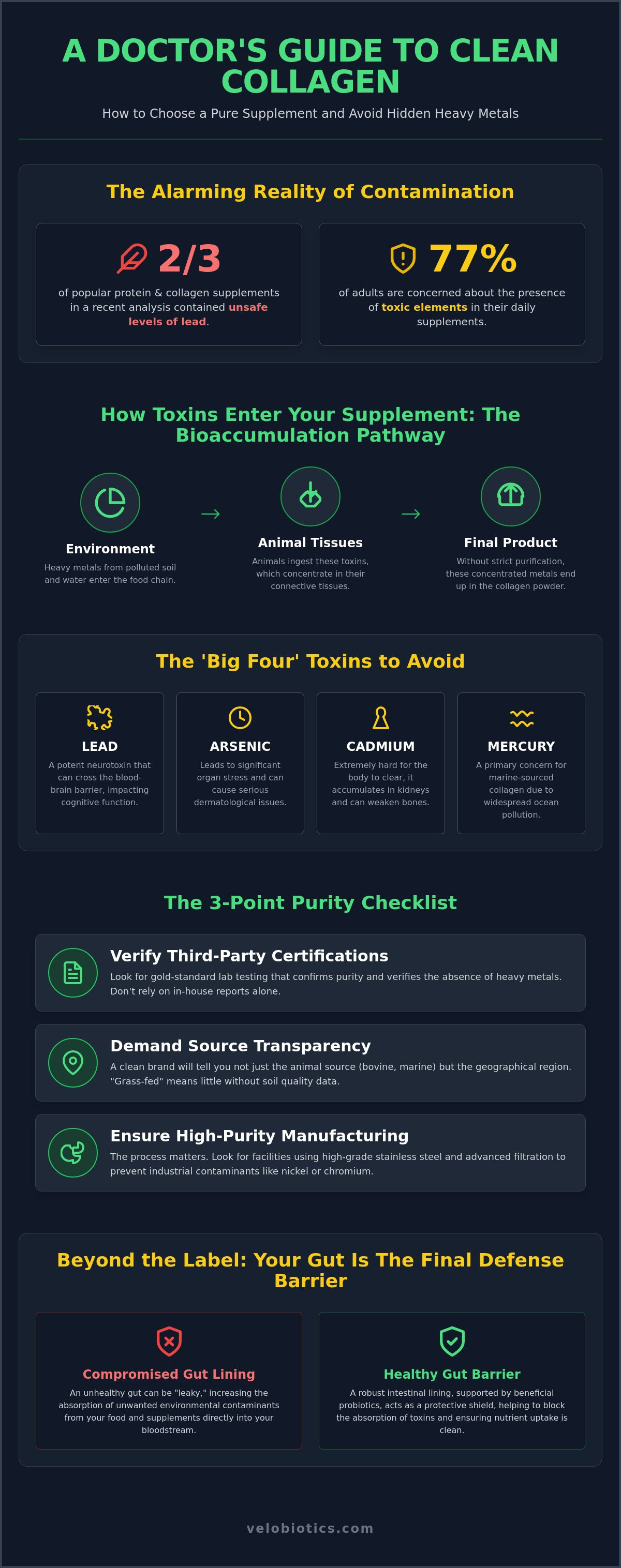
Did you know that in a 2026 analysis of 23 popular protein and collagen supplements, over two-thirds contained lead levels exceeding safe daily limits? It's a startling figure that validates why 77% of adults now worry about toxic elements in their daily shakes. You're likely taking collagen to repair your body, not to burden your system with arsenic or mercury. If you've been feeling overwhelmed by technical jargon or conflicting lab reports, you aren't alone. I've spent years analyzing biological viability, and I want to simplify the process of how to choose a collagen powder without heavy metals so you can supplement with total confidence.
In this guide, I'll provide you with the exact clinical criteria I use to verify product purity and explain which third-party certifications actually matter in the current market. We'll move beyond the label to look at the science of the supply chain and why a healthy gut environment is your secret weapon for safe nutrient absorption. By the end of this article, you'll have a clear, actionable checklist to ensure your collagen is as clean as the results you're looking for.
Key Takeaways
- Identify the specific neurological and physiological risks associated with the "Big Four" toxins often found in animal-sourced supplements.
- Master exactly how to choose a collagen powder without heavy metals by looking for three specific gold-standard third-party certifications on the label.
- Understand the role of the Gut-Skin Axis and why a compromised intestinal lining can lead to the increased absorption of unwanted environmental contaminants.
- Learn how the process of bioaccumulation concentrates heavy metals in animal tissues and why raw material sourcing is your first line of defense.
- Discover how integrating specific probiotic strains with pure collagen peptides can bridge the efficacy gap and enhance your body's natural protective barriers.
The Heavy Metal Dilemma: Why Your Collagen Might Contain Unwanted Guests
I've spent years in the lab and the clinic, and I'll be honest: the supplement industry can feel like the Wild West. I started scrutinizing purity when I noticed patients experiencing unexplained fatigue or skin issues despite "doing everything right." We often forget that what are heavy metals, such as lead, arsenic, and mercury, are dense elements that the body simply isn't designed to process in modern concentrations. Because collagen is a concentrated animal byproduct, it can become a delivery system for these toxins if the manufacturer isn't extremely careful about their supply chain.
Most people assume an organic sticker is a safety blanket. It's not. Think of an organic label as a no-pesticide promise, not a no-heavy-metal guarantee. It's like wearing a raincoat in a swimming pool; you're protected from the splashes, but you're still getting wet. Animals concentrate these metals through a process called bioaccumulation. They eat, drink, and breathe in a specific environment, and their connective tissues act like a sponge for whatever is in the soil or water. Learning how to choose a collagen powder without heavy metals requires looking past the marketing and into the actual biology of the source material.
To better understand this concept, watch this helpful video:
The Source Matters: Bovine, Marine, and Poultry Collagen
Bovine collagen from pasture-raised cattle is often touted as the gold standard, but the geography of that pasture is what actually dictates the toxin profile. Marine collagen, though excellent for Type I peptides, is particularly susceptible to mercury and cadmium accumulation because of our increasingly polluted oceans. Even poultry-sourced collagen can be problematic if the birds were raised in industrial settings with contaminated feed. You want a brand that treats their sourcing like a clinical trial. When you're figuring out how to choose a collagen powder without heavy metals, always ask if the "grass-fed" claim is backed by soil testing from the specific region where the animals grazed.
Manufacturing Contaminants vs. Environmental Toxins
Purity isn't just about where the animal lived; it's about what happened in the factory. Environmental toxins are baked in from the start, but manufacturing contaminants are invited guests. If a facility uses outdated machinery or low-grade filtration, you might find trace amounts of nickel or chromium in your morning smoothie. High-end industrial filtration and 316-grade stainless steel are the clinical standards for maintaining purity during the hydrolysis process. In 2026, heavy metal contamination is defined as the presence of any toxic metallic element at levels that exceed established safe harbor thresholds through environmental uptake or industrial leaching.
The 'Big Four' Toxins: Arsenic, Lead, Cadmium, and Mercury in Supplements
When you're researching how to choose a collagen powder without heavy metals, you'll inevitably run into the "Big Four." These are the primary culprits that clinical researchers monitor because of their high toxicity and tendency to show up in animal-derived products. Lead is perhaps the most insidious; it's a potent neurotoxin that can cross the blood-brain barrier. Arsenic, often found in groundwater, can lead to significant organ stress and dermatological issues. If your collagen contains these, you're essentially counteracting the very skin health benefits you're paying for.
Cadmium and mercury present their own sets of clinical challenges. Cadmium is notoriously hard for the body to clear; it has a biological half-life that can span decades, primarily accumulating in the kidneys and weakening bone density. For those who prefer marine-sourced peptides, mercury is the central concern. Because of the dangers of contaminated supplements sourced from polluted waters, marine collagen requires even more rigorous batch testing than bovine versions. Many consumers use California's Proposition 65 as a benchmark, which sets a "safe harbor" limit for lead at just 0.5 micrograms per day. If a product requires a Prop 65 warning, it's a clear signal to look closer at the lab reports.
Bioaccumulation: The Danger of Daily Dosing
The real risk isn't a single scoop; it's the math of daily habits. Bioaccumulation occurs when your body absorbs these metals faster than it can eliminate them. Over months or years, these trace amounts contribute to your "total toxic load." If you're unsure about a product's purity, I often recommend "pulsing" your supplements. This means taking your collagen for five days and resting for two, giving your natural detoxification pathways a window to catch up. However, the superior strategy is simply starting with a clinically verified clean formula from the beginning.
Clinical Symptoms of Heavy Metal Exposure
In my practice, I've seen heavy metal toxicity hide behind common complaints. Brain fog, persistent fatigue, and unexplained digestive upset are classic early warning signs. It's frustrating because these are the exact symptoms many people hope collagen will fix by improving gut health and energy. If you've been taking a supplement for over 90 days and feel more sluggish than when you started, it's time for a change. You can ask your doctor for a heavy metal blood panel or a provoked urine test to get a clear picture of your internal environment. Understanding how to choose a collagen powder without heavy metals is your first line of defense against this silent buildup.
The Purity Checklist: 3 Non-Negotiable Standards for Clean Collagen
If a brand tells you their product is pure but refuses to show you the lab results, they're essentially asking for blind trust. In my clinical experience, a brand "self-testing" their own batches is like a student grading their own final exam; the results are predictably perfect. A recent Consumer Reports investigation on heavy metals highlighted that even popular protein and collagen shakes often contain excessive lead levels. This is why learning how to choose a collagen powder without heavy metals requires moving past marketing fluff and looking for independent validation.
Purity isn't a suggestion. It's a measurable metric. I look for the "Big Three" seals on every bottle: NSF International, USP (U.S. Pharmacopeia), or Informed Sport. These organizations don't just check the ingredients; they audit the entire facility and testing protocol. Don't settle for a brand that does a "once-a-year" audit. You want batch-specific testing. This ensures that the specific tub in your kitchen was actually screened, not just a sample from three years ago. At my core, I believe in radical transparency, which is a value we built into our own development philosophy.
How to Read a Certificate of Analysis (CoA)
The Certificate of Analysis (CoA) is your ultimate "receipt" for purity. It's a document from an independent lab that lists the exact parts per million (ppm) of metals found in a specific batch. When you review one, look specifically at the lead levels. The gold standard for safety is less than 0.5 mcg per daily dose. If a brand won't provide this, don't buy the product. You can use this simple script to get the info you need:
"Hi [Brand Name], I’m interested in your collagen but want to verify the purity first. Could you please send me the Certificate of Analysis (CoA) for batch #[Number on your tub]? I’m specifically looking for the heavy metal test results for lead, arsenic, and mercury. Thanks!"
Red Flags to Avoid When Shopping
- Proprietary Blends: These often hide the specific source of the collagen, making it impossible to trace the animal's environmental exposure.
- Suspiciously Low Prices: Rigorous third-party testing is expensive. If a product is significantly cheaper than the clinical standard, the brand is likely skipping batch-level screening.
- Masking Agents: Artificial sweeteners and heavy fillers are often used to hide the metallic aftertaste of low-quality, contaminated collagen bases.
Mastering how to choose a collagen powder without heavy metals isn't about being paranoid. It's about being an informed consumer who demands clinical accountability for what goes into their body.
Beyond the Label: How Your Gut Health Influences Collagen Safety
Most people focus entirely on the bottle, but the real magic happens in your digestive tract. Your gut is the ultimate gatekeeper. It decides which nutrients enter your bloodstream and which toxins get shown the exit. Even if you've mastered how to choose a collagen powder without heavy metals, a compromised gut lining can undermine your efforts. This is the Gut-Skin Axis in action. When your intestinal barrier is "leaky," it loses its ability to filter out the trace contaminants that exist even in high-quality supplements. A healthy gut ensures that you're absorbing the beneficial amino acids while keeping the unwanted guests out.
Probiotics play a critical role in this defensive strategy. They don't just help with bloating; they actively support your body's natural detoxification pathways. By maintaining a robust microbial balance, you're essentially installing a high-tech filtration system in your abdomen. This synergy is why I advocate for a dual-approach: purity in the scoop and strength in the gut. Taking your collagen alongside targeted probiotics ensures maximum bioavailability, meaning your body actually uses the peptides for skin and joint repair instead of letting them go to waste.
The Synergy of Probiotics and Collagen Peptides
Think of probiotics as the workforce that prepares the collagen for your body to use. Specific strains help break down large collagen molecules into smaller, absorbable peptides. However, for this to work, you need probiotics that survive stomach acid. If the bacteria die in your stomach, they can't help your small intestine process the collagen. A balanced microbiome acts as a biological filter. It helps sequester heavy metals, preventing them from being absorbed into your systemic circulation. It's a cause-and-effect relationship: better gut health equals safer supplementation.
Actionable Gut-Support Tips
You can start optimizing this process today with a few simple shifts. I recommend pairing your collagen routine with fermented foods like kefir or sauerkraut to diversify your microbiome. Hydration is also non-negotiable. Water is the primary vehicle for both collagen synthesis and the excretion of heavy metals through your kidneys. Utilizing 16-strain probiotics provides a diverse microbial profile that reinforces the intestinal barrier and promotes optimal digestive health. Mastering how to choose a collagen powder without heavy metals is only half the battle; you must also prepare the internal environment to receive it. If you're ready to upgrade your routine, you can explore our clinically-backed probiotic collagen solutions to bridge the absorption gap effectively.
The Velobiotics Standard: Clean Collagen Meets Advanced Delivery
We've spent this guide dissecting the "why" and the "how" of purity. Now let's focus on the "what." When I formulated Almasi Probiotics Collagen Powder, my objective was to create a product where clinical purity meets biological performance. Most brands stop at a clean label, but we address the "absorption gap" by integrating 16-strain probiotic collagen peptides. This isn't just about adding ingredients; it's about a delivery system that ensures the peptides actually reach their destination. By combining these elements, we help your body utilize the nutrients effectively while maintaining a robust internal defense against environmental stressors.
Our commitment to clinical safety means every single batch undergoes scrutiny for the Big Four metals we discussed earlier. We don't just "hope" for purity; we verify it through rigorous batch-level testing. A key component of this is our proprietary micro-encapsulation technology. This acts as a "secret seal" of quality, protecting the active probiotics and collagen until they reach the optimal absorption site in your gut. This level of technological intervention is a fundamental step in how to choose a collagen powder without heavy metals that many competitors simply ignore. It's the difference between a supplement that sits in your stomach and one that actually integrates into your biology.
The Almasi Difference: Type I & II Collagen
Type I collagen is your primary structural protein for skin and hair, while Type II focuses specifically on joint health and cartilage support. By combining them, we provide a holistic structural support system. This formula is specifically designed for those with sensitive guts who might struggle with standard, bulk-processed powders. You can learn more about our approach through our Almasi Probiotics Collagen Powder, which utilizes our unique delivery system. We've removed the guesswork so you can focus on the results.
Practical Steps to Start Your Clean Collagen Journey
Integrating this into your morning is simple. You can stir it into your coffee, blend it into a smoothie, or just mix it with water. Consistency is the primary driver of biological change. Don't expect miracles in 24 hours; the clinical timeline for collagen synthesis usually spans 8 to 12 weeks of daily use. Utilizing 16-strain probiotics provides a diverse microbial profile that reinforces the intestinal barrier and promotes optimal digestive health. As a final doctor’s note, I always tell my patients that investing in purity today prevents health costs tomorrow. When you understand how to choose a collagen powder without heavy metals, you aren't just buying a supplement; you're protecting your long-term vitality.
Empower Your Health with Clinical Transparency
You now have the clinical roadmap to navigate the supplement aisle with total confidence. We've uncovered why a simple organic label isn't enough and why demanding a Certificate of Analysis is your best defense against the "Big Four" toxins. Remember, your internal environment is just as important as the powder itself. By supporting your gut lining, you create a natural filter that prioritizes nutrient absorption over contaminant accumulation. Mastering how to choose a collagen powder without heavy metals is a vital step in protecting your long-term wellness.
Our commitment to your vitality is reflected in every batch we produce. We utilize a 16-strain probiotic delivery system and proprietary micro-encapsulation technology to ensure every peptide is viable and effective. Because we batch-test for both purity and potency, you don't have to guess about what's inside your tub. You're ready to move beyond vague wellness promises and embrace empirical health results. Shop our doctor-formulated, heavy-metal-tested collagen peptides here to start your journey toward a cleaner, stronger version of yourself. Your body deserves nothing less than scientific integrity.
Frequently Asked Questions
Is it possible to find a collagen powder with zero heavy metals?
It's technically impossible to guarantee a product has zero heavy metals because these elements are naturally occurring in our soil and water. However, your goal is to find a supplement that tests below "non-detectable" limits. When you're learning how to choose a collagen powder without heavy metals, you should focus on products that meet California’s Prop 65 safe harbor levels, which are among the strictest safety thresholds in the world.
Does the "Organic" label mean my collagen is free of lead?
An Organic label doesn't mean your collagen is free of lead or other metals. Organic standards focus on the absence of synthetic pesticides and herbicides during the farming process, but they don't regulate the heavy metals naturally found in the earth. Animals can still ingest lead from contaminated groundwater or soil even on organic farms. You must look for specific heavy metal lab results to ensure the product's safety.
How do I know if a brand is actually third-party tested?
You can verify a brand's claims by looking for specific certification seals like NSF International, USP, or Informed Sport on the label. These organizations conduct independent audits of manufacturing facilities and product batches. For total transparency, I recommend requesting a Certificate of Analysis (CoA) for your specific batch number. This document provides the actual laboratory measurements for lead, arsenic, and mercury, proving the brand isn't just grading its own work.
What is the safest source for collagen: bovine, marine, or chicken?
Pasture-raised bovine collagen is generally considered a stable choice, but every source has unique risks. Marine collagen is more susceptible to mercury and arsenic from ocean pollution, while poultry-sourced peptides can be affected by industrial feed quality. No source is inherently the safest without rigorous testing. Your primary focus should be on the brand's sourcing transparency and their willingness to share soil and water testing data from where the animals were raised.
Can my body detoxify the heavy metals found in low-quality collagen?
Your liver and kidneys are designed to clear toxins, but they have a finite capacity. Bioaccumulation happens when you ingest trace amounts of metals every day, eventually overwhelming your body's ability to excrete them. By selecting a high-purity supplement, you keep your total toxic load within a range your body can manage. Strengthening your gut health also provides a critical first line of defense, preventing these contaminants from entering your systemic circulation in the first place.
Is marine collagen safer than bovine collagen regarding arsenic?
Marine collagen often carries a higher risk of arsenic and mercury contamination compared to bovine options. This is due to the environmental uptake of metals by fish from seawater and the marine food chain. If you choose marine peptides, you must be extra vigilant. Understanding how to choose a collagen powder without heavy metals is especially important here, as you'll need to confirm that the fish were sourced from clean, monitored waters with low heavy metal profiles.
What certifications should I look for on a collagen label in 2026?
In 2026, you should look for trademarked seals from NSF International, USP, or the Clean Label Project. These organizations provide the most rigorous screening for environmental toxins and heavy metals in the supplement industry. Certifications like Informed Sport are also excellent for verifying that the product is free of contaminants and banned substances. These labels indicate that the manufacturer has passed independent, clinical-grade audits that go far beyond basic federal requirements.
How does gut health affect how my body uses collagen?
Your gut is the gatekeeper for nutrient absorption. A healthy intestinal lining ensures that collagen is broken down into absorbable peptides while filtering out unwanted trace contaminants. If you have a compromised gut, you won't get the full skin and joint benefits of the collagen you're taking. This is why I recommend a delivery system that pairs collagen with probiotics, as it optimizes the environment for absorption and supports your body's natural protective barriers.

Disclaimer
Information and statements regarding dietary supplements/products have not been evaluated by the Food and Drug Administration, MCC/SAHPRA, MHRA, TGA or any other drug regulatory authority and are not intended to diagnose, treat, cure, or prevent any disease. Information on this website is provided for informational purposes only and is a result of years of practice and experience by the author. This information is not intended as a substitute for the advice provided by your physician or other healthcare professional or any information contained on or in any product label or packaging. Do not use the information on this website for diagnosing or treating a health problem or disease, or prescribing medication or other treatment. Always speak with your physician or other healthcare professional before taking any medication or nutritional, herbal, or homeopathic supplement, or using any treatment for a health problem. If you have or suspect that you have a medical problem, contact your healthcare provider promptly. Do not disregard professional medical advice or delay in seeking professional advice because of something you have read on this website.