

Is It Normal to Have a Slight Vaginal Odor? A Doctor’s Guide to Your Body’s Natural Scent
What if your body's natural scent was actually a high-tech biological status report rather than a hygiene failure? You've likely felt that flash of social anxiety, wondering if a scent is detectable through your clothes or if you've done something wrong. The truth is that many people ask, is it normal to have a slight vaginal odor, only to be met with confusing online myths or aggressive marketing for products that do more harm than good. I've spent my career studying the delicate internal environmental factors that keep your microbiome thriving, and I can tell you that a slight scent is a primary indicator of a functioning, healthy ecosystem.
You deserve to feel confident in your own skin without the constant worry of minor pH fluctuations. In this guide, I'll show you exactly how to distinguish between healthy biological markers and signs of a genuine imbalance like Bacterial Vaginosis, which affects approximately 30% of women in the US. You'll learn why a fishy smell is a clinical signal for attention while a musky or tangy scent is often a sign of protective acidity. We'll break down the science of your body's natural defenses and provide actionable steps to maintain your balance, so you know exactly when to celebrate your health and when it's time to see a doctor.
Key Takeaways
- Learn why a scent-free vagina is a medical impossibility and how your unique biological "signature" acts as a protective, self-cleaning mechanism.
- Discover the definitive clinical answer to the question, is it normal to have a slight vaginal odor, while identifying the triggers behind common scent shifts.
- Understand the 3.8 to 4.5 pH "sweet spot" and how everyday factors like intimacy can temporarily disrupt your internal ecosystem.
- Master a doctor-approved daily protocol for intimate wellness that focuses on a "less is more" philosophy regarding cleansing agents.
- Identify the specific "tipping points" when a natural scent becomes a medical concern and how targeted interventions like Boric Acid can reset your balance.
Understanding Your Body’s Natural Scent Profile
The idea that a healthy body should be entirely scent-free is one of the most persistent medical myths I encounter. In my years of clinical practice, I've seen how marketing campaigns for "floral" hygiene products have created a baseline of social anxiety that simply shouldn't exist. Every healthy body possesses a unique biological signature. This scent isn't a sign of poor hygiene; it's the result of a complex, high-functioning system working exactly as it should.
Patients frequently visit my office asking, is it normal to have a slight vaginal odor, and my answer is always a resounding yes. Your body uses vaginal secretions as a sophisticated delivery system for self-cleaning and protection. These fluids are driven by your vaginal microflora, a bustling community of beneficial bacteria that maintain a protective environment. Without this natural scent profile, your body would lack the acidic shield necessary to ward off opportunistic pathogens.
To better understand this concept, watch this helpful video:
Your hormones, specifically estrogen, play a starring role in this process. Estrogen levels dictate the production of glycogen in the vaginal lining, which serves as the primary food source for your beneficial bacteria. As these bacteria consume glycogen, they produce lactic acid, giving a healthy ecosystem its characteristic tangy or musky aroma. This is a sign of biological viability, not a problem to be solved with harsh soaps.
Why 'Odourless' Isn't the Goal
Trying to achieve an "odourless" state through aggressive scrubbing or douching is a recipe for medical trouble. When you use harsh surfactants, you strip away the protective biofilm and disrupt the delicate balance of your microbiome. A healthy baseline is typically described as slightly musky, earthy, or even like fermented sourdough. This indicates a thriving population of Lactobacilli. If you find yourself reaching for scented wipes to mask this natural state, you might actually be inviting the very infections you're trying to avoid.
How Your Cycle Changes Your Scent
Your scent is not a static metric; it shifts in response to your menstrual cycle. During your period, you may notice a metallic scent. This is completely normal and stems from the iron content in blood. Around ovulation, when estrogen peaks, your discharge may take on a slightly sweeter or more "corn-like" aroma as the consistency changes to support fertility. It's also important to distinguish between vaginal odor and sweat gland activity. After a workout, the apocrine glands in your groin produce a different, stronger scent when sweat interacts with skin bacteria, which is distinct from your internal ecosystem's natural profile. To support your internal balance during these shifts, many women find that Femina™ Probiotic Capsules help maintain the necessary bacterial dominance to keep scents within a healthy range.
Decoding the Scent Spectrum: What Different Odors Actually Mean
The anxiety of wondering if someone can detect your scent through your clothing is a common concern I hear in my clinic. I want to reassure you that most scents are only detectable within a few inches of your body. If you're asking, is it normal to have a slight vaginal odor, the answer is usually found in the specific "notes" your body is producing. Think of these scents as a biological dashboard, providing real-time data on your internal chemistry. Most shifts you experience are temporary, driven by diet, hydration, or where you are in your cycle, and they are easily corrected once you understand the trigger.
The Tangy, Sour, or Yeasty Scent
If you notice a scent reminiscent of sourdough bread or yogurt, your ecosystem is likely in excellent shape. This tangy aroma is the direct result of lactic acid production by your beneficial bacteria. These hard-working microbes keep your environment acidic to prevent pathogens from moving in. While a mild yeasty smell is normal, it becomes a concern only when paired with a change in discharge texture, like a cottage cheese appearance, or intense itching. If the scent is tangy but you feel comfortable, your protective shield is functioning perfectly.
The Ammonia or 'Bleach' Aroma
An ammonia-like smell often points toward external factors rather than an internal infection. Nitrogen-rich compounds in your sweat or a bit of urine residue on your underwear are the most common culprits. Sometimes, high-dose multivitamins or specific medications can alter the nitrogen content of your sweat, leading to a chemical-like aroma. You can perform a quick hydration check right now: if your urine is darker than a pale straw color, you're likely dehydrated. Increasing your water intake often resolves this scent within 24 to 48 hours as it dilutes the metabolic byproducts in your system.
The 'Fishy' or Pungent Red Flag
A sharp, fish-like odor is a clinical signal that your pH has climbed too high, moving from acidic to alkaline. When your "good" bacteria are suppressed, opportunistic "bad" bacteria take over and release volatile amines. These organic compounds are responsible for that specific pungent aroma, which often intensifies after intimacy or during your period. This shift is the hallmark of Bacterial Vaginosis (BV), a condition that affects approximately 30% of women in the US. If you notice this specific shift, using a targeted solution like Femina Probiotic Suppositories with Boric Acid can help reset your pH and restore the dominance of your protective flora.
The Science of Balance: Why pH and Microflora Dictate Your Scent
The vaginal environment is a marvel of biological engineering. To maintain a healthy ecosystem, your body aims for a "sweet spot" on the pH scale between 3.8 and 4.5. This acidic environment serves as your first line of defense against infection. When patients ask, is it normal to have a slight vaginal odor, I explain that this scent is the byproduct of a thriving Lactobacillus army. These beneficial bacteria don't just sit there; they actively produce hydrogen peroxide and lactic acid to keep the neighborhood clean and protected.
Think of Lactobacilli as your internal security team. They ensure that the environment remains hostile to opportunistic pathogens. However, this balance is incredibly delicate. Semen, for example, is highly alkaline with a pH often reaching 8.0. When it enters the vaginal tract, it temporarily neutralizes your natural acidity. This chemical shift is why you might notice a distinct, temporary change in scent immediately following intimacy. It isn't a hygiene failure; it's basic chemistry at work.
How pH Fluctuations Create Odor
When your pH rises above the 4.5 threshold, it triggers a biological domino effect. High pH levels make it difficult for Lactobacillus to survive, leading to a population crash. Without these protectors, "bad" bacteria begin to overgrow, which is the primary driver of unpleasant or pungent scents. Common disruptors that can kickstart this cycle include:
- Harsh soaps and "feminine washes" that strip the protective biofilm.
- Glycerin-based lubricants that can inadvertently feed unfriendly bacteria.
- Hormonal shifts during menopause that alter glycogen availability for your good bacteria.
Vaginal dysbiosis is the clinical term for this microbial imbalance and serves as the root cause of most persistent odor concerns.
The Role of Probiotics in Scent Management
You might wonder how a capsule you swallow can influence your intimate health. This connection is driven by the gut-vagina axis. Through a process called microbial migration, beneficial strains travel from the digestive tract to the vaginal canal. Science has identified specific strains, such as Lactobacillus rhamnosus and Lactobacillus reuteri, as the most effective for this journey. These strains are particularly adept at colonizing the vaginal lining and restoring the acidic barrier.
By populating your gut with these specific microbes, you're essentially sending reinforcements to your internal security team. This helps maintain that 3.8 to 4.5 pH range and ensures your scent remains in the "healthy" category. For a deeper look at how this works, check out our Probiotics for BV: A Doctor’s Guide. Using high-quality supplements like Femina™ Probiotic Capsules provides the targeted support needed to keep your ecosystem resilient and your scent profile balanced.
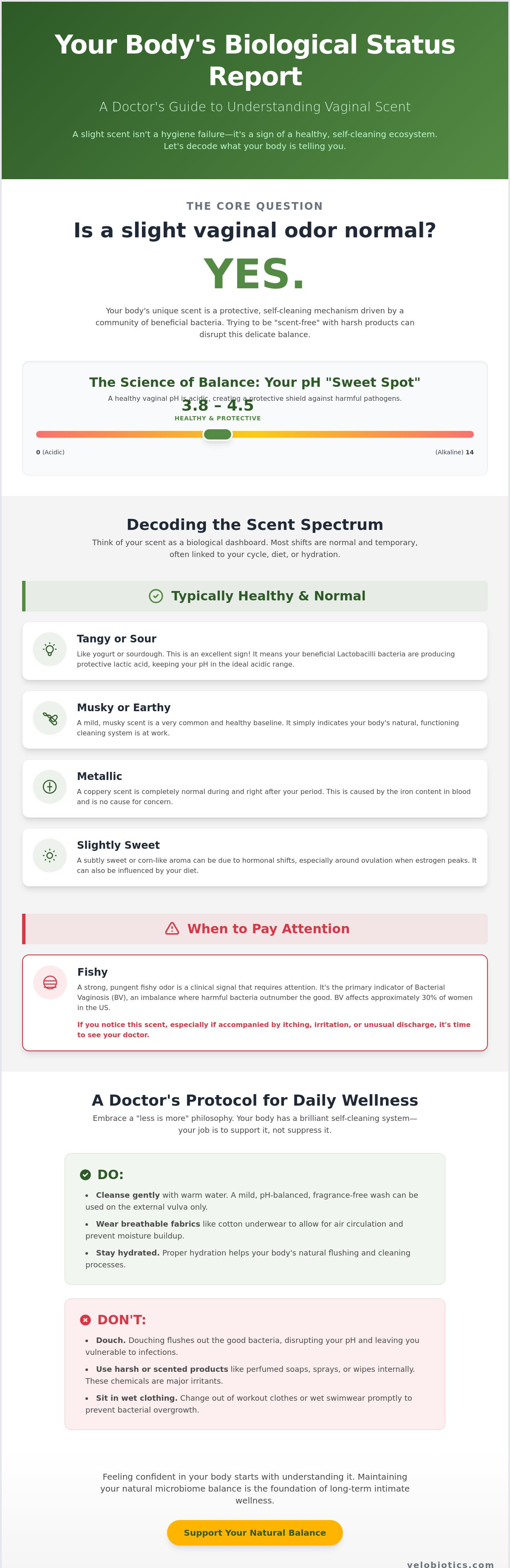
A Doctor’s Practical Protocol for Maintaining a Healthy Scent
Maintaining a healthy scent profile isn't about intensive scrubbing; it's about biological stewardship. If you find yourself still asking, is it normal to have a slight vaginal odor, remember that your goal is to support your existing ecosystem rather than trying to erase it. I've developed this protocol to help you navigate the difference between marketing hype and actual medical necessity. Most odor issues I treat in my clinic stem from over-cleaning rather than under-cleaning. When you simplify your routine, you allow your body's natural defenses to take the lead.
The 'Vulva-Only' Washing Rule
Your internal vagina is essentially a self-cleaning oven. It produces its own lubrication and uses discharge to flush out dead cells and debris. You don't need to help it. In fact, douching is strictly discouraged by the 2021 CDC guidelines because it disrupts your protective microflora and increases infection risk. For the external vulva, water is often sufficient. If you prefer a cleanser, choose one that is fragrance-free and pH-balanced. Avoid "feminine wipes" or deodorant sprays. These products often contain alcohol or synthetic perfumes that mask odors while simultaneously causing micro-tears and irritation in the delicate tissue.
Lifestyle Habits for Long-Term Balance
Cotton is your microbiome's best friend. When you wear synthetic fabrics like polyester or nylon, you're creating a "greenhouse effect" against your skin. These materials trap heat and moisture, which is the perfect breeding ground for the anaerobic bacteria that cause pungent scents. Switch to 100% cotton underwear to allow for proper airflow and moisture evaporation. I also recommend a simple post-intimacy routine. Urinating after sex helps flush the urethra; a gentle external rinse with plain water helps remove alkaline fluids that can shift your pH out of the healthy range.
Your diet also plays a supporting role in your body's chemistry. While the "pineapple myth" is mostly anecdotal, foods high in sulfur, like garlic and onions, can temporarily influence your scent as they are metabolized. To build a more resilient environment from the inside out, focus on fermented foods like kimchi or Greek yogurt. For those who need a more concentrated approach to maintaining their internal defenses, I recommend incorporating Femina™ Probiotic Capsules with Cranberry Extract into your daily routine to ensure your "good" bacteria remain the dominant force.
When to Intervene: Restoring Balance with Targeted Support
While we have established that the clinical answer to is it normal to have a slight vaginal odor is almost always a resounding yes, there is a clear threshold where biological variation becomes a medical concern. Identifying this "tipping point" is essential for preventing chronic discomfort and social anxiety. If your scent shifts from the healthy musky or tangy profiles we have discussed to a persistent, sharp, or fishy aroma that won't go away with hydration or rest, your ecosystem is signaling for a targeted intervention. This shift usually indicates that the "bad" bacteria have successfully staged a coup against your protective Lactobacillus army.
The Power of Boric Acid for Odor Control
Boric acid is a time-tested tool in the gynecological toolkit, acting as both a mild antiseptic and a powerful pH-resetting agent. Its true clinical strength lies in its ability to disrupt biofilms. These are protective, slime-like structures that opportunistic bacteria build to shield themselves from your immune system and traditional treatments. When these biofilms take root, they cause recurrent odor issues that feel impossible to resolve. By introducing a pH-resetting agent, you break down these barriers and return the environment to its protective, acidic state. For a comprehensive approach, Femina Probiotics COOKIE FRESH with Boric Acid provides a dual-action solution that resets the chemical balance while delivering beneficial flora directly where they are needed most.
Building a Resilient Microbiome
Clearing an unpleasant scent is only half the battle; the real victory lies in "re-seeding" the environment to prevent a relapse. Think of boric acid as the tool that clears the weeds and probiotics as the high-quality seeds that fill the garden. Without re-introducing dominant strains like Lactobacillus rhamnosus, the "bad" bacteria will simply move back in as soon as the treatment ends. For ongoing defense and long-term freshness, I recommend Femina Probiotic Capsules with Cranberry. This approach treats intimate health as a part of your overall wellness routine, ensuring your internal security team is always at full strength.
Even with the best self-care protocol, certain symptoms require a professional clinical evaluation. Use this "Call the Doctor" checklist to determine if your situation has moved beyond a simple pH imbalance:
- Fever or chills accompanying a change in scent.
- Pelvic pain or intense cramping that feels deeper than typical period discomfort.
- Discharge that appears gray, green, or frothy.
- Intense burning during urination or physical intimacy.
- Sores, blisters, or a rash in the genital area.
Understanding your body's natural scent is about more than hygiene; it's about intimate confidence. When you know what is normal for your unique body, you can stop worrying about social detection and start focusing on maintaining a thriving, balanced ecosystem.
Empowering Your Biological Balance
You've learned that your body's natural scent isn't a hygiene flaw; it's a sophisticated biological status report. By understanding the 3.8 to 4.5 pH "sweet spot" and prioritizing a "less is more" approach to cleansing, you're already ahead of the curve. While many wonder is it normal to have a slight vaginal odor, you now know that this scent is actually a primary indicator of your body's protective acidity and thriving microflora.
When your ecosystem needs a reset, don't settle for temporary masks or generic wellness promises. Real results come from addressing the underlying biological mechanisms of imbalance. Our doctor-founded formulations utilize proprietary micro-encapsulation technology to ensure maximum probiotic viability, delivering active ingredients exactly where they're needed. This dual-action approach combines Boric Acid with high-potency strains to restore your environment's natural resilience. Ready to reclaim your confidence? Explore the Femina Cookie Fresh Collection for medical-grade pH support. You have the scientific knowledge to maintain your balance; now it's time to feel comfortable and empowered in your own skin again.
Frequently Asked Questions
Is it normal to smell my own vaginal odor through my clothes?
Generally, a healthy scent is only detectable within a few inches of your body. If you are sitting in a specific position or wearing very tight, synthetic fabrics like polyester, you might notice a faint aroma. However, if you are asking, is it normal to have a slight vaginal odor that you can smell while standing up, it may indicate a pH shift or sweat trapped against the skin. Switching to breathable cotton can often resolve this social anxiety immediately.
Can my diet really change how I smell down there?
Yes, your diet influences the metabolic byproducts found in your sweat and secretions. Foods with strong aromatic compounds, such as asparagus, heavy garlic, or onions, can temporarily alter your scent profile as your body processes them. This isn't a sign of a medical problem; it's simply a reflection of your internal chemistry. Increasing your intake of fermented foods like kimchi can help support the beneficial bacteria that keep your baseline scent tangy and healthy.
How can I get rid of a fishy odor naturally without antibiotics?
You can often resolve a fishy scent by using boric acid suppositories to reset your vaginal pH. Boric acid acts as a mild antiseptic that breaks down the bacterial biofilms where "bad" bacteria hide. To prevent the odor from returning, you should pair this with high-quality oral probiotics to re-seed your protective Lactobacillus population. This dual-action approach addresses the root cause of the imbalance without the broad-spectrum destruction caused by traditional antibiotics.
Is it safe to use boric acid suppositories for daily freshness?
No, boric acid is a targeted intervention and should not be used as a daily hygiene product. It is designed to correct an environment that has become too alkaline, such as after your period or physical intimacy. Using it every day can over-correct your pH and lead to dryness or tissue irritation. It's most effective when used for a short course of 7 to 14 days to resolve a specific imbalance.
Why does my vaginal scent change after I have sex?
This change occurs because semen is highly alkaline, which temporarily disrupts your natural acidic barrier. When your pH rises above the healthy 4.5 threshold, it can trigger a chemical reaction that releases a sharper, more noticeable scent. This is a temporary biological shift. A gentle external rinse with plain water after sex is usually sufficient to help your microflora return the environment to its protective, acidic state.
What is the difference between a healthy scent and Bacterial Vaginosis (BV)?
A healthy scent is typically mild, musky, or slightly tangy, while BV is characterized by a strong, persistent fish-like odor. While many patients ask, is it normal to have a slight vaginal odor, the key differentiator for BV is the intensity of the scent and the presence of thin, gray discharge. If the aroma becomes pungent and is accompanied by itching or a burning sensation, your ecosystem has likely moved from a normal state into a clinical imbalance.
Does drinking more water help with vaginal odor?
Proper hydration ensures that your urine and sweat are diluted, which reduces the intensity of external odors. When you are dehydrated, your urine contains a higher concentration of ammonia that can linger on the skin and mix with vaginal secretions. While drinking water won't "flush out" an internal bacterial infection, it is a practical step for maintaining a neutral and fresh external scent profile throughout the day.
Are feminine hygiene sprays safe to use for slight odors?
I recommend avoiding these sprays because they mask odors rather than addressing the underlying biological cause. Most sprays contain synthetic perfumes and alcohol that can cause contact dermatitis or micro-tears in the delicate vulvar tissue. If you are concerned about a shift in scent, it is much safer to support your microbiome with targeted probiotics or a pH-balanced external wash rather than using chemicals that can further disrupt your balance.

Disclaimer
Information and statements regarding dietary supplements/products have not been evaluated by the Food and Drug Administration, MCC/SAHPRA, MHRA, TGA or any other drug regulatory authority and are not intended to diagnose, treat, cure, or prevent any disease. Information on this website is provided for informational purposes only and is a result of years of practice and experience by the author. This information is not intended as a substitute for the advice provided by your physician or other healthcare professional or any information contained on or in any product label or packaging. Do not use the information on this website for diagnosing or treating a health problem or disease, or prescribing medication or other treatment. Always speak with your physician or other healthcare professional before taking any medication or nutritional, herbal, or homeopathic supplement, or using any treatment for a health problem. If you have or suspect that you have a medical problem, contact your healthcare provider promptly. Do not disregard professional medical advice or delay in seeking professional advice because of something you have read on this website.