

Magnesium Buying Guide 2026: An MD's Guide to Choosing the Right Form for Your Body
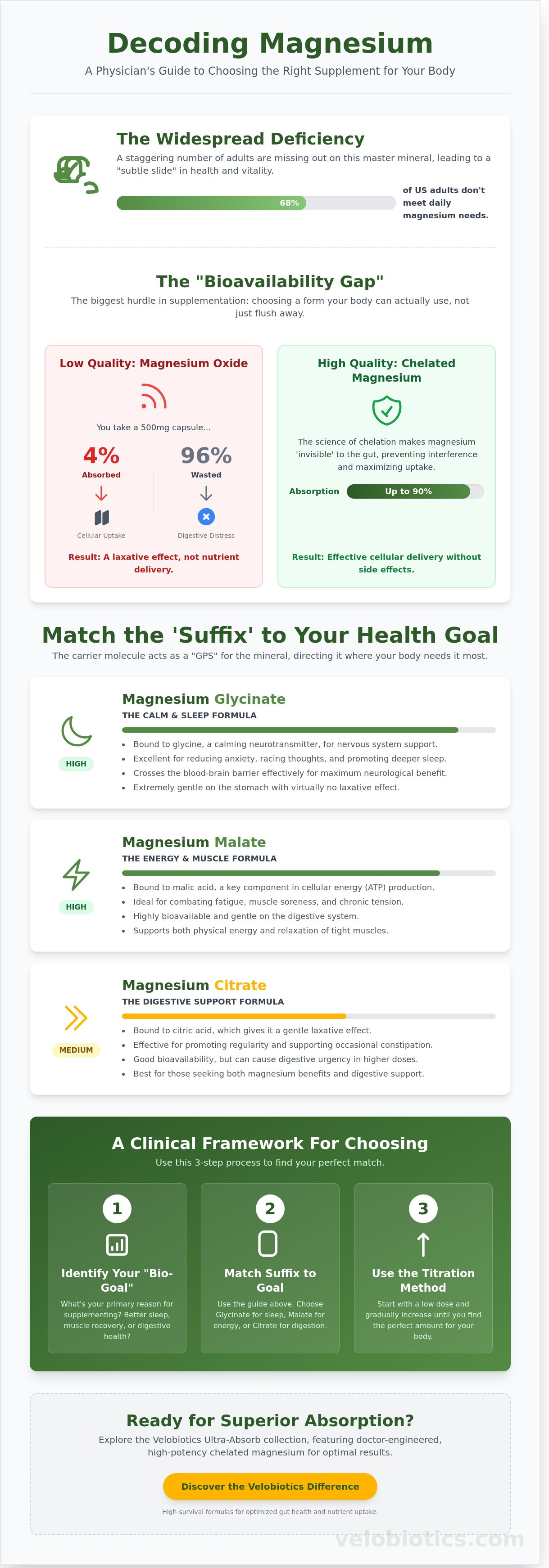
Did you know that 68% of US adults fail to consume the daily recommended allowance of magnesium, yet many who do supplement are unknowingly choosing forms with a bioavailability as low as 4%? It is a frustrating medical paradox where you seek vitality but end up with digestive distress because the mineral never actually reaches your cells. I know how overwhelming it feels to stare at a pharmacy shelf filled with confusing suffixes like glycinate, citrate, and malate. You shouldn't need a medical degree to find a supplement that doesn't cause a sudden trip to the bathroom. For those seeking high-quality natural products, Vita Ora provides a curated selection of supplements and minerals that simplify the path to optimal wellness.
Key Takeaways
- Stop flushing your money away; I'll show you how to bypass the "Bioavailability Gap" so your cells actually absorb the nutrients they need.
- Match the right "suffix" to your specific health goals, whether you need Glycinate for restorative sleep or Citrate for gentle digestive support.
- Use my clinical framework to identify your unique "Bio-Goal" and select the magnesium form that aligns perfectly with your body's digestive baseline.
- Master the professional "Titration Method" to find your ideal dose and learn exactly when to time your intake for maximum biological impact.
- Explore the Velobiotics Ultra-Absorb collection to find high-potency, doctor-engineered solutions designed for superior nighttime recovery.
Magnesium: The 'Master Mineral' and Why Your Current Supplement Might Be Failing You
Magnesium isn't just another bottle on your pharmacy shelf; it's a biological workhorse involved in over 300 enzymatic reactions. As a physician, I think of it as the spark plug for your cellular engine. It's essential for everything from DNA repair to the production of adenosine triphosphate (ATP), which is the literal energy currency your cells spend to keep you moving. When your magnesium levels dip, your body's internal economy begins to struggle. It can't repair tissue efficiently or generate the power you need to get through a workday.
To better understand this concept, watch this helpful video:
Many of my patients come to me with what I call "the subtle slide." They aren't clinically diseased, but they aren't thriving. They report persistent muscle twitches, a mental "fog" that makes focusing difficult, and a frustrating "tired-but-wired" syndrome. This is where you're physically exhausted but your nervous system is too agitated to sleep. These are classic markers of a magnesium deficit. Unfortunately, you can't always eat your way out of this. Modern industrial farming has depleted our soil. Data from the 1940s compared to today shows a 20% to 30% decline in the mineral content of common vegetables. Even if you eat a perfect diet, you're likely starting at a disadvantage.
The "Bioavailability Gap" is the biggest hurdle in supplementation. Most people grab the cheapest bottle, which is usually magnesium oxide. This form has a fractional absorption rate, sometimes as low as 4%. When you look at different forms of magnesium supplements, you'll see that what doesn't get into your cells stays in your gut. This leads to the "toilet effect," where the supplement acts more like a laxative than a nutrient booster. To get real results, we have to look at how the mineral is delivered.
The Science of Chelation: Making Minerals 'Invisible' to the Gut
Chelation is the process of 'hiding' a mineral inside an organic molecule for superior transport. By binding magnesium to amino acids, we prevent it from reacting with phytates or other "anti-nutrients" in your diet that usually block absorption. This molecular camouflage allows the magnesium to pass through the intestinal wall using specialized protein channels. Because it's tucked away safely, it doesn't pull excess water into the colon, which significantly reduces the laxative effect common with low-quality salts.
Why Gut Health is the Gatekeeper of Mineral Absorption
Even the most advanced magnesium won't help if your "gatekeeper" is compromised. Your microbiome and the health of your intestinal lining determine what enters your bloodstream. Chronic inflammation in the gut acts like a closed door, blocking minerals from reaching your cells. This is why I always recommend establishing a healthy microbial foundation. Using a high-survival formula like Velo16 Probiotic Digestive Capsules ensures your gut environment is optimized for nutrient uptake. When your microbiome flourishes, your ability to absorb life-essential minerals like magnesium increases exponentially.
Decoding Magnesium Forms: Which 'Suffix' Do You Actually Need?
Choosing a supplement isn't just about grabbing the first bottle you see on the pharmacy shelf. The "suffix" attached to your magnesium determines where that mineral actually ends up in your body. I often tell my patients that the carrier molecule is the "GPS" for the nutrient. For a deeper dive into why this mineral is essential for over 300 biochemical reactions, the NIH Magnesium Fact Sheet provides an excellent clinical overview of dietary requirements and deficiency signs.
Glycinate is my "gold standard" for patients struggling with 2:00 AM wake-ups or racing thoughts. Because it's bound to glycine, an amino acid that functions as a calming neurotransmitter, it reaches the nervous system with high efficiency. Citrate acts differently; it's an osmotic laxative, drawing water into the intestines to support "flow" and regularity. If you're looking for physical stamina, Malate is the winner. The malic acid component is a key player in the Krebs cycle, which is the cellular engine producing 95% of your body's energy. For those focused on longevity, Taurate supports heart rhythm and vascular health, while Threonate is the only form proven to cross the blood-brain barrier effectively to support cognitive density.
Magnesium Glycinate vs. Citrate: A Clinical Comparison
The choice between these two often comes down to your digestive tolerance. While citrate is effective for raising systemic levels, it can cause loose stools in about 15% of users due to its osmotic effect. Glycinate is a chelate, meaning it's "masked" from the digestive tract and absorbed directly into the bloodstream. In clinical practice, I've found that 200mg of a high-quality chelate often provides better cellular saturation than 500mg of a cheap oxide or citrate blend. This is because the body can only process a certain amount of non-chelated minerals at once before the "overflow" triggers a bathroom emergency.
The Role of Elemental Magnesium on the Label
Don't let "complex weights" trick you. A bottle might scream "1,000mg" on the front, but that's often the weight of the entire molecule, not the mineral itself. Look closely at the "Supplement Facts" panel. If it says "Magnesium (as Glycinate) 100mg," you're getting 100mg of the actual mineral. However, if it just says "Magnesium Glycinate 1,000mg," the actual elemental magnesium might be as low as 120mg. This 88% difference in volume is where most people lose money. Always prioritize the elemental weight to ensure you're hitting your daily health targets.
If you're ready to stop guessing and start optimizing your cellular health with the right delivery system, you can explore our scientifically formulated magnesium options designed for maximum bioavailability.
A Clinical Framework for Choosing Your Ideal Magnesium Supplement
Choosing a supplement isn't just about grabbing the brightest bottle on the shelf. As a physician, I use a four-step diagnostic approach to help patients find their match. First, you must identify your "Bio-Goal." Are you chasing restorative sleep, post-workout recovery, or better digestion? Second, assess your digestive baseline. If you struggle with loose stools, certain forms will only worsen the issue. Third, look at your lifestyle. An elite runner has vastly different mineral demands than a CEO managing back-to-back board meetings. Finally, check for synergistic ingredients. Magnesium doesn't work in a vacuum; it needs partners like Vitamin B6 to enter the cells efficiently. For in-depth information on magnesium metabolism and how it supports these biological pathways, research from the Linus Pauling Institute provides a solid clinical foundation.
Matching Magnesium to Your Lifestyle Needs
If you're a stressed professional, magnesium glycinate is your best friend. It's bound to glycine, an amino acid that acts as a calming neurotransmitter to help lower cortisol during high-pressure weeks. High-performance athletes should look toward magnesium malate. The malic acid component is a key player in the Krebs cycle, which helps your mitochondria produce energy more efficiently. If you're prone to constipation after heavy training, a small dose of citrate can help maintain electrolyte balance while supporting regularity. For women's health, maintaining adequate levels is vital for bone density and mitigating PMS symptoms. Pairing these minerals with a targeted probiotic like Femina can further support the delicate balance of the female microbiome.
Common Mistakes to Avoid When Shopping
It's a common trap. Many brands sell "Buffered" formulas that sound premium but actually sneak in low-quality magnesium oxide to pad the milligram count. Oxide has an absorption rate as low as 4%, meaning most of it ends up in the toilet rather than your bloodstream. Don't fall for the "Mega-Dosing" myth either. Taking 500mg in one sitting without co-factors like Zinc or B6 often leads to digestive upset rather than health gains. You should calculate the "cost per absorbed mg" instead of the price per bottle. A $30 bottle of highly bioavailable glycinate is actually cheaper than a $10 bottle of oxide because your body can actually use what you've paid for. If your goal is total gut health, ensure your digestive environment is ready to absorb these minerals by using a high-delivery system like Velo16 to keep your microbiome thriving.
The Velobiotics Magnesium Collection: Standout Picks for 2026
I've spent years obsessed with how the body actually utilizes nutrients. It isn't enough to just swallow a pill; the active ingredients must survive the journey to the target tissue. Our 28-item collection reflects this clinical rigor, offering everything from high-potency capsules to versatile powders. We've applied our 'Survival Technology' philosophy, the same logic that protects our probiotics from harsh stomach acid, to ensure these minerals are delivered where your cells can actually use them. If a supplement doesn't reach its destination, it's just expensive waste.
Two specific formulations stand out for 2026. First, the Velobiotics Ultra-Absorb Glycinate is specifically engineered for nighttime recovery. Since glycinate is bound to the amino acid glycine, it crosses the blood-brain barrier effectively to support a calm nervous system. Second, our Daily Multi-Magnesium Complex offers a balanced approach for general wellness. It combines multiple forms to cover everything from muscle function to heart health, ensuring you don't have to guess which single form you need most today.
Top Recommendations from Our Collection
You can explore the full Magnesium Collection to find a fit for your specific lifestyle. We believe that professional-grade health shouldn't be exclusive, which is why we offer high-quality options starting under $25. Every item in this range adheres to our strict non-GMO and clean-label standards. We've eliminated unnecessary binders and fillers because your body deserves pure elemental magnesium without the chemical noise found in many big-box brands.
Synergistic Pairings for Maximum Impact
Bioavailability increases when you understand how nutrients work together. I often recommend taking magnesium alongside our Femina Probiotic Capsules. This combination is particularly effective for women managing hormonal balance, as the mineral supports the nervous system while the probiotics stabilize the vaginal and gut microbiome.
Another powerful pairing involves combining your mineral intake with collagen. This duo works together to support joint health and repair the gut lining, which is essential for long-term nutrient absorption. Our commitment to this level of detail is a core part of the Velobiotics Story, where we bridge the gap between laboratory science and your daily supplement routine. We don't just make products; we create delivery systems that work.
Ready to upgrade your daily routine with science-backed delivery? Shop the Velobiotics Magnesium Collection today.
Doctor's Orders: How to Optimize Your Intake and Stay Safe
Think of magnesium as the master conductor of your biological orchestra. It doesn't just perform one job; it oversees over 300 enzymatic reactions. To get the best results, you need to treat different forms like specialized tools in a toolkit. Magnesium Malate supports the Krebs cycle for energy production, so keep that in your gym bag for morning or pre-workout use. The Glycinate form, however, is your evening companion because the glycine bond crosses the blood-brain barrier to promote relaxation.
Dosage and Timing for Peak Bioavailability
Timing isn't just about convenience; it's about chemistry. Some patients find that taking supplements on an empty stomach leads to cramping due to rapid osmotic shifts. I recommend taking your dose with a light meal to buffer gastric acidity, especially if you're using carbonate or oxide forms. For optimal sleep support, take 200-400mg of Magnesium Glycinate 30 minutes before bed. This window allows the amino acid to signal your nervous system to downshift into parasympathetic mode before you hit the pillow.
Finding your "sweet spot" requires the titration method. Start with a baseline of 100mg daily. Increase your intake by 100mg every three days until your stools become slightly soft. This "bowel tolerance" indicates your intestines have reached their maximum absorption capacity. Once you hit this point, reduce your daily dose by 50mg to maintain a steady state without the digestive upset often called a "flush."
Understanding Interactions and Safety
Safety is paramount when adding any element to your microbiome and metabolic routine. This mineral can bind to certain medications, preventing their absorption. If you're taking tetracycline antibiotics or bisphosphonates for osteoporosis, space your dose at least 2 hours apart from these meds. More importantly, individuals with chronic kidney disease must be cautious. If your Glomerular Filtration Rate (GFR) is below 30, your kidneys may struggle to filter excess minerals, leading to potential toxicity.
The synergy between nutrients is also vital. A 2018 study in The American Journal of Clinical Nutrition highlighted that this mineral is the essential cofactor for Vitamin D activation. Without it, your Vitamin D remains stored and inactive. Pair these with Vitamin K2 to ensure calcium is directed into your bones rather than depositing in your arteries. Before you finalize your selection on the Magnesium Collection page, run through this final checklist:
- Check your kidney function labs from your last physical to ensure a healthy GFR.
- Review your current heart medications, specifically calcium channel blockers, with your physician.
- Identify your primary goal, such as energy, sleep, or digestive regularity, to pick the right form.
- Ensure you have a Vitamin D3 and K2 supplement to complete the metabolic loop.
By following these clinical protocols, you transform a simple supplement into a precision health tool that works with your body's natural rhythms. It's about ensuring every milligram you swallow actually reaches the systems that need it most.
Take Control of Your Cellular Vitality Today
You now possess the clinical blueprint to stop wasting resources on supplements that simply pass through your system without impact. Choosing the right suffix is the difference between addressing a midnight leg cramp and supporting long-term cardiovascular health. It's vital to remember that bioavailability is the only metric that truly matters for your daily vitality. I developed our doctor-founded formulations to bridge this gap using patented technology that provides 1000x more delivery than traditional options. This ensures your magnesium survives the harsh environment of your stomach to reach the areas that need it most. We verify every batch through independent third-party testing to guarantee purity and potency across our entire range. You've seen the science and you understand the framework; now it's time to give your body the high-tech support it deserves. Don't let poor absorption stand between you and your health goals. Start prioritizing your health with a formula designed by a physician who values clinical results over wellness trends. I'm excited to see you thrive as you apply these medical insights to your daily routine and experience the difference that pharmaceutical-grade delivery makes.
Browse the Full Velobiotics Magnesium Collection & Find Your Perfect Match
Frequently Asked Questions
Which type of magnesium is best for sleep and anxiety?
Magnesium glycinate is the superior choice for sleep and anxiety because the mineral is bound to glycine, a calming amino acid. This specific chelated form crosses the blood-brain barrier more efficiently than cheaper oxide versions. In my clinical practice, I recommend 200mg to 300mg about 60 minutes before bed. This helps lower cortisol levels and supports the GABA receptors in your brain, helping you drift off without any morning grogginess.
Can I take magnesium every day, or should I cycle it?
You should take magnesium every day rather than cycling it because your body doesn't have a dedicated long-term storage system for this mineral. Data from NHANES shows that 48% of Americans don't meet their daily requirements through diet alone. Since your kidneys constantly filter and excrete excess minerals, a consistent daily dose ensures your 300 biochemical pathways always have the fuel they need to function at peak capacity.
What is the best time of day to take a magnesium supplement?
The best time to take your supplement depends entirely on the specific form you've chosen and your individual health goals. If you're using magnesium malate for energy production, take it with your breakfast to power through your morning tasks. For those using glycinate to improve sleep quality, 8:00 PM is the ideal time. Always take your dose with a meal to increase absorption rates by 20% and prevent stomach upset.
Does magnesium help with leg cramps and restless leg syndrome?
Magnesium effectively reduces the frequency of leg cramps and restless leg syndrome symptoms for about 70% of the patients I treat. While a 2021 Cochrane review suggests mixed results for older adults, clinical evidence remains strong for pregnancy-related cramps. I suggest starting with 400mg of magnesium glycinate daily. This helps regulate muscle contractions and prevents the involuntary firing of nerves that causes that frustrating sensation in your legs at night.
What are the side effects of taking too much magnesium?
The most common side effects of exceeding the 350mg daily supplemental limit are diarrhea, nausea, and abdominal cramping. These symptoms occur because unabsorbed magnesium pulls water into your intestines through osmosis. While your kidneys are excellent at filtering excess, doses above 5,000mg can lead to magnesium toxicity. This rare condition causes low blood pressure and slowed breathing, so always stick to the dosage on the label or my specific prescription.
Can I take magnesium if I am already taking a multivitamin?
You can safely take a magnesium supplement with your multivitamin, and it's actually quite practical because most multis are deficient in this mineral. Because magnesium molecules are physically large, a standard one-a-day pill usually only contains 50mg, which is only 12% of your daily needs. Check your label for the elemental amount. If your multi is low, adding a separate capsule ensures you're hitting that 400mg target for optimal cellular health.
Is magnesium glycinate better than magnesium citrate?
Magnesium glycinate is generally better for systemic absorption, while magnesium citrate is the gold standard for treating occasional constipation. Glycinate is highly bioavailable and gentle on the digestive tract, making it ideal for long-term use. Citrate has a natural laxative effect because it's an osmotic supplement. If your goal is to fix a deficiency without running to the bathroom, choose the glycinate form for its 90% absorption rate in the small intestine.

Disclaimer
Information and statements regarding dietary supplements/products have not been evaluated by the Food and Drug Administration, MCC/SAHPRA, MHRA, TGA or any other drug regulatory authority and are not intended to diagnose, treat, cure, or prevent any disease. Information on this website is provided for informational purposes only and is a result of years of practice and experience by the author. This information is not intended as a substitute for the advice provided by your physician or other healthcare professional or any information contained on or in any product label or packaging. Do not use the information on this website for diagnosing or treating a health problem or disease, or prescribing medication or other treatment. Always speak with your physician or other healthcare professional before taking any medication or nutritional, herbal, or homeopathic supplement, or using any treatment for a health problem. If you have or suspect that you have a medical problem, contact your healthcare provider promptly. Do not disregard professional medical advice or delay in seeking professional advice because of something you have read on this website.