

Probiotics for Bloating & Gas: Doctor's Relief Guide (2026)
What if the expensive supplements you’re taking are essentially dead on arrival? It’s a biological reality that most standard capsules are destroyed by your stomach acid before they ever reach your lower intestine. If you’ve been searching for effective probiotics for bloating and gas only to end up with the same "balloon belly" by mid-afternoon, you aren’t imagining the lack of results. You’re likely part of the 30% of adults facing chronic bloating while wasting money on products that lack true biological viability.
I understand the social anxiety and physical discomfort that comes with digestive distress. Clinical studies show that specific, science-backed strains can reduce bloating by up to 50%, but only if they survive the journey. In this guide, I’ll break down the latest 2026 research on multi-strain formulas, which deliver 45% better results than single-strain options. You’ll discover the proprietary micro-encapsulation technology designed to protect these "good bugs" so you can finally achieve a flatter, comfortable stomach. We’re moving past vague wellness promises to focus on the empirical evidence and delivery systems that actually solve the problem at the source.
Key Takeaways
- Learn how an internal microbiome imbalance called dysbiosis turns your gut into a fermentation tank, leading to that uncomfortable "balloon belly" sensation.
- Discover why biological viability is the secret to success when choosing probiotics for bloating and gas, ensuring the active cultures survive the stomach's harsh acidic environment.
- Identify the specific "power strains," such as Lactobacillus plantarum, that are clinically proven to reduce abdominal distension and improve overall gut comfort.
- Master practical, doctor-led lifestyle hacks like the "Chew Your Liquids" rule to jumpstart your digestive enzymes and prevent gas before it even starts.
- Understand how to select the right clinical-grade solution, whether you need the comprehensive 16-strain support of Velo16 or the aesthetic focus of GutSlim Tummy Toner.
Understanding the "Balloon Belly": Why You’re Bloated and Gassy
In my clinical practice, I see patients every day who describe their stomach as a balloon ready to pop. This isn't just a minor inconvenience after a large meal. For many, chronic abdominal distension is a physiological signal that the internal environment is struggling to process fuel. While some medical sources suggest bloating is simply "swallowed air," the reality is often much more complex. If you’re hunting for probiotics for bloating and gas, you’re likely trying to stop an internal chemical reaction that’s gone off the rails.
The root cause is usually dysbiosis, which is just a medical term for a microbiome that’s out of balance. When your "good" bacteria are outnumbered, gas-producing microbes take over the real estate in your gut. To get a better grasp of how these microscopic residents influence your health, you can look at this comprehensive overview of probiotics. Understanding the baseline helps you see why simply "eating more fiber" often makes the balloon belly worse before it makes it better.
To better understand this concept, watch this helpful video:
The Fermentation Factory: What Happens Inside
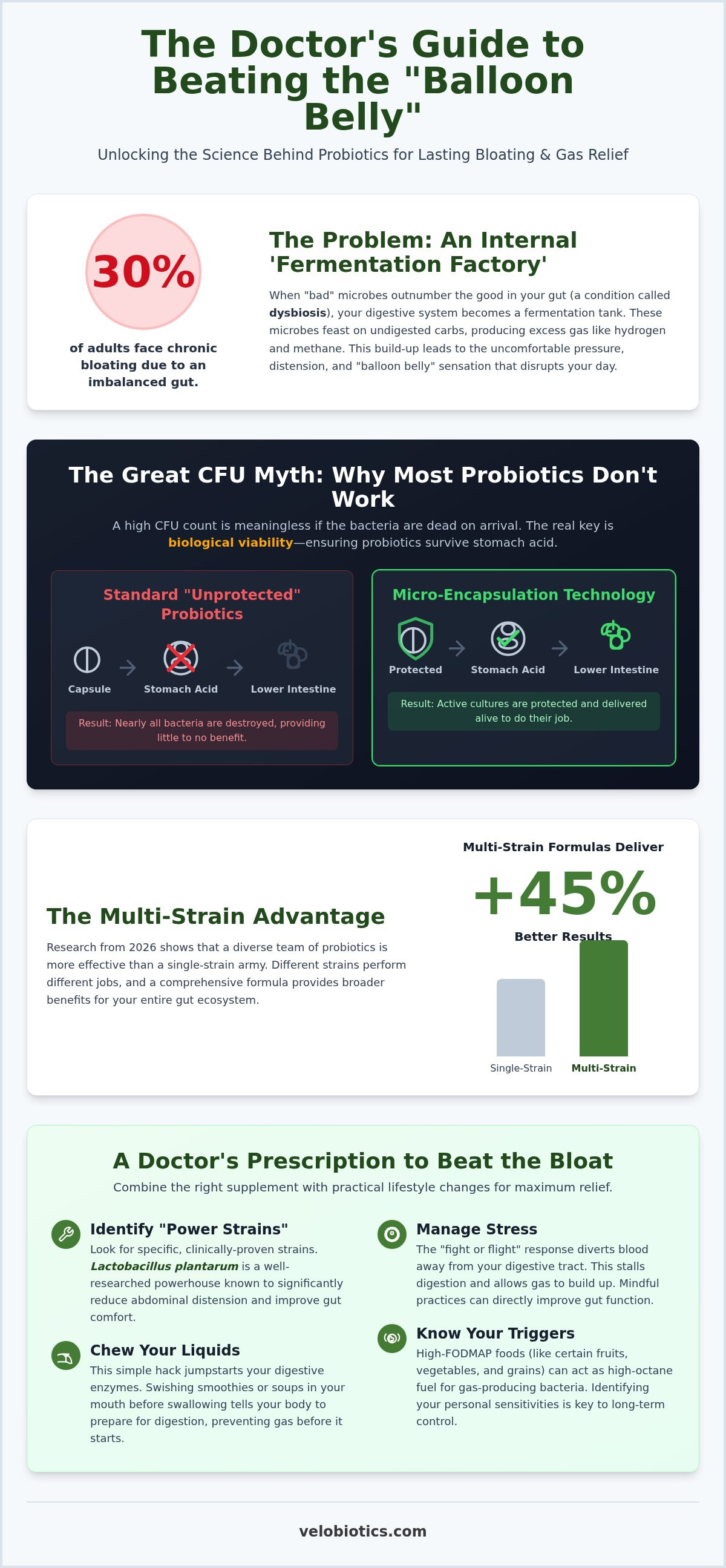
Your gut is essentially a sophisticated fermentation tank. When certain bacteria encounter undigested carbohydrates, they feast. This process is called fermentation, and its primary byproducts are gases like hydrogen and methane. Methane-producing microbes are particularly troublesome because they can slow down gut motility. This creates a vicious cycle where food sits in your system longer, providing even more fuel for fermentation. This is why 30% of adults experience chronic bloating; their internal factory is producing "bubbles" faster than the body can clear them.
Hormonal vs. Digestive Bloating
It’s vital to distinguish between a heavy meal and hormonal shifts. Fluctuating levels of estrogen and progesterone can significantly impact how fast food moves through your digestive tract. When transit time slows down, fermentation increases. Women often experience this "cyclical bloat" regardless of what they eat. For these specific physiological needs, Her-Biotics Probiotics Original Multivitamin 60 Capsules for Women provides targeted support to help balance the microbiome alongside these natural hormonal changes.
Beyond hormones, common triggers like FODMAPs (fermentable oligosaccharides, disaccharides, monosaccharides, and polyols) act as high-octane fuel for gas-producing bacteria. Even stress can play a role. When you’re stressed, your "fight or flight" response redirects blood flow away from your digestive tract. This stalls the process and allows gas to build up, leading to that familiar physical discomfort and social anxiety. Finding the right probiotics for bloating and gas means finding a way to break this cycle and restore order to your internal ecosystem.
The Survival Problem: Why Most Probiotics Don’t Reach Your Gut
You might be surprised to learn that most of the supplements you swallow are essentially dead before they ever reach their destination. This is what I call the "viability gap." When people shop for probiotics for bloating and gas, they usually look for the biggest number of Colony Forming Units (CFUs) on the label. They assume 100 billion bacteria must be better than 10 billion. However, this is the great CFU myth. If those 100 billion bacteria are "naked" and unprotected, your stomach acid will likely eliminate almost all of them within minutes.
Stomach acid is an incredibly harsh environment, designed specifically to break down food and kill off invading pathogens. Its low pH is a probiotic’s worst enemy. For a supplement to be effective, it needs biological viability, which means the bacteria must be alive and capable of colonizing your gut when they arrive. For more expert insights on probiotics and how they function within the human body, it's clear that survival is the most critical metric of quality.
Micro-encapsulation is a technological seal that shields bacteria until they reach the alkaline environment of the intestines.
The Science of Micro-Encapsulation
Think of micro-encapsulation as a heat shield for a spacecraft entering the atmosphere. Without that shield, the craft burns up upon entry. In the same way, our proprietary delivery system acts as a protective barrier against gastric juices. While many brands use a basic "enteric coating," this is often just a simple layer on the outside of the capsule. True micro-encapsulation protects the individual probiotic strains at a microscopic level. It ensures that the "good bugs" remain dormant and safe until they hit the higher pH levels of your small and large intestines, where they can actually go to work.
Measuring Success: What Actually Arrives?
When you’re looking at a label, don't get distracted by massive strain counts that lack a delivery strategy. The key is active utilization. It doesn't matter how much you ingest; it only matters how much your body can actually use. In my research, I’ve found that a smaller, protected dose is significantly more effective than a massive, unprotected one that gets incinerated in the stomach. If you want a clinical-grade solution that prioritizes survival, I recommend looking into Velo16 for comprehensive support. By focusing on delivery technology rather than just raw numbers, you can finally stop wasting money on supplements that don't survive the journey.
Top Probiotic Strains for Gas and Bloating Relief
Most people look for a single "silver bullet" when choosing probiotics for bloating and gas. However, clinical data suggests that a multi-strain approach is significantly more effective. Think of your gut as a complex ecosystem; you wouldn't try to restore a decimated rainforest by planting only one type of tree. By introducing a variety of beneficial bacteria, you create a robust defense system that can crowd out gas-producing pathogens more efficiently than any single strain could alone. This diversity is why multi-strain formulas often deliver 45% better results for bloating relief in clinical settings.
One of the true champions in my clinical view is Lactobacillus plantarum. It’s specifically recognized for its ability to reduce abdominal distension, which helps that uncomfortable "stretched" feeling disappear. Another clinical favorite is Bifidobacterium infantis. While it is often associated with infant health, it’s a powerhouse for adults too. It works by soothing the intestinal lining and reducing the low-grade inflammation that often leads to excess gas buildup. When these strains work in tandem, they create an environment where harmful, gas-producing microbes simply cannot thrive.
The "Bloat-Busting" Genera
The most effective formulas center on the Lactobacillus and Bifidobacterium genera. These are your primary gas-fighters. To handle acute digestive upset, I often look for Saccharomyces boulardii, a beneficial yeast that works differently than bacteria to stabilize the gut environment quickly. For those who want a broad safety net, Velo16 incorporates 16 distinct strains. This level of diversity ensures that no matter which specific microbe is causing your imbalance, you have a counter-strain ready to intervene and restore order.
Synergy and the Gut Environment
It isn't just about the bacteria themselves; it's about what they produce once they arrive. Effective probiotics for bloating and gas generate short-chain fatty acids (SCFAs) like butyrate. These SCFAs lower the pH of your gut, making it an inhospitable place for the "bad" microbes that thrive on fermentation. While some brands focus on adding external digestive enzymes, the real magic happens when you ensure your probiotics survive to produce their own enzymes naturally. Finally, remember that prebiotics are the fuel your "bloat-busting" bacteria need. Without proper nourishment, even the best strains won't be able to colonize and provide the long-term relief you deserve.
A Doctor’s Prescription: Lifestyle Hacks to Beat the Bloat
While high-quality probiotics for bloating and gas provide the biological foundation for a healthy gut, your daily habits act as the construction crew. In my clinical practice, I’ve found that even the best supplements work better when paired with a few strategic lifestyle adjustments. One of my favorite recommendations is the "Chew Your Liquids" rule. It sounds a bit odd, but your saliva contains amylase, an enzyme that jumpstarts the breakdown of carbohydrates. By swirling liquids or smoothies in your mouth for a few seconds, you ensure that these enzymes begin the digestive process before the food even reaches your stomach, reducing the workload on your lower gut.
Movement is another powerful tool in your arsenal. I suggest a 10-minute post-meal walk. This isn't about burning calories; it's about using gravity and gentle movement to help dispel gas trapped in the intestinal folds. Additionally, pay attention to your hydration levels. When you don't drink enough water, your body holds onto sodium, leading to "salt bloat." This fluid retention can feel very similar to gas pressure, but it's easily remedied by consistent, plain water intake throughout the day.
Mindful Eating for Better Motility
When you're stressed, your body enters a "fight or flight" state that effectively shuts down non-essential functions like digestion. Eating while rushed or anxious leads to air swallowing and poor chewing, which is a guaranteed recipe for gas. Try my favorite "MD hack": take three deep diaphragmatic breaths before your first bite. This simple act signals your nervous system to enter "rest and digest" mode. Follow this with the 20-minute rule. It takes about 20 minutes for your satiety hormones to reach your brain, so slowing down prevents overeating and the subsequent abdominal distension.
Identifying Your Personal Triggers
Every gut is unique, so I recommend keeping a 3-day "Bloat Diary." Track what you eat and how you feel two hours later. You might find hidden culprits like sugar alcohols, such as xylitol or erythritol, which are notorious for causing rapid fermentation in the colon. Also, reconsider your love for sparkling water. While it's better than soda, the carbon dioxide bubbles you swallow can easily become trapped gas. For a deeper look at how lifestyle and supplements work together, check out this Probiotics for Digestive Health: A Doctor’s Guide. If you're ready to combine these hacks with a reliable delivery system, optimize your gut today with Velo16.
Targeted Solutions for a Flatter, Happier Tummy
Identifying the root cause of your discomfort is the first step, but selecting the right clinical tool is where the transformation actually happens. Many generic brands offer a one size fits all pill that ignores whether your primary struggle is hormonal, metabolic, or purely digestive. In my experience, the most successful patients are those who match their supplement to their specific physiological goals. When you choose probiotics for bloating and gas, you should be looking for a formula that addresses your unique biological profile rather than a generic wellness promise.
Consistency is the final piece of the puzzle. I often tell my patients that probiotics are living organisms, not chemical switches. They need time to bypass the stomach, reach the colon, and establish a stable colony. Research indicates that it takes approximately 30 days of daily use for these beneficial strains to effectively colonize the gut and crowd out gas-producing pathogens. If you stop after a week, you're essentially evicting the construction crew before they've finished the foundation.
Velo16: Clinical Strength Digestive Support
For those dealing with chronic gas, irregular bowel movements, or that heavy, persistent "balloon" sensation, I recommend a high-diversity approach. Velo16 Probiotic Capsules provide a comprehensive 16-strain profile designed to cover every corner of your microbiome. This diversity ensures that you aren't just relying on one strain to do all the work. By introducing a broad spectrum of beneficial bacteria, you create a robust internal environment that can handle a wider variety of dietary triggers and environmental stressors.
The GutSlim Range: Beyond Digestion
If your goal includes both digestive comfort and aesthetic results, the GutSlim range offers a more specialized path. GutSlim Tummy Toner is formulated for those who want to manage their metabolic health alongside their gut health. Certain probiotic strains have been shown to influence appetite and fullness signals, helping you feel more in control of your dietary choices while simultaneously reducing the fermentation that causes mid-day bloat. It’s a dual-action approach that targets both the "why" and the "how" of abdominal distension.
Ultimately, achieving a flatter, more comfortable stomach is about more than just a single supplement. It’s a total lifestyle shift that combines the right probiotics for bloating and gas with the mindful eating habits and movement strategies we've discussed. By choosing a formula with proven biological viability and committing to the 30-day colonization window, you’re moving away from temporary fixes and toward long-term digestive mastery. Your gut is a complex system; treat it with the scientific rigor it deserves.
Step Into Your Bloat-Free Future
Your journey to a flatter, more comfortable stomach doesn't have to be a guessing game. We've established that the "Balloon Belly" is a biological challenge that requires a technological solution. By choosing probiotics for bloating and gas that feature micro-encapsulation, you ensure those beneficial bacteria actually survive the stomach's acid bath to do their job. Remember to pair your supplements with practical hacks like mindful chewing and post-meal movement to jumpstart your internal construction crew.
It takes about 30 days for these strains to fully colonize, so stay consistent and let the science work for you. You don't have to settle for ineffective wellness trends when clinical-grade, doctor-led research is available at your fingertips. If you're ready to reclaim your digestive confidence and eliminate social anxiety, Browse our Doctor-Formulated Probiotics for Bloating Relief. Our formulations offer 16-strain clinical diversity and are micro-encapsulated for 10x better survival, ensuring you get the results you've been searching for. Here's to a lighter, happier you.
Expert Answers to Your Gut Health Questions
How long does it take for probiotics to help with bloating?
Most people notice an initial shift in their digestion within 14 days of consistent use. However, for significant and lasting relief from abdominal distension, you should commit to at least 4 weeks. This timeframe allows the new bacteria to colonize your gut and shift the microbiome balance. If you're using high-quality probiotics for bloating and gas, consistency is the most critical factor in achieving a flatter, more comfortable stomach.
Can probiotics actually make bloating and gas worse at first?
It's quite common to experience a temporary increase in gas when you first start a high-potency supplement. Think of it as a "remodeling" phase where the new, beneficial bacteria are crowding out the old, gas-producing residents. This adjustment period usually lasts between three to five days. If the discomfort persists beyond a week, try halving your dose and gradually increasing it as your system adapts to the new microbial environment.
Is it better to take probiotics for gas on an empty stomach or with food?
For standard supplements, taking them 30 minutes before a meal is usually best because stomach acid is at its lowest. However, if you're using micro-encapsulated technology, the timing is less restrictive because the technological seal protects the bacteria. I generally recommend taking your dose with a glass of water first thing in the morning. This routine ensures the "good bugs" reach your intestines before the heavy lifting of digestion begins.
What are the best probiotic strains specifically for gas relief?
Clinical research highlights Lactobacillus plantarum as the gold standard for reducing abdominal distension. Bifidobacterium infantis and Bifidobacterium longum are also excellent for soothing the intestinal lining and reducing fermentation. A multi-strain approach is always superior to a single strain. Look for a formula that offers at least 10 billion CFU and includes these specific "power strains" to ensure you're targeting the gas at its biological source.
Can I take probiotics for bloating every day?
You should take them every day to maintain a healthy microbiome. Your gut is a dynamic environment influenced by diet, stress, and medications, which can constantly deplete your beneficial bacteria. Daily supplementation acts like a maintenance crew, ensuring your internal ecosystem stays balanced. Skipping days can allow gas-producing microbes to regain their territory. For long-term comfort, make it as routine as brushing your teeth or taking a daily multivitamin.
Do probiotics help with bloating caused by hormonal changes?
Probiotics can definitely help with the "cyclical bloat" caused by estrogen and progesterone fluctuations. These hormones often slow down gut motility, which leads to increased fermentation and gas. By improving transit time and strengthening the gut barrier, specific strains can mitigate the physical discomfort associated with your cycle. I often recommend targeted support like Her-Biotics for women who find their bloating is strictly tied to their monthly hormonal shifts.
What is the difference between probiotics and digestive enzymes for gas?
Probiotics are living organisms that colonize your gut, while digestive enzymes are proteins that help break down specific food molecules. Enzymes provide immediate help by dismantling complex carbs or fats during a meal. Probiotics offer a long-term solution by addressing the underlying microbiome imbalance. While enzymes are a great "quick fix" for a heavy dinner, probiotics for bloating and gas are necessary for permanent relief and overall digestive health.
How do I know if my probiotics are actually working?
You'll know they're working when you experience fewer "balloon belly" episodes after meals and more regular bowel movements. Many patients also report a significant reduction in the social anxiety caused by unpredictable gas. Another sign is a visible reduction in abdominal distension by the end of the day. If you don't see these changes within 30 days, you might need a formula with better biological viability or a higher strain diversity.

Disclaimer
Information and statements regarding dietary supplements/products have not been evaluated by the Food and Drug Administration, MCC/SAHPRA, MHRA, TGA or any other drug regulatory authority and are not intended to diagnose, treat, cure, or prevent any disease. Information on this website is provided for informational purposes only and is a result of years of practice and experience by the author. This information is not intended as a substitute for the advice provided by your physician or other healthcare professional or any information contained on or in any product label or packaging. Do not use the information on this website for diagnosing or treating a health problem or disease, or prescribing medication or other treatment. Always speak with your physician or other healthcare professional before taking any medication or nutritional, herbal, or homeopathic supplement, or using any treatment for a health problem. If you have or suspect that you have a medical problem, contact your healthcare provider promptly. Do not disregard professional medical advice or delay in seeking professional advice because of something you have read on this website.