

The Gut-Sperm Axis: Exploring the Gut Health and Male Fertility Connection in 2026
Did you know that sperm counts have plummeted by nearly 50% over the last 40 years? It is a staggering figure that leaves many men wondering why their standard lab results often come back as "normal" even when they're struggling to conceive. If you have felt the frustration of unexplained infertility or felt lost in a sea of complex medical jargon, you are not alone. It's exhausting to be told to just keep trying when you want real, scientific answers about the gut health and male fertility connection.
I'm here to tell you that your reproductive health is not a localized event; it's the output of a systemic "Gut-Sperm Axis" where your microbiome dictates sperm viability. In this guide, we will strip away the confusion and dive into the empirical evidence behind how gut-derived inflammation affects your motility and DNA fragmentation. You'll walk away with a clear understanding of the science and actionable, doctor-led strategies to optimize your fertility through targeted microbiome support. We're moving past vague wellness promises to give you the biological tools you need to take charge of your family's future.
Key Takeaways
- Understand how your digestive system acts as the command center for reproductive health through the bidirectional Gut-Sperm Axis.
- Learn how an imbalance of gut bacteria, known as dysbiosis, triggers systemic inflammation that directly impairs sperm motility and DNA integrity.
- Discover why the gut health and male fertility connection depends on probiotic viability and how to ensure your supplements actually survive stomach acid.
- Follow a practical 5-step protocol to eliminate gut disruptors and incorporate prebiotic fibers that fuel beneficial, fertility-boosting bacteria.
- Identify the specific clinical nutrients like Zinc and Selenium that work synergistically with probiotics to maximize your reproductive potential.
What is the Gut-Sperm Axis? Understanding the Connection
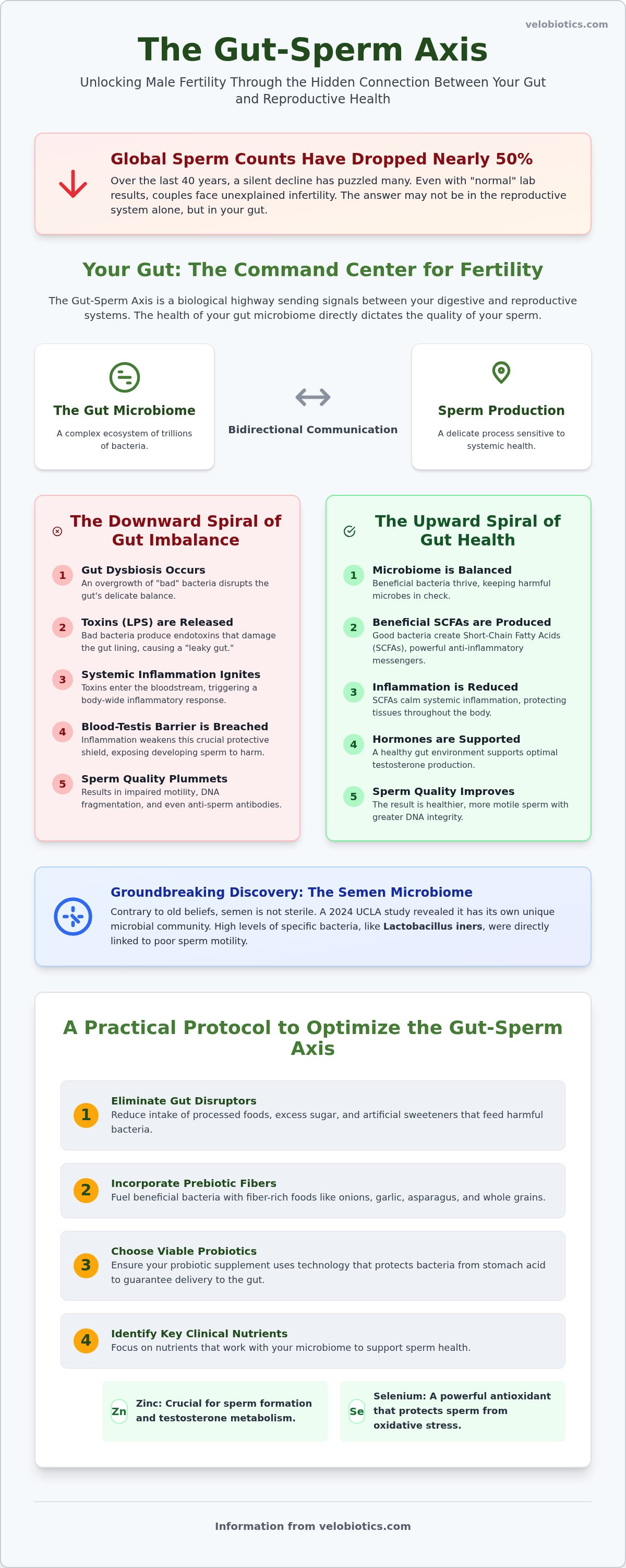
The Gut-Sperm Axis isn't just a fancy medical term; it's the biological highway connecting your digestive system to your reproductive potential. Think of your gut as the project manager for your body's production line. Just as we've studied the Gut-Brain Axis to understand mood and cognition, we're now uncovering how your gut acts as the "command center" for your fertility. When your gut is healthy, it signals your body to produce high-quality sperm. When it's in a state of chronic inflammation, that signal gets garbled, affecting everything from count to motility. This gut health and male fertility connection is the missing piece for many couples trying to conceive.
As a physician, I often tell my patients that sperm quality is a mirror. It reflects your metabolic health and, more importantly, your microbial balance. If your gut lining is compromised, inflammatory markers leak into your bloodstream and travel directly to the delicate environment of the testes. This creates oxidative stress, which is essentially "rusting" for your sperm cells. By managing your microbiome, you aren't just fixing your digestion; you're protecting the integrity of your genetic material.
To better understand this concept, watch this helpful video:
The Discovery of the Semen Microbiome
For decades, medical textbooks taught us that semen was sterile. We now know that's simply not true. A groundbreaking 2024 UCLA study revealed that semen contains its own unique community of microbes. While some bacteria are helpful, others act like unwanted guests at a party. For instance, researchers found that high levels of Lactobacillus iners are linked to poor sperm motility. This discovery confirms that the microbial environment of the reproductive tract is deeply influenced by the health of the gut, creating a complex gut health and male fertility connection that science is only beginning to fully map.
How Gut Bacteria "Talk" to the Testicles
So, how do these tiny organisms communicate across the body? They use chemical messengers called metabolites. Beneficial gut bacteria produce Short-Chain Fatty Acids (SCFAs), which help lower inflammation and support the production of testosterone. Without these messengers, your hormonal balance can shift, leading to lower sperm counts and reduced libido. We've spent years researching these complex interactions to bridge the gap between laboratory breakthroughs and your daily routine. You can read more about our commitment to this science in the Velobiotics story. Understanding this axis is the first step toward taking control of your reproductive health.
For researchers and scientists looking to investigate the chemical messengers and laboratory breakthroughs discussed in these studies, visit Essential Acids to find high-purity peptides for analytical and scientific applications.
How Gut Dysbiosis Damages Sperm Quality
Think of your gut like a high-stakes ecosystem. When the balance of "good" and "bad" bacteria shifts toward the negative, we call it dysbiosis. It's not just a digestive hiccup; it's a systemic alarm. This imbalance is a primary driver in the gut health and male fertility connection because it turns your digestive tract into a source of toxic runoff that eventually reaches your reproductive organs.
Bad bacteria produce endotoxins known as Lipopolysaccharides (LPS). In a healthy gut, these stay put. But when dysbiosis weakens your intestinal wall, LPS enters your bloodstream. This triggers a wave of inflammation that travels throughout your body, eventually reaching your reproductive system. This biological mechanism is the foundation of the gut health and male fertility connection. As a doctor, I've seen how frustrating it is to have "unexplained" issues, but the truth is often hidden in these microscopic interactions.
Leaky Gut and the Blood-Testis Barrier
Developing sperm are incredibly delicate. They require a pristine environment, which is why they're shielded by the Blood-Testis Barrier (BTB). The BTB is the reproductive system’s primary defense mechanism against circulating toxins. When chronic inflammation from a leaky gut hits this barrier, it causes a "breach." Your immune system, suddenly exposed to sperm cells it doesn't recognize as "self," can start producing anti-sperm antibodies. This directly sabotages your sperm concentration and motility, leading to the very issues that standard tests often miss.
For those researching the latest scientific developments in tissue repair and the maintenance of biological barriers, 157peptides.com offers high-purity compounds used in advanced laboratory studies.
Oxidative Stress: The Enemy of DNA Integrity
This internal fire creates Reactive Oxygen Species (ROS). While some ROS are normal, an excess leads to oxidative stress. Imagine ROS as microscopic shrapnel hitting your sperm's DNA. This results in fragmentation, which is a leading cause of infertility and miscarriage. This damage also impacts morphology, or the shape of the sperm, making it harder for them to reach their destination. Many men try to solve this with standard antioxidants from a grocery store shelf. However, if the gut remains in a state of dysbiosis, you're essentially trying to blow out a forest fire with a birthday candle. You have to stop the inflammation at the source. Research on the human microbiome and male infertility confirms that systemic health is the true foundation of reproductive success.
Addressing these microbial gaps is why we focus on biological viability. If you're ready to support your system from the inside out, consider a targeted approach like Pregbiotics Conception to help stabilize your internal environment.
The Role of Probiotics in Male Reproductive Health
If your gut is the source of "toxic runoff" as we discussed in the previous section, then probiotics are the restoration crew. I like to think of probiotic therapy as "re-seeding" a scorched landscape. By introducing beneficial bacteria, we can crowd out the inflammatory microbes that trigger the systemic fire damaging your sperm. This restoration is a critical step in strengthening the gut health and male fertility connection, but it isn't as simple as just swallowing any pill you find at the chemist.
Most men who try probiotics for fertility feel a sense of skepticism, and frankly, it's often justified. The harsh reality is that the majority of standard probiotics fail before they even start. Your stomach acid is designed to destroy bacteria; it's a highly effective biological barrier. When you take a traditional supplement, the vast majority of those "billions" of CFUs are decimated in the stomach. For a deeper dive into this mechanism, you can read our guide on probiotics for digestive health to understand what actually reaches your gut.
Strains That Support Sperm Motility
Clinical research has identified specific "heavy hitters" in the microbial world that directly influence reproductive outcomes. Strains like Lactobacillus rhamnosus have shown significant promise in improving sperm concentration and motility. These beneficial bacteria work by displacing harmful groups like Pseudomonas, which are often found in higher concentrations in men with sub-optimal fertility. A diverse, multi-strain formulation is essential. It creates a robust ecosystem that supports the gut health and male fertility connection by maintaining the integrity of the intestinal lining and preventing the "leaky gut" breaches we covered earlier.
The Velobiotics Difference: Micro-encapsulation
To truly influence the gut-sperm axis, we had to solve the delivery problem. It's the difference between a supplement that looks good on a label and one that creates a biological result. We utilize a proprietary micro-encapsulation technology that acts as a protective seal for every single bacterium. This ensures that the probiotics survive the acidic journey through the stomach. In fact, our data shows that 1000x more bacteria survive and reach the lower intestine alive when compared to standard capsules. This isn't just a technical edge; it's the bridge that allows these beneficial microbes to actually lower systemic inflammation and support the delicate environment where your sperm are produced.
A 5-Step Protocol to Optimize the Gut-Sperm Axis
Understanding the gut health and male fertility connection is the first step, but implementation is where we see clinical results. This protocol isn't about vague "detoxing"; it's a methodical restoration of your internal environment. We're aiming to lower systemic inflammation and provide the biological building blocks your body needs to produce resilient, high-motility sperm. By following these five steps, you're essentially re-engineering the environment where your genetic material is created.
- Step 1: Eliminate Gut Disruptors. Processed sugars and excessive alcohol are the primary fuels for dysbiosis. They feed the "bad" bacteria that produce inflammatory endotoxins, which eventually breach the blood-testis barrier.
- Step 2: Increase Prebiotic Fiber. Think of this as the "fertilizer" for your beneficial microbes. Without enough fiber, your good bacteria can't produce the short-chain fatty acids needed to keep your gut lining strong.
- Step 3: Manage Stress. High cortisol levels directly damage the gut lining. This creates a negative feedback loop between your brain, gut, and fertility, often referred to as the gut-brain-fertility connection.
- Step 4: Supplement with Targeted Probiotics. You need a multi-strain formulation. Most importantly, it must be designed for survival so the bacteria actually reach the lower intestine alive.
- Step 5: Monitor Progress. Don't guess; test. Schedule a semen analysis after 90 days to quantify your improvements and see the tangible results of your protocol.
Dietary Changes for a Fertile Microbiome
Your microbiome eats what you eat. A high-fat, low-fiber diet is the biggest threat to the gut health and male fertility connection because it promotes a "leaky" gut environment. Focus on "fertility foods" like walnuts, which have been shown in clinical studies to improve sperm vitality and morphology. Leafy greens rich in folate and fermented foods like kimchi or sauerkraut are also essential. Small swaps make a massive difference. Replace your daily soda with kombucha or sparkling water with lemon to reduce sugar-driven inflammation while supporting microbial diversity.
Timing and Consistency
Biological change isn't instant. It takes roughly 74 to 90 days for new sperm to mature, a process known as spermatogenesis. This means the lifestyle changes you make today won't be fully reflected in your semen analysis for about three months. You are essentially cultivating a new crop of genetic material. Consistency is the key to success here. I recommend a daily routine using Pregbiotics Conception to ensure your microbiome receives a steady, protected supply of beneficial strains throughout this entire production cycle.
If you're ready to start your 90-day transformation, you can explore our doctor-led formulations to find the right support for your fertility journey.
Expert Recommendations: Targeted Fertility Support
Generic multivitamins often fail because they treat the body as a simple bucket. You pour nutrients in and you expect them to work. But as we've explored, the gut health and male fertility connection is far more complex. If your gut is inflamed or your microbiome is out of balance, your body won't effectively utilize the very minerals meant to support sperm production. This is why a targeted, clinical approach is superior to a one size fits all solution. We don't just want to provide ingredients; we want to ensure those ingredients are biologically active where they matter most.
Zinc, Selenium, and Folic Acid are essential structural components of healthy sperm. Zinc supports testosterone levels and sperm count, while Selenium acts as a structural engineer, protecting sperm from the oxidative stress we discussed earlier. However, these nutrients need a stable, low-inflammation environment to do their jobs. By pairing these high-grade minerals with protected probiotics, we ensure that your body is actually capable of absorbing and using them. It's about biological viability, not just label claims. My commitment as a founder is to maintain this scientific integrity in every formulation we release.
Why Pregbiotics for Men?
We developed Pregbiotics Essentials to bridge the gap between basic nutrition and microbial health. It's not just a supplement; it's a clinical-grade tool designed for men who are serious about their reproductive future. This formulation addresses nutritional gaps and supports your microbiome simultaneously. Because we use our proprietary micro-encapsulation, you can rest easy knowing the beneficial bacteria are actually reaching your gut alive. It's simple to use and provides the peace of mind that comes from doctor-led research and empirical evidence.
The Path Forward for Couples
I always remind my patients that fertility is a team effort. We're now seeing evidence of a joint microbiome approach where both partners' gut health influences their collective success. When both of you optimize your microbiomes, you create a healthier environment for conception and beyond. Gut health is a shared lifestyle, not a solo mission. It's time to stop settling for unexplained answers and start taking control of your biological potential through the gut health and male fertility connection. You can explore our full range of fertility-focused probiotics to find the targeted support your family needs to grow.
Take Control of Your Reproductive Future Today
We've moved past the era of viewing fertility as an isolated, localized event. By understanding the gut health and male fertility connection, you now have a biological roadmap to address "unexplained" challenges at their microbial source. Remember that your sperm production is a 90-day journey. Success requires consistent support and, most importantly, a delivery system that ensures your probiotics actually survive the harsh acidic environment of your stomach to reach the lower intestine.
As a doctor-founded brand, I've prioritized scientific integrity by developing proprietary micro-encapsulation technology. This innovation ensures 1000x better bacterial survival compared to standard capsules, providing targeted support across the entire spermatogenesis cycle. You don't have to feel overwhelmed by medical jargon or stay skeptical about whether your supplements are actually working. The evidence is clear: a healthy gut is the foundation of a fertile life.
Optimize your fertility with Pregbiotics Conception and start re-engineering your internal environment today. You have the tools to make a tangible difference in your family's future. Stay consistent, trust the clinical evidence, and take charge of your biological potential.
Frequently Asked Questions
Can probiotics really improve sperm count and motility?
Yes, clinical research confirms that specific probiotic supplementation can significantly enhance sperm parameters. Randomized clinical trials have shown that oral intake of Lactobacillus and Bifidobacterium strains leads to measurable improvements in sperm concentration and movement. By restoring microbial balance, these beneficial bacteria lower the systemic inflammation that otherwise sabotages the environment where sperm are produced.
How long does it take for gut health changes to affect sperm quality?
It typically takes about 90 days to see the results of your gut health improvements in a semen analysis. This timeframe aligns with the natural cycle of spermatogenesis, which is the 74 to 90 day period required for new sperm to fully mature. You're essentially waiting for a "new crop" of sperm to develop under these improved, low inflammation conditions.
What is the "Gut-Sperm Axis" exactly?
The Gut-Sperm Axis is the bidirectional communication pathway between your digestive system and your reproductive organs. Your gut acts as a biological command center, sending chemical signals and metabolites that influence the health of your testes. This pathway is a critical component of the gut health and male fertility connection, as it dictates the level of oxidative stress your sperm must endure.
Can "Leaky Gut" cause male infertility?
Yes, a "leaky" intestinal lining allows inflammatory endotoxins like Lipopolysaccharides (LPS) to enter your bloodstream. Once these toxins circulate, they can breach the protective Blood-Testis Barrier. This triggers an immune response that may cause your body to produce anti-sperm antibodies, directly leading to reduced sperm counts and poor motility that standard fertility tests often label as "unexplained."
Are there specific probiotic strains for male fertility?
Clinical studies highlight Lactobacillus rhamnosus and Bifidobacterium longum as top performers for reproductive support. These specific strains help displace harmful bacteria that are often found in higher concentrations in men with sub-optimal fertility. To be effective, these strains must be protected by micro-encapsulation to ensure they survive stomach acid and reach the lower intestine alive.
Should I take a probiotic if my semen analysis is normal?
Yes, because a standard semen analysis doesn't measure DNA fragmentation or microscopic oxidative stress. Even if your count and motility look good on paper, gut-driven inflammation can still damage the genetic integrity of your sperm. Proactive support of the gut health and male fertility connection ensures your genetic material is as resilient and healthy as possible for conception.
How does inflammation in the gut reach the testicles?
Inflammation travels through your body via systemic circulation in the bloodstream. When your gut lining is compromised, inflammatory markers and bacterial byproducts leak into your blood. These molecules circulate throughout your system and can disrupt the delicate, low-heat, and low-inflammation environment that your testicles require to produce high-quality, viable sperm cells.
Does stress affect both my gut and my fertility?
Absolutely, stress triggers the release of cortisol, which is known to directly damage the integrity of your gut lining. This damage creates a "leaky" environment that fuels systemic inflammation. Since your reproductive system is highly sensitive to oxidative stress, a high-pressure lifestyle can sabotage your sperm quality by triggering this destructive chain reaction starting in your digestive tract.

Disclaimer
Information and statements regarding dietary supplements/products have not been evaluated by the Food and Drug Administration, MCC/SAHPRA, MHRA, TGA or any other drug regulatory authority and are not intended to diagnose, treat, cure, or prevent any disease. Information on this website is provided for informational purposes only and is a result of years of practice and experience by the author. This information is not intended as a substitute for the advice provided by your physician or other healthcare professional or any information contained on or in any product label or packaging. Do not use the information on this website for diagnosing or treating a health problem or disease, or prescribing medication or other treatment. Always speak with your physician or other healthcare professional before taking any medication or nutritional, herbal, or homeopathic supplement, or using any treatment for a health problem. If you have or suspect that you have a medical problem, contact your healthcare provider promptly. Do not disregard professional medical advice or delay in seeking professional advice because of something you have read on this website.