

What Not to Do When Using Boric Acid: A Doctor’s Guide to Safety (2026)
Did you know that while nearly 70% of women will experience a yeast infection, many risk their delicate internal ecosystem by using powerful treatments incorrectly? As a doctor, I've seen how easily a "quick fix" turns into a cycle of irritation because of simple, avoidable errors. If you're feeling overwhelmed by conflicting online advice or anxious about potential side effects, you aren't alone. Understanding exactly what not to do when using boric acid is the most important step in protecting your vaginal microbiome, especially as Phase 3 clinical trials and 2026 regulatory shifts change how we view these products.
I promise to provide you with a clear, science-backed roadmap to ensure your health journey is safe, effective, and entirely irritation-free. We'll explore the critical mistakes that lead to "burning," the strict boundaries around oral toxicity, and the specific signs that tell you to stop treatment immediately. By the end of this guide, you'll have a professional plan for long-term balance and the confidence to manage your wellness with clinical precision and peace of mind.
Key Takeaways
- Understand that boric acid is strictly for vaginal use; oral ingestion is a critical medical emergency that must be avoided at all costs.
- Discover exactly what not to do when using boric acid, including the hygiene and timing mistakes that can compromise your recovery.
- Learn why douching is redundant during treatment and why waiting 24 hours after insertion is essential for maintaining comfort during intimacy.
- Identify the physical red flags, such as open sores or pregnancy, that require you to stop treatment immediately to protect your health.
- Master the "reset" strategy by learning how to repopulate your vaginal flora with beneficial bacteria once the boric acid has cleared the environment.
The Golden Rule: Why Boric Acid is a Suppository, Not a Supplement
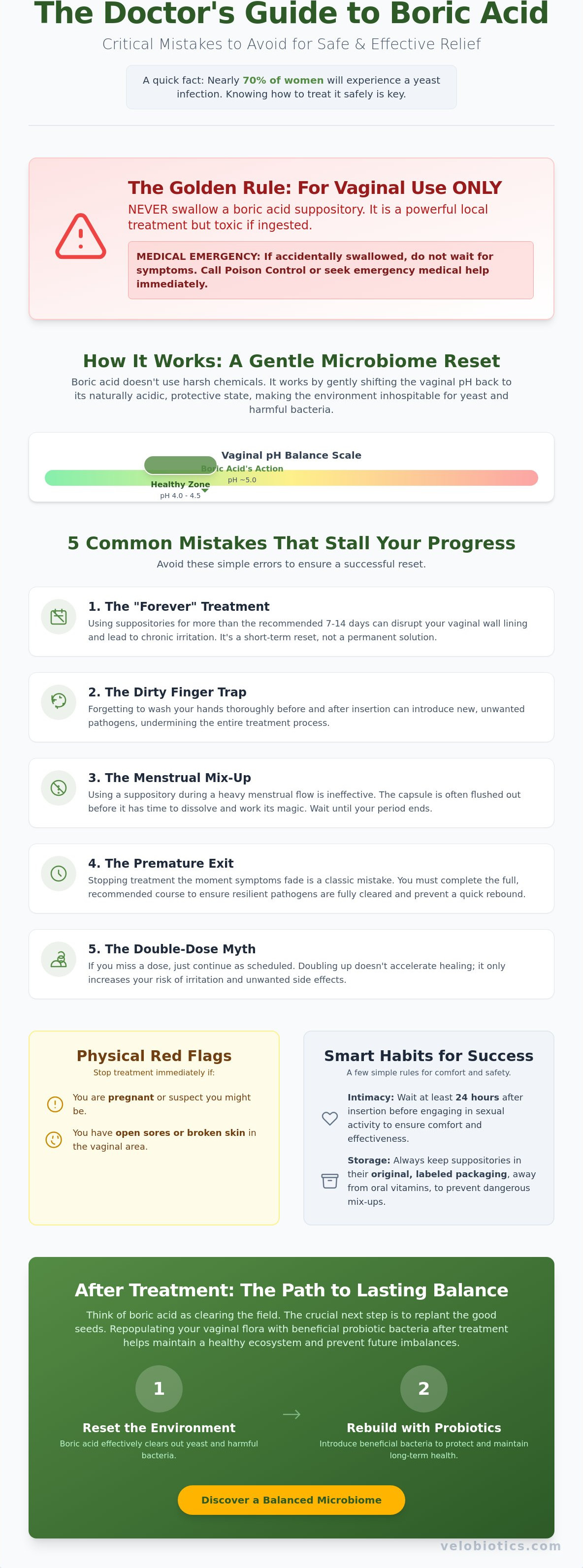
With a Phase 3 clinical trial for boric acid suppositories currently underway and expected to finish in June 2026, we are finally seeing the clinical validation this treatment deserves. However, validation doesn't mean it's a supplement. When learning what not to do when using boric acid, the most vital lesson is that it's strictly for vaginal use. Swallowing these capsules can be fatal. While it looks like a standard vitamin, its chemical structure is designed for local application within the vaginal canal, where it acts as a "reset button" for your microbiome.
The word "acid" often triggers alarm bells, but Boric acid is actually a mild substance with a pH of about 5.0. Since a healthy vaginal environment sits between 4.0 and 4.5, this compound helps gently shift the balance back to its acidic baseline without the harshness people often fear. This safety only applies to topical, internal use. If ingested orally, it becomes a systemic toxin because our internal organs aren't equipped to process it in that concentration. If accidental ingestion occurs, don't wait for symptoms; spoiler: call Poison Control immediately.
To better understand the safety profile and clinical application of this treatment, watch this helpful video from an OBGYN perspective:
The Science of Why It Must Stay Local
Boric acid works by physically disrupting the cell walls of fungi and bacteria. It's an effective hunter of yeast and the pathogens that cause bacterial vaginosis. Medical guidelines generally recommend a standard 600 mg dose for recurrent issues. When you use a suppository like Femina Probiotic COOKIE FRESH, the active ingredient stays exactly where the problem is. If you swallow it, the acid enters your bloodstream. Your liver and kidneys are designed to filter nutrients, but they cannot effectively metabolize boric acid. Bypassing the digestive system isn't just about efficacy; it's a critical safety barrier that keeps the treatment local and your vital organs safe.
Storage Mistakes That Could Be Dangerous
One of the biggest risks I see in my practice is "aesthetic" storage. Understanding what not to do when using boric acid includes respecting its storage requirements. Never move your suppositories into unlabeled glass jars or mix them with your daily vitamins. It's incredibly easy to grab the wrong capsule during a sleepy morning routine. Keep your treatment in its original, child-proof packaging, well away from your oral supplements. This is especially important given the 2027 California law changes that will require even stricter warning labels on these products. Treat these as a cleansing agent, not a nutrient, and keep them separate from your daily vitamin organizer to prevent any dangerous confusion.
5 Common Usage Mistakes That Stall Your Progress
Even the most effective medical tools can fail if the application is flawed. When patients come to me frustrated that their symptoms haven't cleared, it's often due to a few recurring tactical errors. Understanding exactly what not to do when using boric acid is the difference between a successful microbiome reset and a cycle of recurring irritation. Let's break down the five most frequent blunders I see in my clinical practice.
- The "Forever" Treatment: Using the product beyond the 14-day window can lead to vaginal wall thinning and chronic irritation.
- The Dirty Finger Trap: Forgetting to wash your hands before and after insertion introduces new pathogens into an already vulnerable environment.
- The Menstrual Mess: Using suppositories during a heavy flow often results in the capsule being flushed out before it can fully dissolve.
- The Premature Exit: Stopping treatment the second the odor vanishes allows resilient bacteria to rebound; you must finish the full course.
- The Double-Dose Myth: Doubling up because you missed a night doesn't speed up healing; it just increases the risk of chemical "burn" and discomfort.
For a detailed look at why these boundaries exist, this patient safety guide for boric acid offers a comprehensive overview of clinical precautions. If you're looking for a reliable, medical-grade option for your reset, the Femina COOKIE FRESH Boric Acid ONLY suppositories are designed with these safety parameters in mind.
The "More is Not Better" Philosophy
In medicine, the dose makes the poison. While it's tempting to use boric acid every time you feel a "twinge," excessive use can strip away the protective mucosal lining of the vagina. This leads to desquamative irritation, making you feel like you have an infection when you actually have a chemical sensitivity. 600mg is the clinical gold standard per dose for effective microbial disruption. Stick to this amount and the recommended duration to avoid turning a solution into a new problem.
Hygiene and Insertion Blunders
Insertion isn't just about getting the capsule "in"; it's about placement and purity. If you don't reach the upper vaginal canal, the boric acid won't distribute evenly across the cervix and vaginal walls where biofilms often hide. I always recommend using a clean applicator or thoroughly washed hands to ensure you aren't trading one bacteria for another. Don't forget that as the capsule dissolves, it creates a watery discharge. Using a breathable cotton panty liner is a practical way to manage this without trapping excess moisture that could encourage further yeast growth.
Interactions and Intimacy: What Not to Mix with Boric Acid
Managing your vaginal health requires more than just following a dosage; it involves understanding how your treatment interacts with your lifestyle. A major part of knowing what not to do when using boric acid is recognizing that this compound doesn't play well with others. Whether it's a partner or another product in your bathroom cabinet, mixing variables during your treatment window can lead to severe irritation or even safety risks for those around you.
Douching vs. Boric Acid: The Ultimate Face-Off
I often tell my patients that douching is like trying to clean a room with a leaf blower; you aren't removing the mess, you're just pushing the dust into the corners. Douching can force bacteria higher into the reproductive tract, increasing the risk of pelvic inflammatory disease. Boric acid works through a completely different mechanism, utilizing its acidic properties to inhibit fungal growth locally. If you're using a high-quality suppository like Femina COOKIE FRESH Boric Acid ONLY, let it do the heavy lifting. Adding douches or medicated creams to the mix creates a chemical cocktail that often results in contact dermatitis or severe stinging.
Logistics of Love: Intimacy Timing
One of the most common questions I get is about sex. The reality is that intimacy and boric acid require a strict 24-hour separation. It isn't just about the "mess"; it's about physiological safety. There are three primary reasons why you should pause your sex life during treatment:
- Mechanical Friction: The gritty texture of a dissolving capsule can act like sandpaper before it fully absorbs, causing micro-tears in the vaginal wall that increase your infection risk.
- Latex Degradation: Boric acid can weaken the structural integrity of latex. This makes condoms far more likely to break, leaving you vulnerable to STIs or unplanned pregnancy.
- Partner Toxicity: Boric acid is toxic if swallowed and can cause chemical irritation to a partner's skin. It has a bitter, metallic taste that serves as a biological warning sign.
For a safe social and medical schedule, I recommend inserting your suppository at bedtime after all intimate activities are finished for the night. This ensures the 600mg dose has eight hours of undisturbed contact with the vaginal lining to reset your environment effectively. If you're planning an intimate evening, skip the dose that night and resume the following evening, but remember that consistency is key for a total microbial reset. Waiting that full 24 hours ensures all residue has been cleared, protecting both your progress and your partner.
Physical Red Flags: When to Stop Using Boric Acid Immediately
While boric acid is a powerful tool for resetting your vaginal pH, it's not a universal solution for every situation. Part of knowing what not to do when using boric acid is recognizing when your body is signaling a "hard stop." If you experience symptoms that go beyond mild, temporary tingling, you may be dealing with a contraindication or a more serious underlying infection that requires prescription intervention rather than an over-the-counter reset.
- Severe Burning: A slight warmth is normal; intense, sharp pain is not.
- Hives or Rashes: These indicate a systemic allergic reaction to the compound.
- Pelvic Pain: Deep, aching pain in the pelvis or lower abdomen is a major red flag.
- Fever and Chills: These systemic symptoms suggest an infection like Pelvic Inflammatory Disease (PID) rather than simple BV or yeast.
Broken Skin and Absorption Risks
The vaginal mucosa is highly vascular, meaning it's rich in blood vessels. If you have open wounds, sores, or active bleeding that isn't your period, don't insert a suppository. Broken skin acts as a direct gateway, allowing the boric acid to enter your bloodstream. This is exactly what we want to avoid. The goal is local antimicrobial action, not systemic absorption. If you've recently had a rough pelvic exam or a surgical procedure, wait until your doctor confirms the tissue is fully healed. Distinguishing between a "chemical burn" and yeast infection itching is key. A burn usually feels like a sharp, localized stinging that worsens after insertion, while yeast itching is often more generalized and persistent.
Pregnancy and Breastfeeding Concerns
Pregnancy is an absolute "No-Go" for boric acid. It's classified as a Class C risk. This means evidence of fetal harm has been found in animal studies, and sufficient human data is lacking to prove safety. Because boric acid can be teratogenic, it poses a significant risk to a developing fetus. If you are expecting or breastfeeding, you must consult your OBGYN for safer alternatives like specific probiotics or prescription antifungals. Our commitment to safety is deeply personal, and you can read more about our clinical philosophy in the Velobiotics Story. We believe in providing solutions that respect the body's natural boundaries. If you need a safe way to maintain your daily balance during pregnancy or nursing, explore our probiotic capsules for women as a gentle, oral alternative.
Beyond the Basics: How to Avoid the ‘Boric Acid Only’ Trap
Imagine cleaning your home by throwing out every piece of furniture, including the heirlooms you love. That's essentially what happens when you rely solely on antiseptic treatments without a recovery plan. Boric acid is an exceptional "reset button" because it's non-selective; it clears out the pathogens causing odor and discomfort. However, it doesn't distinguish between the bad actors and the beneficial flora your body needs. When patients ask me what not to do when using boric acid, my answer is always the same: don't stop at the reset. If you leave the vaginal environment empty, you're just creating a vacancy for the same old problems to move back in.
The Post-Boric Acid Recovery Plan
A healthy microbiome is like a crowded, thriving city. When it's populated by "good" bacteria, specifically Lactobacillus crispatus, these microbes produce lactic acid and hydrogen peroxide. This creates a natural, protective acidic barrier that prevents pathogens from taking root. Without these defenders, your pH will eventually drift back into the alkaline range, inviting recurrent BV or yeast infections. This is where many people fail. They use the acid to kill the infection but forget to repopulate the territory. To solve this, I recommend a dual-action approach. Using a product like Femina Probiotic Cookie Fresh is a smart move because it pairs the clearing power of boric acid with the restorative power of probiotics in one step. It ensures that as you reset the environment, you're also introducing the "good guys" to maintain the peace.
Practical Long-Term Maintenance
Once you've achieved a clean slate, your goal shifts from intervention to preservation. Boric acid shouldn't be a daily habit. Instead, use it strategically. Many of my patients find success by using a single suppository only after their period or after intimacy, which are times when the vaginal pH naturally becomes more alkaline. For daily support, transitioning to oral vaginal probiotics is the most effective way to keep your Lactobacillus levels high without constant internal intervention. Here is my "Doctor’s Secret" for staying fresh long-term:
- Hydrate: Proper systemic hydration supports healthy mucosal moisture.
- Breathable Fabrics: Stick to 100% cotton underwear to prevent moisture traps.
- Targeted Probiotics: Use oral supplements designed specifically for vaginal health rather than just general gut health.
Biological balance isn't a one-time event; it's a daily process of support and protection. Ready for a smarter reset? Try Femina Cookie Fresh for a probiotic-powered clean. By moving beyond the "boric acid only" mindset, you're giving your body the tools it needs to stay balanced, resilient, and irritation-free for the long haul.
Empower Your Microbiome for Long-Term Resilience
Understanding the clinical boundaries of your treatment is the first step toward reclaiming your comfort. We've established that boric acid is a powerful antiseptic reset, but its efficacy depends entirely on your technique. By avoiding common pitfalls like oral ingestion and improper storage, you ensure your body remains a protected environment rather than an empty house waiting for a relapse. Knowing what not to do when using boric acid allows you to use this clinical tool with total confidence.
The ultimate goal is to transition from a state of "clearing" to one of "protection." This is why our doctor-led research focuses on biological viability. Our formula utilizes micro-encapsulation technology to protect 10 strains of clinical-grade probiotics; this ensures they reach their destination alive and ready to defend your ecosystem. We've designed this dual-action approach to solve the biological problems that standard products often ignore.
If you're ready to stop the cycle of irritation and start a smarter, more sustainable health journey, Shop Cookie Fresh: The Doctor-Formulated Boric Acid + Probiotic Suppository. You have the knowledge and the tools to take control of your vaginal health today. Stay balanced and stay confident.
Frequently Asked Questions
Can I use boric acid while I am on my period?
You can use boric acid during your period, but it's most effective when your flow is light. During heavy bleeding, the fluid volume can flush the dissolving capsule out of the vaginal canal before it has time to work. If you're in the middle of a 7-day treatment course, continue through your cycle, but consider using a backup probiotic once your period ends to ensure the microbiome remains stable.
Is it normal to have watery discharge after using a boric acid suppository?
Watery discharge is a standard and expected result of the gelatin capsule and the 600mg of powder dissolving internally. This usually occurs within a few hours of insertion and can continue into the next morning. I recommend wearing a breathable cotton panty liner to manage this moisture and prevent external skin irritation. If the discharge has a strong chemical odor or causes intense itching, stop use and consult your physician.
What happens if I accidentally swallow a boric acid capsule?
If you swallow a boric acid capsule, you must call Poison Control or seek emergency medical care immediately. This compound is toxic when ingested orally and can lead to systemic poisoning, as the liver and kidneys cannot process it safely. A major part of what not to do when using boric acid is treating it like an oral supplement; always keep it in its original packaging to prevent dangerous mix-ups with your vitamins.
Can I use boric acid if I have an IUD?
Boric acid is generally considered safe to use if you have an IUD, as the treatment remains localized within the vaginal canal. It doesn't typically interfere with the placement or the hormones of the device. However, if you're experiencing unusual cramping or if your IUD strings feel different, it's best to pause the treatment and have a quick check-up with your OBGYN to ensure everything is positioned correctly.
How long should I wait to have sex after inserting boric acid?
You should wait at least 24 hours after insertion before engaging in any intimate activity. This window allows the powder to fully dissolve and clear from the vaginal vault. Understanding what not to do when using boric acid includes avoiding sex too soon, as the grit can cause micro-tears in your tissue and the active ingredients can degrade latex condoms or cause chemical irritation for your partner.
Can boric acid cause a burning sensation?
A mild, temporary stinging or burning sensation can occur, especially if your vaginal tissue is already raw from a yeast infection or BV. This is usually a sign that the pH is shifting. However, if the burning is intense, persistent, or accompanied by visible swelling and hives, you may be having an allergic reaction. In these cases, you should stop the application immediately and rinse the area with plain, lukewarm water.
Is boric acid safe to use every day for maintenance?
Boric acid isn't a daily maintenance supplement; it's a clinical tool for short-term microbial resets. Using it every single day for extended periods can strip the protective mucosal lining and kill off the beneficial Lactobacillus bacteria you need for long-term health. Most medical guidelines suggest a 7 to 14-day window for acute issues. For daily balance, a high-quality oral probiotic is a much safer and more sustainable long-term strategy.
Why can’t I use boric acid while pregnant?
Boric acid is contraindicated during pregnancy because it's a Class C substance, meaning it has the potential to cause fetal harm. Since the vaginal walls are highly absorbent, the compound could theoretically enter the bloodstream and affect the developing fetus. If you're pregnant and struggling with recurrent infections, always talk to your doctor about pregnancy-safe alternatives like specific probiotics or prescription-grade creams that don't pose these developmental risks.

Disclaimer
Information and statements regarding dietary supplements/products have not been evaluated by the Food and Drug Administration, MCC/SAHPRA, MHRA, TGA or any other drug regulatory authority and are not intended to diagnose, treat, cure, or prevent any disease. Information on this website is provided for informational purposes only and is a result of years of practice and experience by the author. This information is not intended as a substitute for the advice provided by your physician or other healthcare professional or any information contained on or in any product label or packaging. Do not use the information on this website for diagnosing or treating a health problem or disease, or prescribing medication or other treatment. Always speak with your physician or other healthcare professional before taking any medication or nutritional, herbal, or homeopathic supplement, or using any treatment for a health problem. If you have or suspect that you have a medical problem, contact your healthcare provider promptly. Do not disregard professional medical advice or delay in seeking professional advice because of something you have read on this website.